Loading document...
15th September 2024 Ref 24/00415/B
Further to receipt of the letter dated 27th August notifying us that our appeal against the planning decision has been passed for consideration as a hearing, please consider this as our full written statement regarding the case.
Ref 24/00415/B – refusal dated 22nd July for the Ground floor extension and alterations and Conversion of existing roof in to habitable space by raising the roof, erection of 2 dormers and installation of rooflights at 1 Bradda View, Ballakillowey, Colby, Isle of Man IM9 4BE. It is noted that the proposed ground floor extension has already been granted approval under application
The PP Officers report (dated **) refuses our application on the basis of:
• By virtue of the increased height and overall volume of extensions this proposal would result in a dominating feature within the street scene and disrupt the sense of openness. The design would have an overbearing impact upon existing and future residential amenity for the neighbouring dwellinghouses, but in particular numbers 3 and 2 Bradda View and number 11 The Chase.
In consideration of this request to appeal the refusal, reference is made to the Residential Design Guide July 2021 (hereinafter referred to as “Guide”). As noted in this document, ‘the aim of this guidance….to work together to improve the quality of our built environment…encourage creative, innovative and locally distinctive designs that respond to the changing needs of our communities’. We are keen to work together to find a suitable way in which 1 Bradda View can be enhanced in sustainable yet sympathetic way to ensure that this almost 40 year old, 3bedroom bungalow can reasonably be altered to better house families in accordance with more current and future housing demands in terms of maximising our existing footprint, enhancing the sustainability of the property whilst at the same time modernising the property in a way that sympathetically retains key elements that reflect the character of the property where possible. We are ourselves a young family of five with two working parents and three children in fulltime education. The design guide makes reference to ‘ensuring our properties contribute to making our Island an even better place to live and work’. The buildings in Bradda View Estate are all now over 30 years old and whilst most have had some form of extension or alteration (as noted in the refusal) no alterations have yet been made to No 1 Bradda View and we are aware that we are the only non-retired residents in all 7 bungalows within Bradda View.
We would like to appeal the refusal on the following basis:
Refusal Assessment, section 7 - Principle of refusal is based on ‘design and character and whether there would be any harmful impact on neighbour amenity’
The full cul-de-sac (Bradda View and Bradda View Grove) is made up of 31 houses. 7 are bungalows and all others are much larger, two-story house . The style of the houses differ in the part of the cul-de-sac known as Bradda View Grove.
No 1 forms part of the cul-de-sac estate but sits on the entrance as an end of row plot. Bradda View Grove houses
Bradda View Estate houses
feature in the street scene of Bradda View’
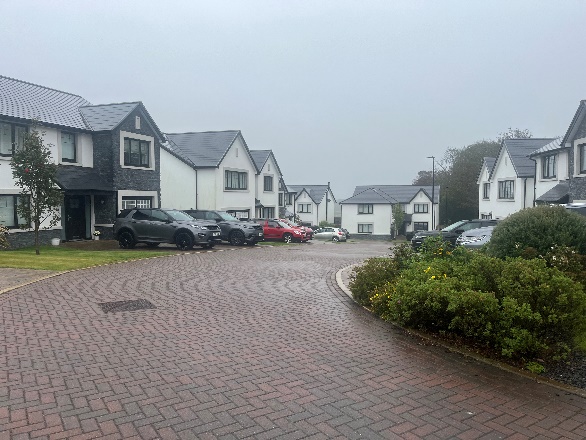
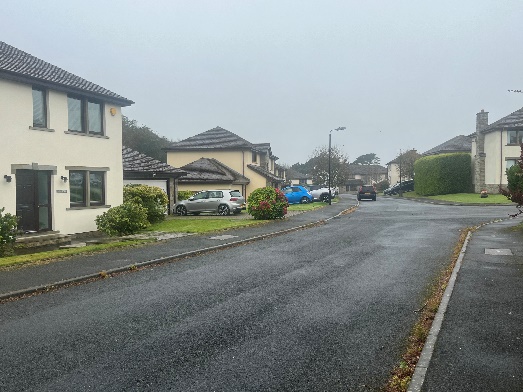
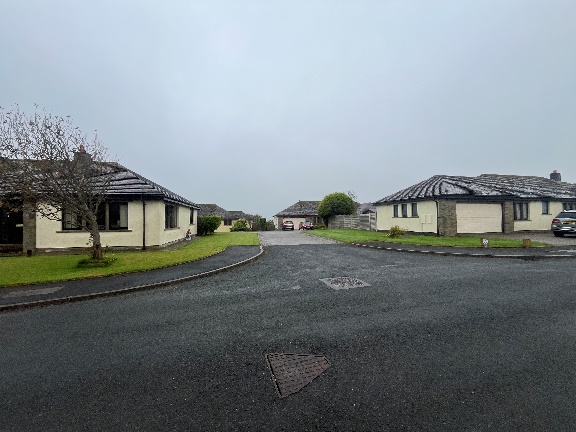
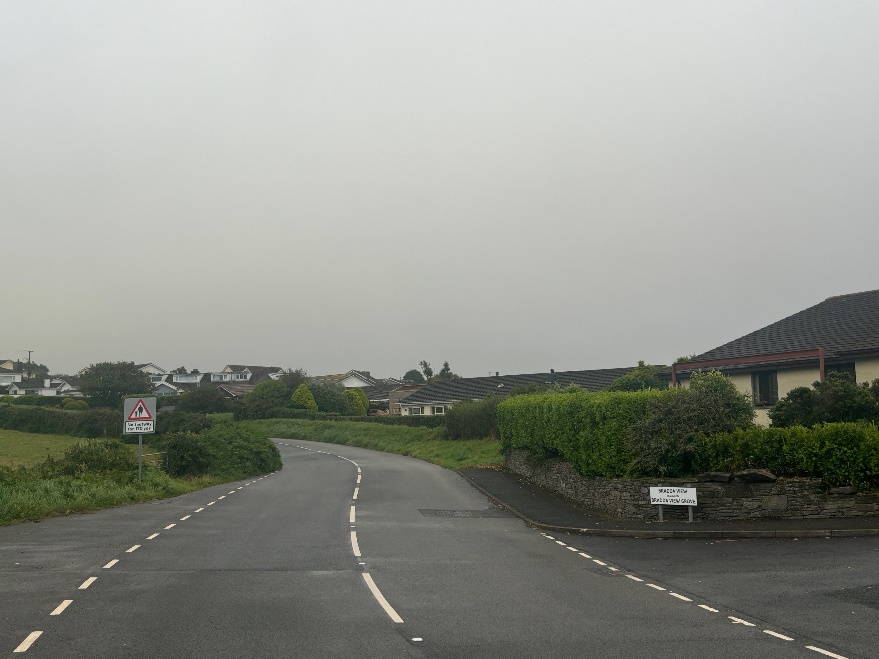
Due to the steep climb into the estate and the layout and great distance between the bungalows, the bungalows cannot be all viewed together from any one vantage point.
Clarification regarding the use of the word ‘dominating’ feature of the street scene of Bradda View is sought. The larger window on the proposal is on the west side of the house that overlooks the agricultural fields. The west side of the house is adjacent to Ballakillowey Road.
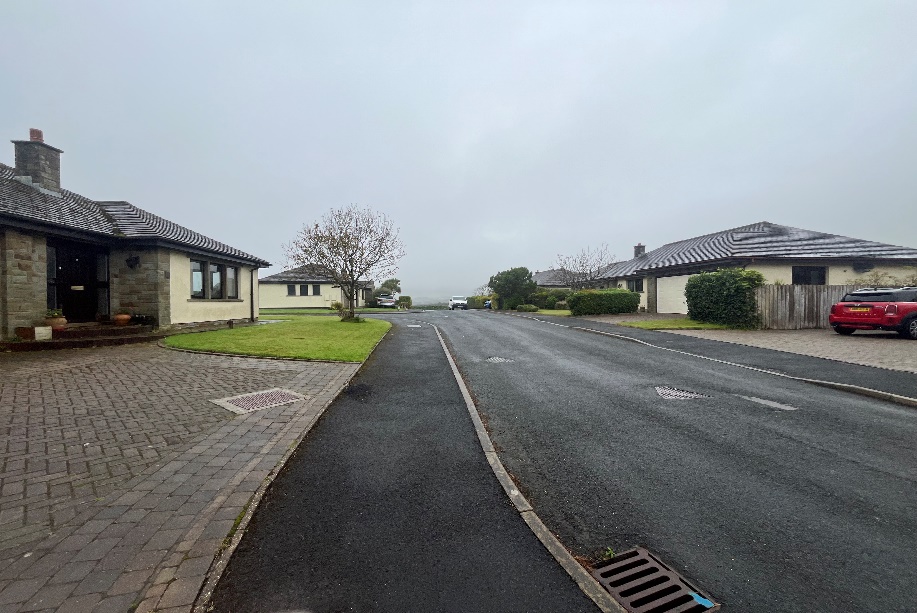
On entrance to Bradda View Estate, due to the undulation in the level of the road into the estate itself, the west side of the house has no bearing on the street scene of Bradda View. The proposal to introduce multiple roof elements was to take in to account the street scene of Bradda View by retaining a hip on the Bradda View Estate side and ensuring the dormers are inkeeping with the shape of the porch nor do they extend beyond the line of the porch.
Proposed location of 2 dormers.
Example of Bradda View Grove house with multiple roof elements:
View on exit from the estate. Challenge how the proposed increase in height would create a dominating feature in the street scene.
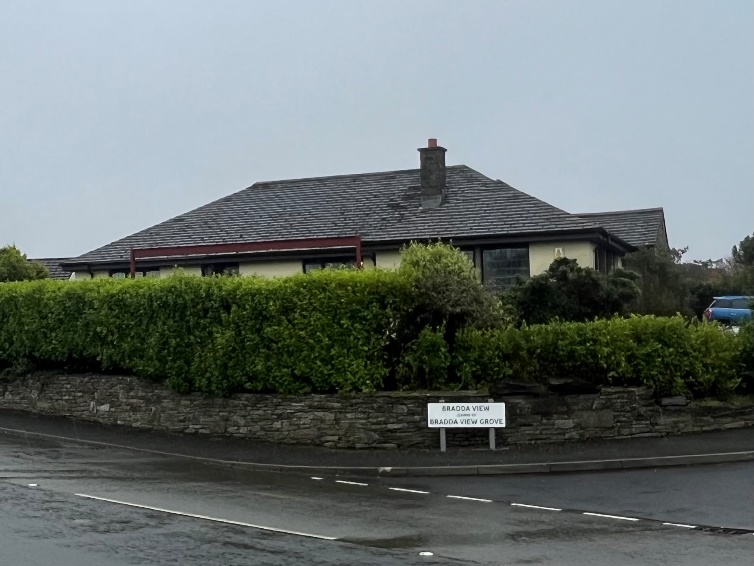
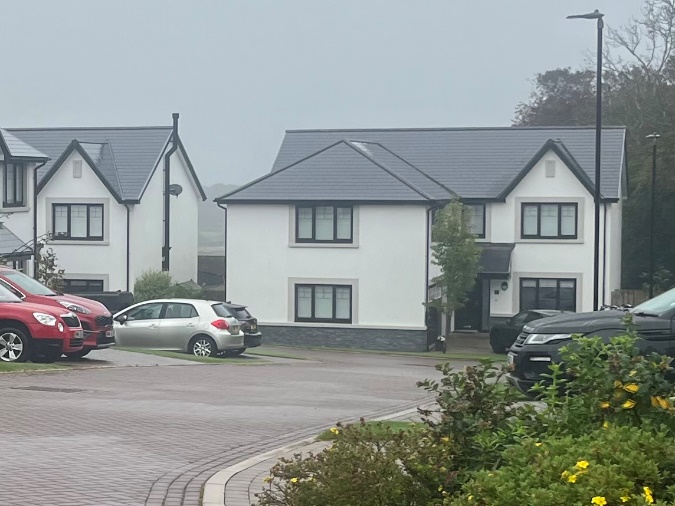
Whilst the plans do include two dormers on the Bradda View side, there are countless examples across the island of the addition of dormers to bungalows to enable utilisation of roof space and develop properties without significantly impacting the footprint of a property. In line with the comments of the Senior Planner following submission of our first set of drawings, the then gabble end was removed and a replaced with a hipped roof to reduce the visual impact for neighbours in Bradda View. We would like to challenge the statement that the addition of two dormers for secondary habitual rooms are classed a ‘dominating feature’ as there are only 3 bungalow’s on the left side of the estate before the houses then progress in to significantly larger, two-story dwellings.
Larger, 2 storey dwellings in Bradda View Estate
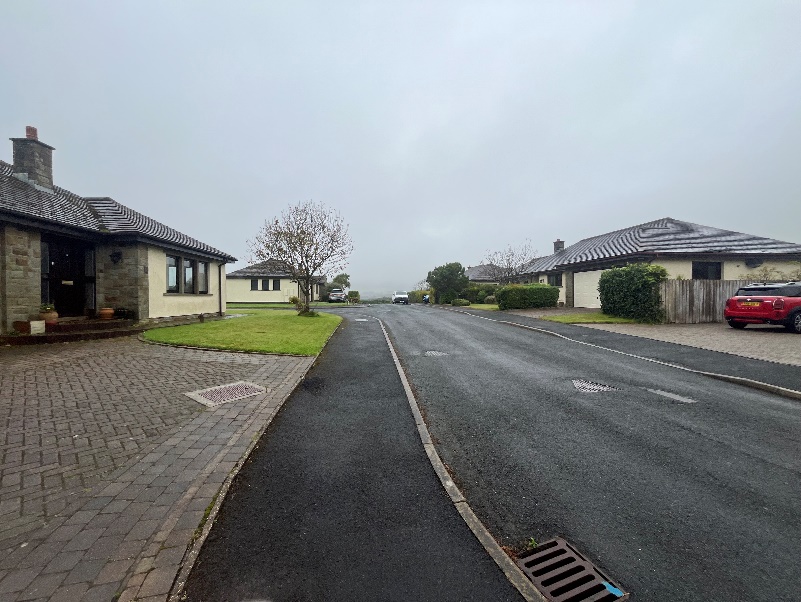
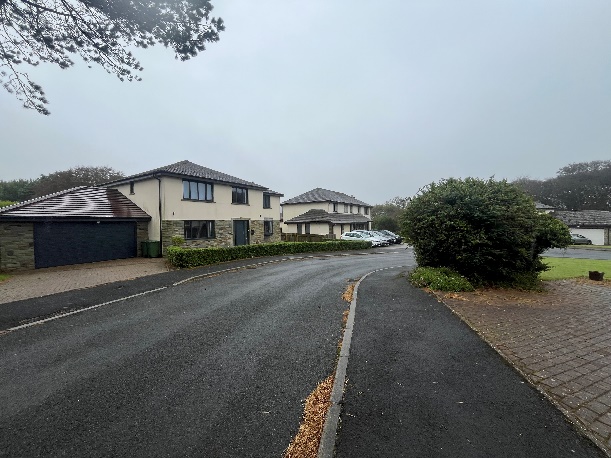
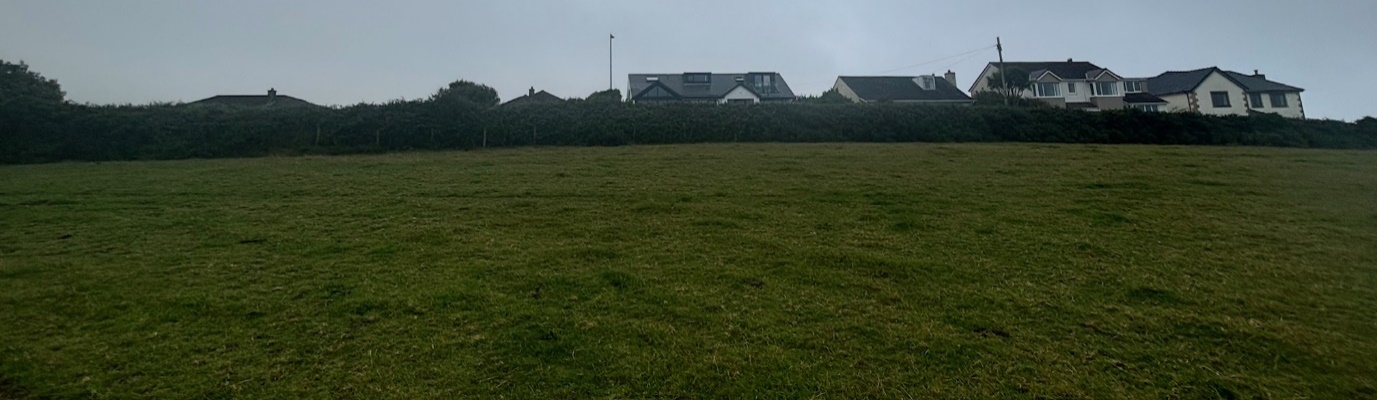
All houses on Ballakillowey Road and the rest of the hillside are a complete mix of 2 story houses, bungalows, dormered-bungalows, 3 story houses, all completely different in character. Whilst our house sits at the entrance to Bradda View estate, the elevation of the road means that 1 Bradda View is already the dominant property upon entrance. As the estate then slopes down from Ballakillowey road as you pass only 3 bungalows before reaching much larger, 2-story houses, all have varying roof lines as a result of the undulation of the road.
The following photo is of the last house as you travel up Ballakillowey Road, immediately before Bradda View Estate. This is not a single storey bungalow and has recently been extended to include new dormers.
All houses as you travel up Ballakilllowey Road from the roundabout are a mix of bungalows, dormer bungalows, two-story or three-story houses. As you pass the estate and head north on Ballakillowey Road, there are a mix of bungalows, dormer bungalows and then a two-story house as demonstrated in the following photo:
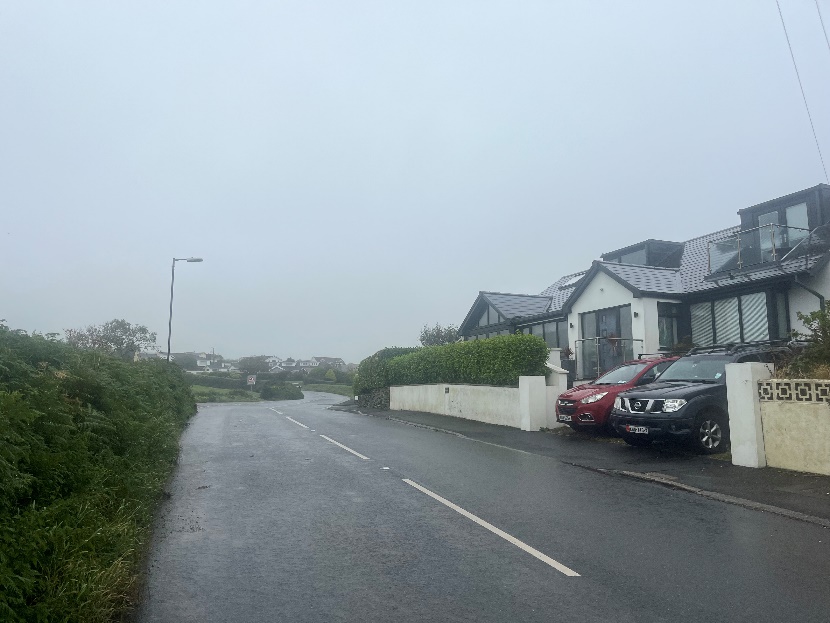
All houses on Ballakillowey Road and the rest of the hillside are a complete mix of 2 story houses, bungalows, dormered-bungalows, 3 story houses, all completely different in character. Whilst our house sits at the entrance to Bradda View estate, the elevation of the road means that 1 Bradda View is already the dominant property upon entrance. As the estate then slopes down from Ballakillowey road as you pass only 3 bungalows before reaching much larger, 2-story houses, all have varying roof lines as a result of the undulation of the road.
7.6.1 – ‘Between the junction and Bradda View the roof line steadily rises with the gradient of the road’
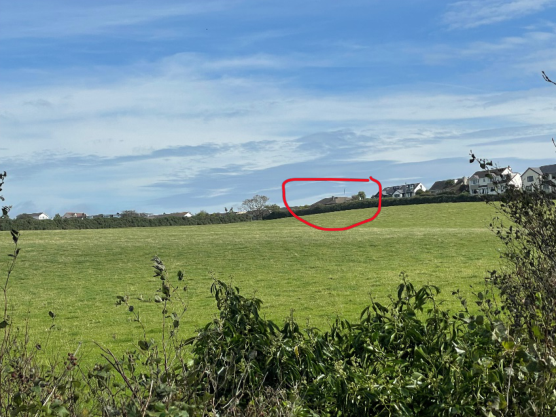
1 Bradda View is highlighted in the photo below. This clearly demonstrates the houses on the way up Ballakillowey Road have both a high roof line than 1 Bradda View nor do they rise with the gradient of the road.
We do not agree with this statement. As the houses on the road are a mix of dormer bungalows, two-story or three-story houses the roofline does not rise steadily with the gradient of the Ballakillowey Road.
Roofline of No 1 on Ballakillowey Road. The right of each picture is the increasing gradient:
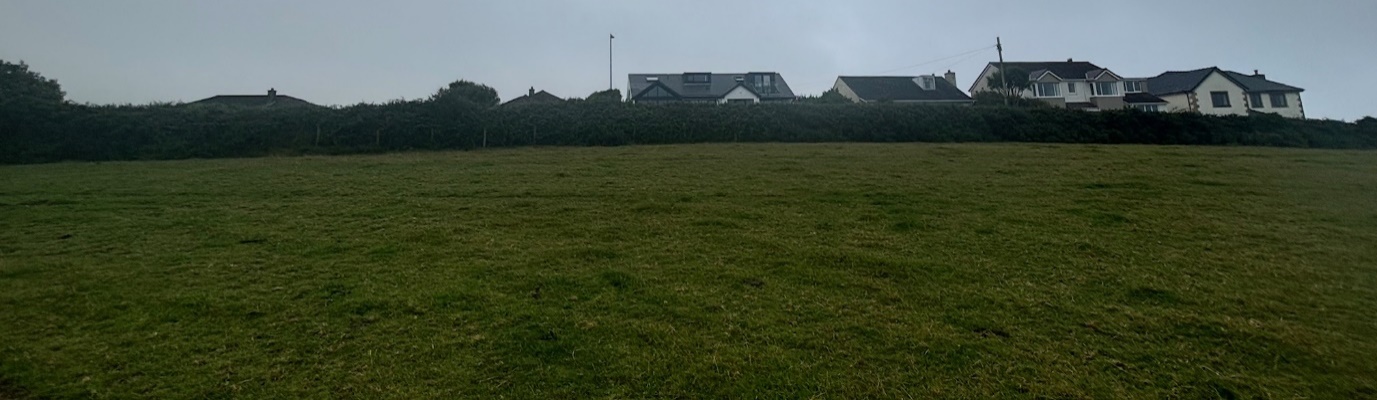
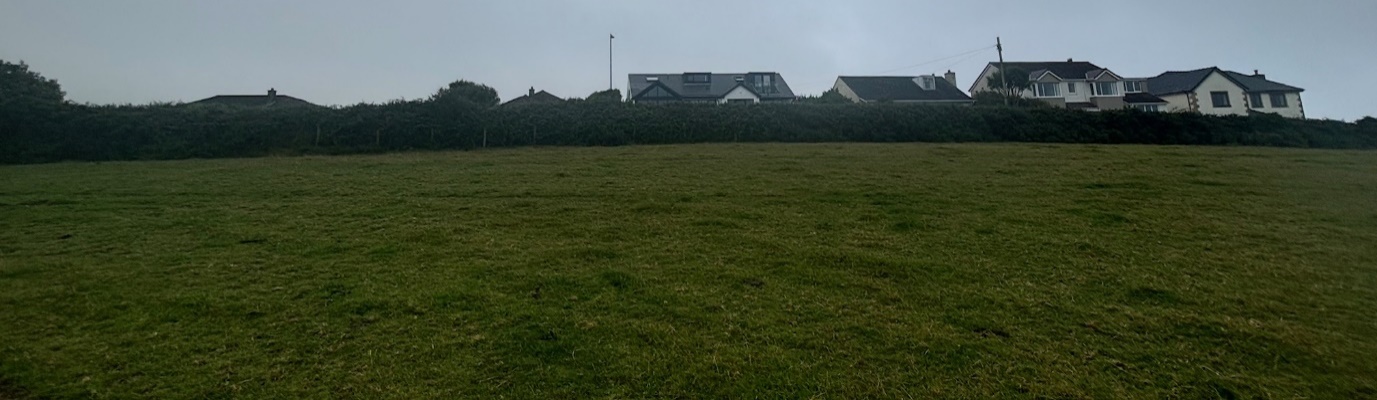
We would challenge this on the basis that there are a number of dwellings close by the site that have dormers, the last house on route up Ballakillowey Road before the entrance of Bradda View estate has multiple dormers (property known as ‘Struan’). The following photos evidence the dormers on several of the dwelling close by No 1.
In addition, there are endless examples on island of dormers having been added to houses where originally there were none.
21/00099/B
The proposal is for the hipped roof on the east side of the house adjacent to No 3 Bradda View to remain. This adjustment was made following discussion with the Senior Planner. The two dormer windows have been suggested for secondary habitable rooms only.
The suggested gable is on the north facing side of the house. This is not visible from Bradda View Estate in any way.
As said, there are 7 bungalows of similar style on the whole of the hillside that is made up of Ballakillowey Road, Bradda View and all other estates accessed from Ballakillowey Road.
In accordance with 1.5.4. of the Guide, whilst not a direct planning matter, reference to certain design approaches as being relevant may be necessary. As it currently stands, due to the age of the house, there is no provision for insulation in the roof for example. As a family looking to enhance the sustainability of our house.
We would challenge the statement that the character would ‘obliterated’ by the current proposal. The proposal was drawn up in such a way that considers the impact of the street scene of Bradda View by retaining the hip. The dormers serve two secondary habitual rooms only. The proposed gable has been included to maximise the use of the space without having an impact on Bradda View as this cannot be seen from the estate. It is sympathetic to both the character of Bradda View and the mix of properties on Ballakillowey Road.
There are many other defining characters of the properties in part of Bradda View, primarily the use of Yorkshire stone. Alterations to other defining characters (movement away from the brown windows, dark doors etc) have already been made to many of the houses. As stated in
1 Bradda View, whilst a ‘corner plot’ is an end of road property as far as Bradda View is concerned as it is situated on the entrance to the estate only. It also sits on Ballakillowey Road which has a very different and inconsistent lay of houses. No 2 & 3 Bradda View form part of Bradda View Estate and No 11 The Chase is on Ballakillowey Road.
Whilst a corner plot, the houses within Bradda View and on Ballakillowey Road are significantly different. We would challenge the statement that 2 dormers are ‘over-dominating’. Whilst the dormers do represent a change, they do not result in a disruption to the sense of openness between the properties and the street scene.
The following photo demonstrates the current roofline and evidences that several of the surrounding properties on Ballakillowey Road are already much higher than 1 Bradda View so we would challenge the basis that the proposal is visually over-dominating.
We would question the distance as being over 20 metres from the proposed dormers which are for secondary habitual rooms, the degree of orientation is also questionable in line with the 25 degree rule referred to in the Guide. No 1 is already slightly elevated in comparison with No 2 so there has always been an element of dominance in terms of height.
The photo above helps evidence the distance between No 1 and No 2 being opposite. We have the full support of the current residents of No 2 and they have reviewed our plans and offered to provide written evidence of the same.
The gable and first floor window are proposed to house a secondary habitual room. This has not been taken in to consideration. The building nearest 1 Bradda View on the grounds of No 11 is a garage. The garden of the property is located on the East side of their house and is not visible from No 1 Bradda View. When planning consider a right to a view non-material, it seems extreme to object on the basis that secondary use window would overlook a driveway that a family may use to utilise their view. In addition, the occupiers of No 11 do not agree with the PPO’s comments, are fully supportive of our plans to the extent that they have submitted an email to the Planning Department to evidence the same.
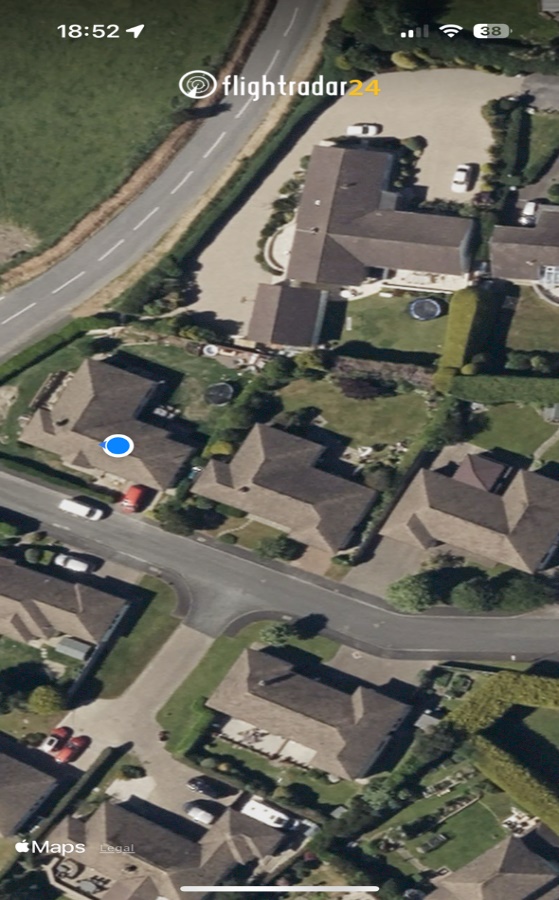
The primary habitual rooms of No 3 currently face South. There are then two small windows on the West side of their house that are currently shaded by 1 Bradda View and one looks directly in to our garage. As per the photo below, any shadow cast is currently done so by their own dwelling (in red). Due to the distance and orientation we would challenge the statement that the impact of the raised roof would have any impact on the windows and the rear of No 3.
Due to the distance between No 1 Bradda View and 11 The Chase, we would challenge the statement that that any shadow would be cast over any windows of this dwellinghouse or their rear amenity areas. As shown in yellow, this is the garage of 11 The Chase. The distance between No 1 and 11 The Chase is too far for a shadow to be cast over their amenity areas beyond any shadow that is already case by their own trees. In addition, our neighbours in 11 The Chase have written to you directly to evidence their support of our application.
The proposed increase is 1.1m and only 150mm at the eaves with the retention of a hip roof on the side of the house that is adjacent to No 3. There is no overlooking element or any impact on shadowing so would challenge the statement that this could be considered to have an ‘overbearing’ (this term is seemingly applied in a subjective manner and is not defined) The more modern and sustainable light and space enhancing additions to the property (large window and proposed gable) are on the Ballakillowey roadside of the building and were
specifically proposed in such a way to retain the current roof pitch on the as far as possible in terms of Brada View and minimise the impact of the extension for the occupiers of No 3 Bradda View. As a result, we would like to challenge the statement that the proposal would have an ’overbearing impact’ upon No 3 Bradda View. No 3 Bradda view currently does not have the views that our house has over the Ballakillowey Road. Their primary habitable rooms currently look directly in to our garage and on to the street. Elevation of the roof with the proposed retention of the hip would have no additional bearing on the daylight in to or view from their property beyond the current impact as a result of the orientation of our house. The suggested retention of the hip here was to ensure minimal impact upon No 3.
There is no basis given for this statement in the refusal. This goes against many of the principles referred to in the Guide. The proposal has failed to take in to account the need for planning to encourage development of existing properties to bring them in line with the principles referred to in the Guide. There should be support for families who wish to enhance and modernise existing properties, in this case one that is over 30 years old, without sacrifice to residential amenities in the sense of outdoor space. Future occupants are likely to include younger families and not just retired persons. Private amenities in the form of retention of useable garden space is key. Retaining the outdoor recreational space in our garden is important as this is where our children play sports safely which is why we were reluctant to extend the footprint of the house any further. 4.1.5. of the Guide - to extend the footprint would require a loss of private amenity, external space. In addition, it is no longer the case that teenagers leave home and don’t return. Future occupants are likely to include teenagers and adults in to their twenties while they try to fund their own property acquisitions. We do not feel, therefore, that this element of residential amenity of future occupants of adjacent residents has been taken in to account at all.
In addition, more modern extensions that include an element of extended glass to bring in natural light and maximise local views are increasingly regarded as important. As it currently stands the hallway that runs the length of the bungalow has no daylight whatsoever with no windows or access to natural light.
We’d also like to refer to 2.6.1. of the Guide which recommends that consideration is given to neighbours and any concerns they may have. When I approached our neighbours in No 3 to discuss if there were any elements of our proposed extension they may be amenable to reviewing with us, they confirmed that they just don’t want to see the roof line of our house changed. As we are the only owners of a bungalow with a young family, we are the first to give consideration to an extension of the bungalows. All other neighbours have been openly supportive of our approach, recognising that whilst the first to submit an application like this, it is expected that future needs of families will be similar to ours.
Finally, reference to s1.1.1. of Guide, the purpose of our application was to enhance the living space of a local five-person family in a modest way that includes an element of ‘locally distinctive’ designs in a way that responds to the changing needs of our communities as the more modern expectation is that young families increasingly seek one bedroom per child. The bungalow is currently 3-bedroom property. The purpose of the design as submitted was to future-proof the house in a number of ways whilst ensuring the style of the house is retained in line with all other houses in the estate, specially referencing the materials used whilst at the same time maximising the use of the existing footprint and addressing many outdated features of the house (in terms of sustainability such as lack of any insulation in the roof space).
Copyright in submitted documents remains with their authors. Request removal
View as Markdown