Loading document...
Town and City Date: 2011-07-07 11:10:00 Location: 27 JUN 2011 Appeal: 27 JUN 2011
Demolition of Existing Dwelling, Ashwood, Ballamenagh Road, Baldrine, Isle of Man and Erection of Replacement Partially Earth Sheltered 'Eco-Dwelling'
For
Captain Simon Pressly & Mrs. Lynn Pressly
July 2011
Key Associates Ltd Chartered Architects
1.0 Introduction 2.0 Planning Policy Statement 3.0 Relevant Planning History 4.0 Architect's Design Statement 5.0 Appendix A - Existing Photographs
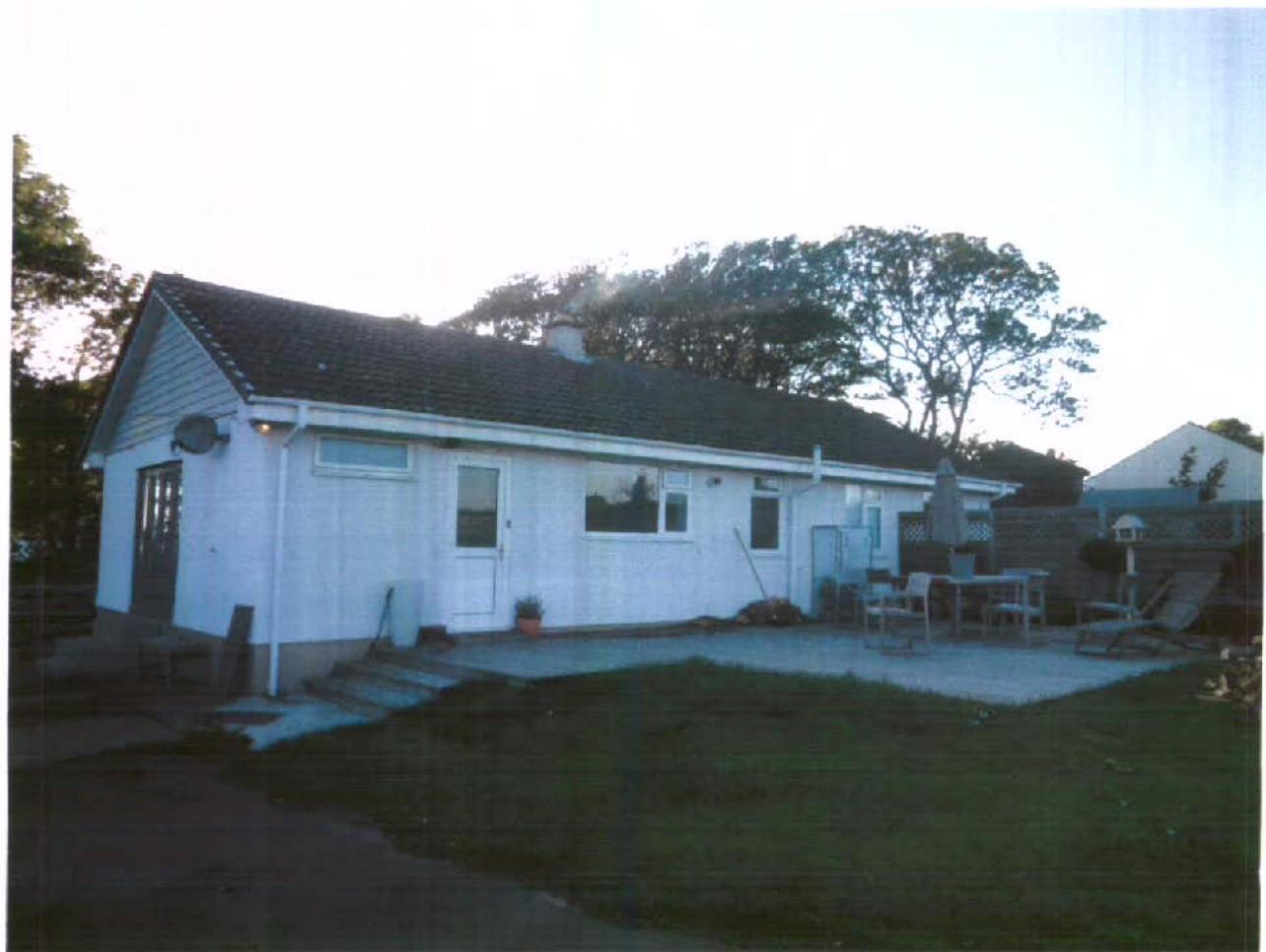
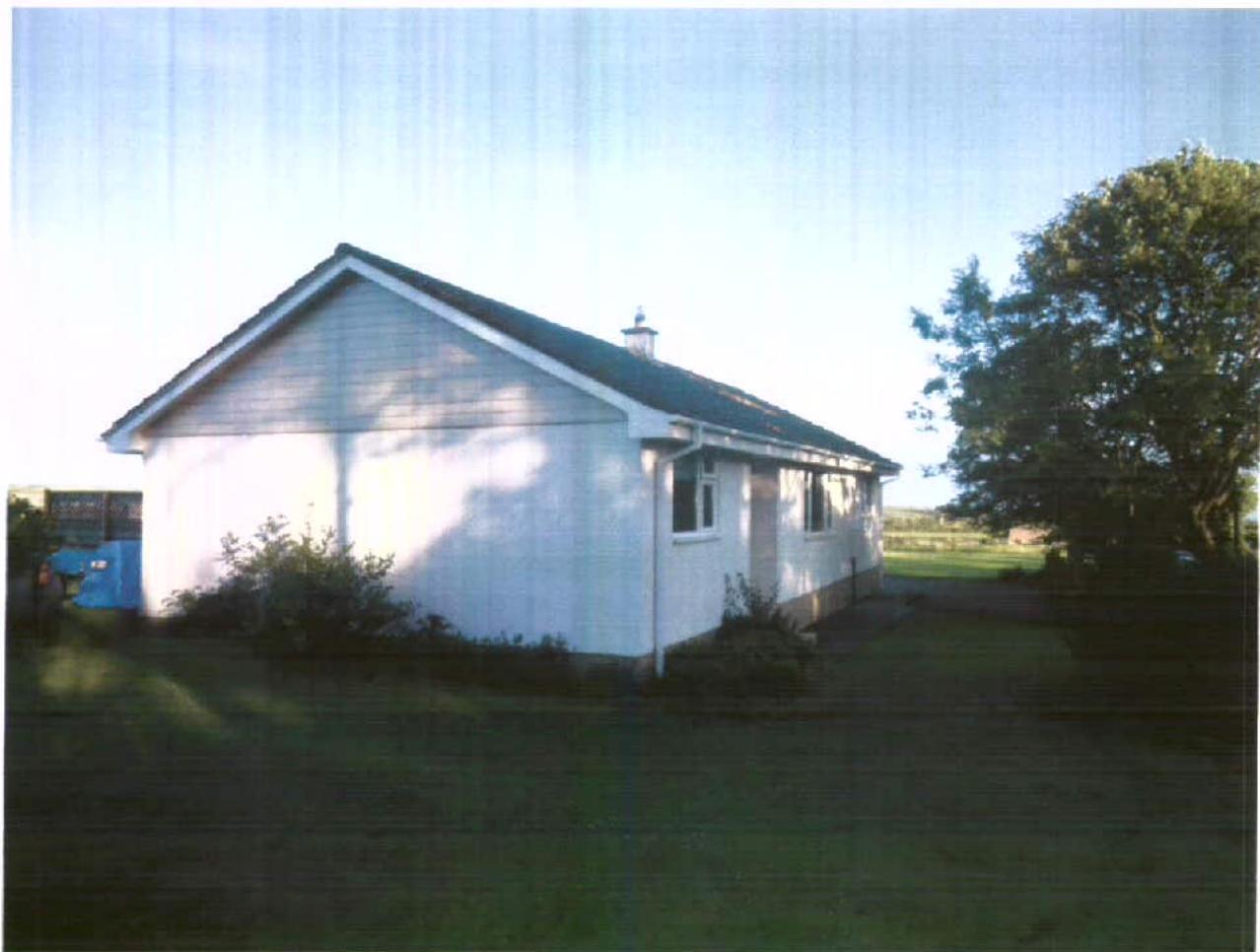
1.1 The application site covers approximately 5322.00 square metres ( 0.5322 Hectares) ( 1.315 Acres) and is bounded in Red on the application drawings, representing the residential curtilage of the property known as 'Ashwood'. 1.2 The site as a whole is situated within a small grouping of dwellings, known as Ballamenaugh Beg, it is accessed via Ballamenagh Road, a minor road off the main A2 highway immediately south of Baldrine. 1.3 A topographical survey has been carried out on the site, and is included in the package of application drawings. From this survey it can be seen that the existing site ranges in level from approximately 104.00 metres at its northern boundary to a level of 98.5 metres at its southern corner. A fall of approximately 5.50 metres over the length of the site, the aspect being generally a south facing slope. 1.4 Vehicular access to the application site is currently available via two points, one to the north west corner and one on the western boundary. It is proposed to utilise the existing access point at the north west corner of the site, the access to the western boundary being removed. It is proposed to position a set of new gates slightly back into the site, this gated access will take the form of Manx stone gate posts fitted with timber gates. It is also proposed to re-position the short section of existing 'Manx' hedge, as currently located adjacent to the existing access position on the western, (road-side), boundary, in order to enhance the vision splay in this direction. Visibility splays of 60 metres are hence achieved, and formed in accordance with the requirements of the Dept. of Infrastructure - Highways Division, (see drawing no. K219/P/10-03). 1.5 In addition to the re-positioning of this short section of existing 'Manx' hedge, it is also proposed to remove the existing fence line along this western boundary, which currently forms the garden enclosure to the existing property, and replace it with a new section of 'Manx' hedge, hence linking the re-positioned section of 'Manx' hedge, with an existing 'Manx' hedge forming the remaining length of this road-side western boundary. 1.5 The foul water drainage from the proposed property will connect to a new Klargester 'Bio-Disc' system, whilst it is proposed that the surface water drainage from the proposed property will partially be mitigated by the earth sheltering over the garage, and partly by the use of a soak-away. 1.6 The application site currently houses a 1960's rendered bungalow, positioned approximately five metres from the road-side boundary, near the northwest corner of the site, (ie vehicular access point), a small garden shed is also located near this access point. Photographs at the existing dwelling are contained in Appendix A of this statement.
2.1 This site is covered by the Laxey and Lonan Area Plan Order 2005, which indicates as on Map No. 2, that the site is located at the edge of an area of high landscape value and scenic significance. The site is also adjacent to an area zoned as
predominantly residential, and as such relates to this area. Due to the presence of the existing dwelling, the site has an established residential status, set within a larger ownership curtilage which is designated as open space/agricultural use within the plan.
There are a number of policies within the Strategic Plan which are relevant to the proposals, the first of these being General Policy 3, and more specifically sections (c) and (d) of this policy, which allows development to be permitted outside of land zoned for development under certain conditions. Section (c) of general Policy 3 states: (c) Previously developed land which contains a significant amount of building; where the continued use is redundant; where redevelopment would reduce the impact of the current situation on the landscape or the wider environment; and where the development proposed would result in improvements to the landscape or wider environment;
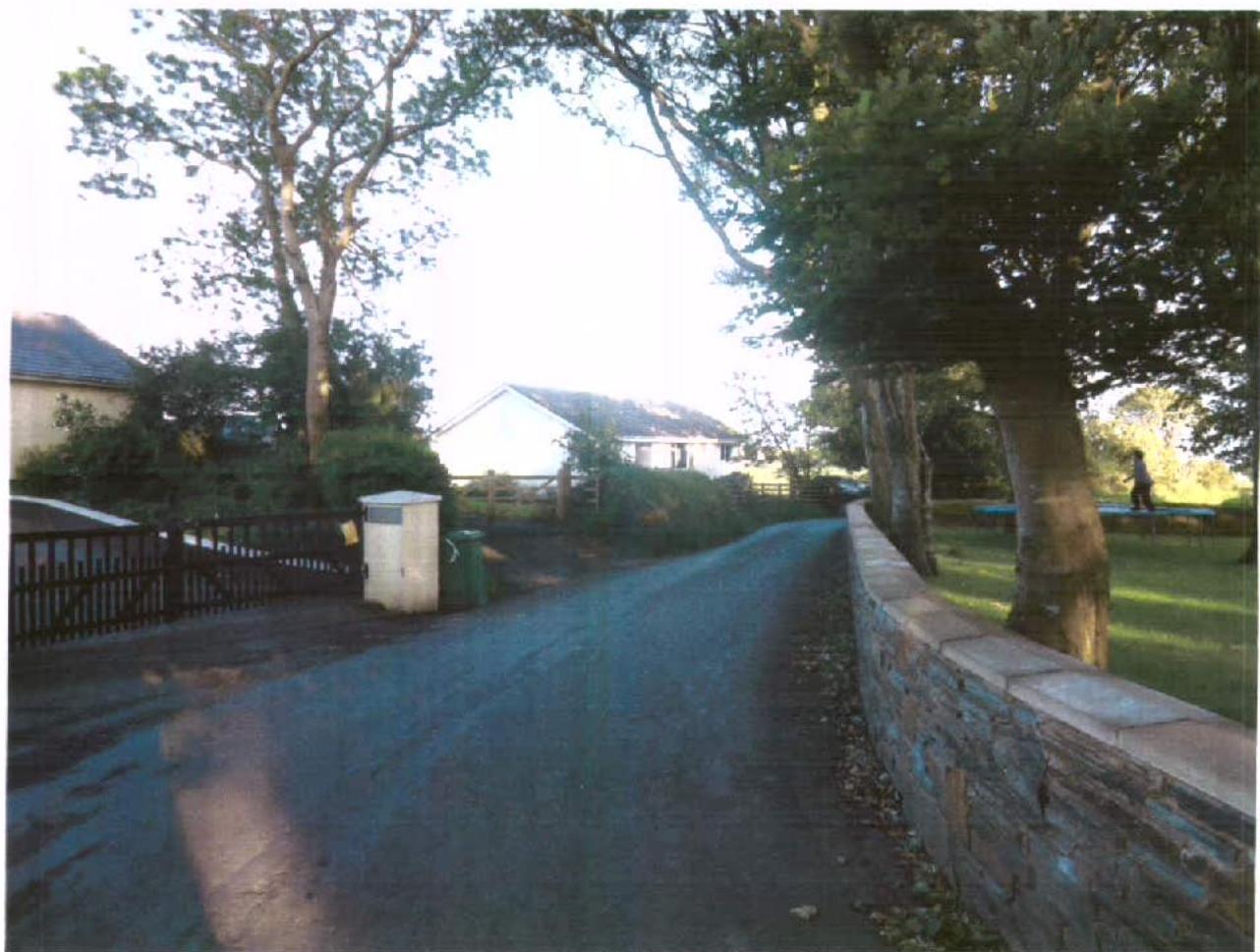
The existing site contains an existing single storey 1960/1970 rendered residential dwelling with is generally of poor architectural merit, is visually unattractive and has a detrimental impact on the quality of the surrounding landscape, by it's siting close to the Ballamenaugh Road, making it visible to those travelling north / south on this road.
The applicants believe the application proposals comply fully with section (c) of General Policy 3, these proposals significantly reduce the visual impact of this proposed residential dwelling on the site and its surrounding landscape due to:
Section (d) of General Policy 3 states; (d) The replacement of existing rural dwellings; (Housing Policies 12, 13 and 14);
Therefore replacement dwellings in the countryside should be subject to Housing Policies 12, 13 and 14. Housing Policy 12 states that replacement of an existing dwelling in the countryside will generally be permitted unless it has lost its residential status by abandonment or is of architectural or historic interest. As the existing building remains in residential use it has not lost its residential status. The existing buildings are not of any architectural or historic interest, therefore the proposals comply with Housing Policy 12.
Housing Policy 13 relates to rural dwellings which have lost their residential status, which is not the case with the application site and therefore housing Policy 13 does not apply in this case.
Where a replacement dwelling is permitted, it must not be substantially different to the existing in terms of siting and size, unless changes of siting or size would result in an overall environmental improvement; the new building should therefore generally be sited on the footprint of the existing, and should have a floor area which is not more than greater than that of the original building (floor areas should be measured externally and should not include attic space or outbuildings). Generally, the design of the new building should be in accordance with Policies 2-7 of the present Planning Circular 3/91, (which will be revised and issued as a Planning Policy Statement).
Exceptionally, permission may be granted for buildings of innovative, modern design where this is of high quality and would not result in adverse visual impact; designs should incorporate the re-use of such stone and slate as are still in place on the site, and in general, new fabric should be finished to match the materials of the original building.
Consideration may be given to proposals which result in a larger dwelling where this involves the replacement of an existing dwelling of poor form with one of more traditional character, or where, by its design or siting, there would be less visual impact.
The existing dwelling is 174.32 sq.m. in plan area, measured externally and incorporating the previously approved, and partially constructed, extension, (ie 02/00245/B). The existing dwelling is located to the north-west corner of the site very close to the Ballamenagh Road, and as such is readily visible in the area, as photograph no. 3 in Appendix A demonstrates.
It is proposed that the replacement dwelling will therefore be situated further to the east of the existing property, with a north-northeastern to south-southwestern orientation, the principle entrance elevation being on the north-northeastern side. Whilst this may not be fully in accordance with HP14, there are a number of reasons for doing this which can be summarised as follows;
The proposed dwelling covers an area of 438.7 sq.m., (measured around the external walls, and excluding the garage). The garage area totals 65.45 sq.m. and is fully earth sheltered, hence the visual impact of the proposal is significantly reduced, (it is noted that were the calculation method for earth sheltered accommodation to
be applied, counting of the actual floor area of the earth sheltered garage, the resulting floor area of the proposed garage would be 32.72 sq.m.) While the floor area of the proposed dwelling is significantly greater than that of the existing bungalow, it should be noted that a great deal of care has been taken to attempt to mitigate any visual impact of this proposed dwelling on it's surroundings. This is achieved via the extensive use of 'Sedum' roof coverings, coupled to the relocation of the proposed dwelling away from the road boundary, (at least 24.5 metres away), and the fact that the proposal is not visible from other roads within the area, as well as the overall design of the dwelling: utilising earth sheltering: timber cladding to the south-southwestern elevation and first floor walls on the other three elevations in order to achieve a 'softened naturalistic' architectural composition, which together minimises / mitigates the visual impact of this proposed dwelling. Accordingly, the applicants believe the proposal, which although of an innovative modern design, has as an overall proposal, minimised the impact upon, and integration into, it's rural context, and therefore is in accordance with Housing Policy 14 .
3.1 'Approval' granted for the conversion of a garage into a study. Planning application number PA92/00790/B, dated 1st January 1994. 3.2 'Approval' granted for the installation of patio door to replace window to approved dwelling. Planning application number PA01/00558/B, dated 20th July 2001. 3.3 'Approval' granted for the extension to dwelling to provide additional living accommodation, erection of garage and creation of driveway. Planning application number PA02/00245/B, dated 19th June 2002. 3.4 Planning application 'refused' for 'approval in principle' for the demolition of existing bungalow and erection of three dwellings with double garages. Planning application number PA05/92370/A, dated 6th April 2006 3.5 'Approval in principle' granted for the erection of a replacement dwelling and garage. Planning application number PA08/01127/A, dated 1st August 2008 3.6 The applicants are not aware of any further planning applications on this site in the past.
4.1 Pre-Application Consultations
During the design process, the applicants architect has carried out consultations with:
Mr. A Holmes - Dept. Of Infrastructure - Planning Officer, \& Ms Hazel Fletcher - Dept. Of Infrastructure - Highways Design Engineer. The advice given within these pre-application consultations has been incorporated into the drawings and information which form the basis of this application.
The proposals take the form of a two-storey residential dwelling which utilises the natural slope of the site via cut and fill excavations to fully earth shelter the double
garage. The roof over this earth sheltered garage is then intensively planted with a range of indigenous plants which support the local environment's biodiversity. The mass of the roof line to the main two storey dwelling is reduced via a low pitched roof line (nine degrees), to its' northern orientation, which forms the approach elevation, and has a 'green roof' extensively planted using Sedum 'blanket' roof covering. This Sedum roof slope, located adjacent to the intensively planted garage roof, combines to give a 'green/naturalistic' appearance to the main entrance elevation. A narrow band of 'clear storey' glazing then supports the leading edge of the southern orientated roof. This southern, (rear facing), roof is of aluminium standing seam construction in a dark grey colour, echoing the forms of an 'agricultural / dutch barn'. A smooth rendered 'Fin' wall follows the radius and profile of the south facing curved roof and continues down to ground level, giving the impression of 'anchoring' this roof and drawing the eye down to ground level, while functionally serving to partially enclose the 'external courtyard' hence providing protection from easterly winds. This 'Fin' wall extends internally into the building and forms part of the chimney construction. The external wall construction has substantial amounts of timber cladding, (Larch or Beach), especially on its' southern elevation, this gives a 'natural' feel to the architectural language, as well as being an environmentally sustainable building material. Large amounts of high efficiency double/triple glazing, is also proposed for this southern elevation, hence maximising the environmentally beneficial effects of passive solar gain. This glazing is protected from over-heating in high summer with a combination of structural over hangs at the eaves to protect first floor glazing; and 'Briee Soleil' / first floor balconies to protect areas of ground floor glazing. Areas of smooth rendered masonry construction are to be found at ground floor level on the north and west elevations, forming a 'base' which serves aesthetically to 'break-up' the massing of the proposed two storey dwelling, also areas of the south and east elevations, as well as chimneys are picked out and provide zones of relief / highlight within the overall composition. Fenestration patterns on the main entrance elevation, (north elevation), and the west elevation are generally sash type, and are of traditional proportion
In addition to:
This proposed dwelling will employ a variety of environmentally friendly technologies to provide it's servicing requirements. These can be summarised as follows:
Solar Panels - Solar panels are to be mounted on the south facing roof slope of the dwelling to provide hot water heating. This will provide the majority of the hot water heating requirements for the dwelling for the year, minimising the need for fossil fuels.
Ground Source Heat Pump - A ground source heat pump is to be used as the back-up boiler system for space heating for the dwelling, a system which utilises ground 'slinkies' buried within trenches to generate heat via an electrical heat pump system. This form of heat production is extremely efficient, developing 4.5 Kw of heat output for each 1 Kw of electricity used in powering the system. The ground source heat pump is to be linked to an under-floor heating system which provides space heating at significantly lower input temperatures than traditional boiler and radiator systems, typically using less than half the energy to produce the same internal temperature.
Foul Water Bio-Disc - In order to deal with the foul water drainage from the dwelling it is proposed to utilise a 'Klargester Bio-Disc' which is essentially an individual packaged sewage treatment plant which takes domestic effluent, and after treating it, produces a cleaned effluent which can safely be discharged to a tail drain soak-away or in some circumstances to a water course. The bio-disc will be sized to suit the maximum effluent output from the dwelling.
Rain Water Harvesting for 'Grey' Water Use - It is intended to utilise rain water harvesting to take surface water from the roof to an underground storage tank where the water will be filtered, and pumped, for re-use as 'Grey' water in flushing of WC's ect. in the house. The storage tank will have an overflow system discharging surplus water to the surface water soak-away.
Whilst the proposal is uncompromisingly contemporary in its form, the integration of areas of 'green' Sedum roof on the northern roof slopes, and the utilisation of earthsheltering construction methods over the garage, as well as the specification of, were possible, a variety of sustainable, locally sourced, materials, and the use of sustainable technologies, all significantly contribute to a reduced visual and environmental impact of this proposed dwelling on it's surroundings. The proposed dwelling has a larger floor area than that of the existing property, however, it results in a significantly reduced impact than that which currently exists, due to it's relocated position on the site, and environmentally sensitive / sustainable design. The design and specification of this proposed dwelling aims to significantly it's reduce carbon footprint, with the development generating the majority of the electricity required to run its' heating and ventilation systems, whilst minimising the levels of heating required due to: integration of super-insulation and air tightness levels in the construction; making maximum use of passive solar gains via design and orientation; use of ground or air source heat pumps; as well as earth sheltering of the garage. Hence in addition to the use of forms and materials which attempt to lower the visual impact on the proposed dwelling's immediate area, and were possible reflect the over-riding character of the area, this proposal addresses its' responsibilities on a wider national and international level to reduce it's inherent carbon foot print as well as the carbon footprint of its occupants.
Photograph No. 1
Photograph No. 2
Photograph No. 3
Copyright in submitted documents remains with their authors. Request removal
View as Markdown