Planning Statement In Support Of The Erection Of A Replacement Dwelling, Cronk Vane, Stoney Mountain Road, Foxdale, Malew
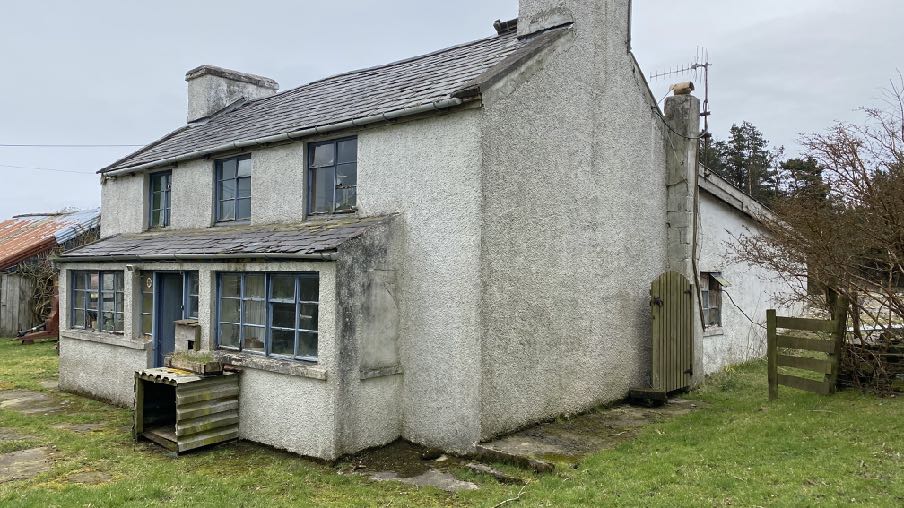
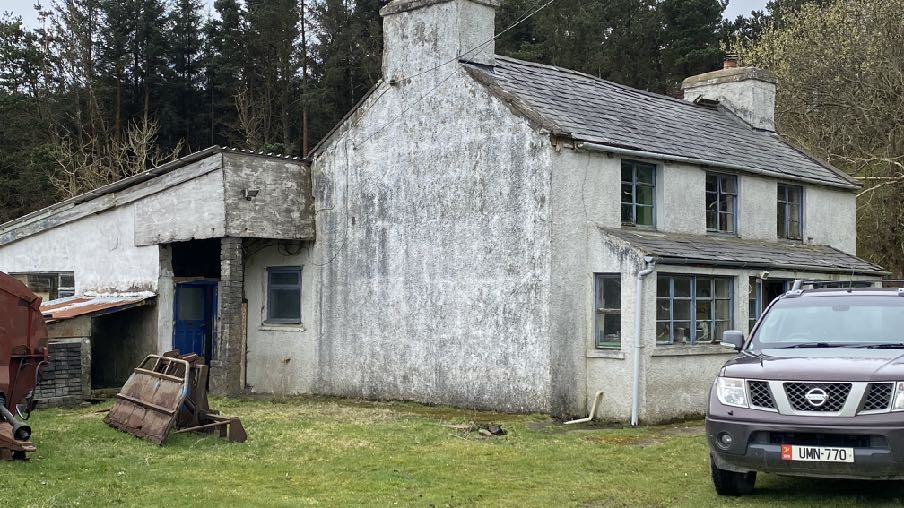
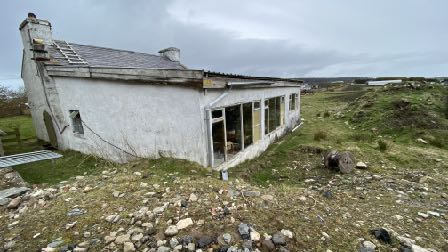
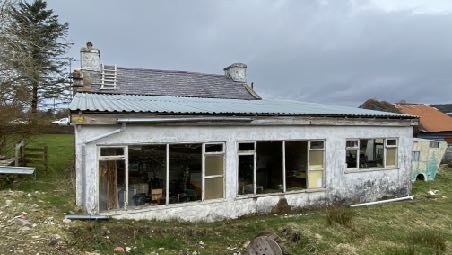
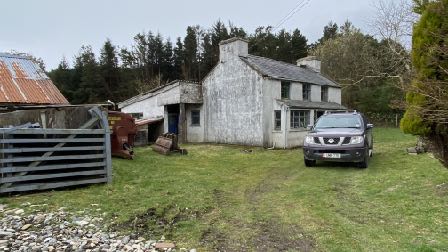
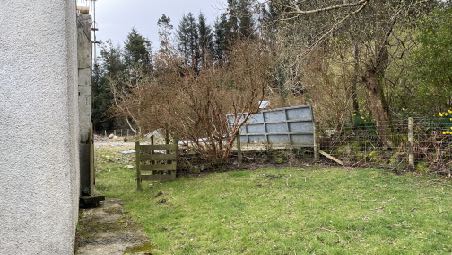
A photograph of the existing two-story detached house proposed for demolition, featuring roughcast rendering and a single-story extension on the front elevation.A photograph of the existing white two-story dwelling with an attached single-story structure, situated in a rural setting with trees in the background.
1.0 Introduction
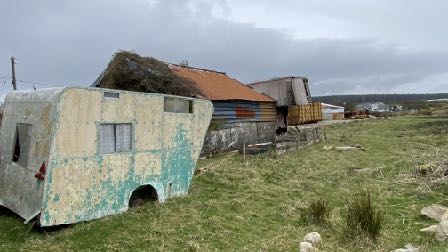
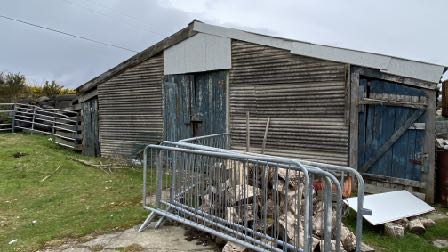
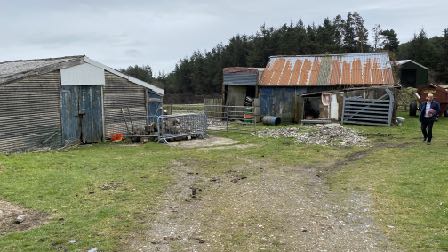
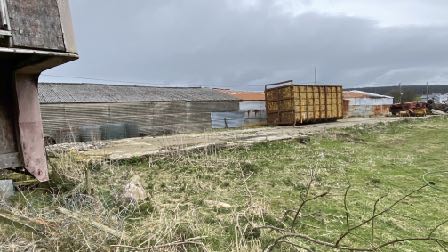
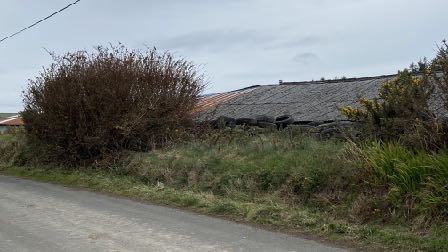
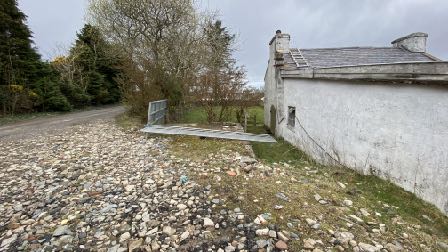
1.1 The site is a parcel of land which sits to the south of the Stoney Mountain Road and on the corner of it and the roadway which leads to Stoney Mountain Quarry. The overall site is an area of 1.6ha which contains grassed field, a dwelling and a number of outbuildings. Recently, a new portal framed building has been constructed to the rear of the older buildings alongside the road. There is a long, sheeted building alongside the road, a smaller sheeted building to the south west of that and the cottage, Cronk Vane, sits to the south west of that.
1.2 Almost all of the buildings are currently visible from the highway.
1.3 The boundary with Stoney Mountain Road is formed by a low hedge and the boundary between the site and the quarry lane is marked by shrubs with an access onto it from the site.
A photograph showing a dilapidated caravan in the foreground with a thatched-roof building and other structures in the background.A photograph showing a dilapidated wooden outbuilding or barn with weathered cladding and blue doors, situated in a rural setting with a metal barrier in the foreground.A photograph showing a rural site with several dilapidated agricultural sheds and outbuildings, including a person standing on the right.A photograph showing a rural site featuring a long corrugated metal agricultural building and a large skip in the foreground.The image shows a dilapidated stone structure with a damaged slate roof, heavily overgrown with vegetation and bushes, situated alongside a rural road.A photograph showing a white-walled building with a slate roof on the right, a gravel driveway in the foreground, and a metal gate leading to a grassy area.
1.4 The cottage is traditional at its core but has been extended numerous times over the years at the side and the rear. It sits close to the quarry lane - approximately 7m from it.
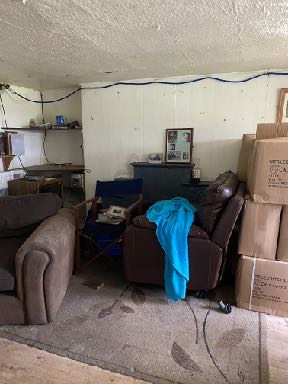
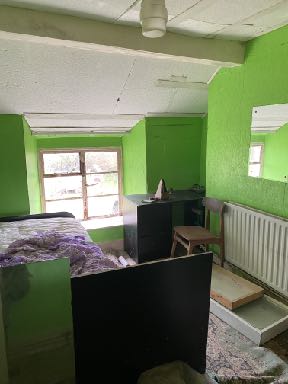
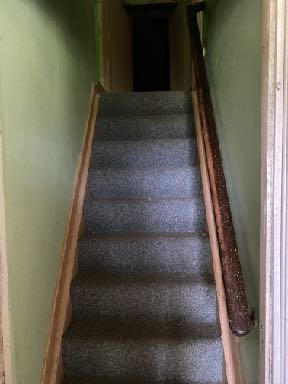
1.5 The house was occupied approximately 5 years ago. The windows are metal framed and single glazed. The ceilings are low and the floors have been raised in the past to try to eliminate damp issues coming up from the ground below which is beneath the level of the adjacent road and lane. The central staircase is steep with small treads.
A photograph of an existing single-story white dwelling with a large windowed extension and solar panels on the roof, set in a rural landscape.A photograph of an existing single-story white bungalow with a slate roof, appearing to be in a state of disrepair or renovation with a ladder leaning against the chimney stack.A photograph showing a rural property with an existing white cottage-style dwelling and a corrugated metal outbuilding. A dark SUV is parked on the grass in front of the house near a metal gate.A photograph showing the rear garden area of a property with a white wall on the left, a wooden fence, and trees in the background.Interior photograph of a cluttered room with sofas and boxes, likely showing the existing dwelling proposed for demolition.Interior photograph of a room with bright green walls, showing a bed, desk, and window looking out to a garden.A photograph showing an interior view of a carpeted staircase with wooden handrails leading upwards.
2.0 The proposal
2.1 Proposed is the demolition and replacement of the existing dwelling and all of the sheeted outbuildings and the erection of a new dwelling. The new dwelling will be located further east than is the current dwelling. It will utilise the existing access from Stoney Mountain Road and a new residential curtilage will be created. Once the new dwelling is complete, the existing cottage, which will be used for storage and a site unit during construction, will be demolished and the area restored to a field.
2.2 The existing cottage has a floor area of 167sq m measured externally, an eaves level of 3.6m and an overall ridge height of 5.5m. The frontage is 8.7m and the overall depth is 12m.
2.3 The proposed dwelling will have an overall floor area of 219sq m, an eaves level of 5m and a ridge height of just over 8m. The frontage is just under 12m and the depth is 7m. It is designed following the principles of Planning Circular 3/91 with substantial gable end chimneys, vertically propoerionted windows appearing as sliding sashes
2.4 The dwelling will be served by the existing septic tank.
2.5 The new residential curtilage will be formed with new planting of native species of tree/hedge hawthorn, blackthorn, hazel and elder. The existing residential curtilage is approximately 1510 sq m and the new residential curtilage slightly larger at 2445 sq m.
3.0 Planning policy
3.1 The site lies in a wider area not designated for a particular purpose on the Area Plan for the South. There are no constraints applicable to the site on the Constraints Map 1.
3.2 The site is not within a Conservation Area, none of the buildings or trees on the site are Registered and the site is not shown as being at risk of flooding on the national flood risk maps.
3.3 The countryside is protected for its own sake under Environment Policy 1 of the Strategic Plan. General Policy 1 states that development outside of areas designated for such, will not be permitted and provides a number of exceptions including the replacement of existing houses and where further advice is provide in the form of Housing Policies 12 and 14:
Housing Policy 12: The replacement of an existing dwelling in the countryside will generally be permitted unless:
(a) the existing building has lost its residential use by abandonment; or
(b) the existing dwelling is of architectural or historic interest and is capable of renovation.
In assessing whether a property has lost its habitable status(1) by abandonment, regard will be had to the following criteria:
(i) the structural condition of the building;
(ii) the period of non-residential use(2) or non-use in excess of ten years;
(iii) evidence of intervening use; and
(iv) evidence of intention, or otherwise, to abandon.
Housing Policy 14: Where a replacement dwelling is permitted, it must not be substantially different to the existing in terms of siting and size, unless changes of siting or size would result in an overall environmental improvement; the new building should therefore generally be sited on the “footprint” of the existing, and should have a floor area(1), which is not more than 50% greater than that of the original building (floor areas should be measured externally and should not include attic space or outbuildings).
Generally, the design of the new building should be in accordance with Policies 2- 7 of the present Planning Circular 3/91, (which will be revised and issued as a Planning Policy Statement). Exceptionally, permission may be granted for buildings of innovative, modern design where this is of high quality and would not result in adverse visual impact; designs should incorporate the re-use of such stone and slate as are still in place on the site, and in general, new fabric should be finished to match the materials of the original building.
Consideration may be given to proposals which result in a larger dwelling where this involves the replacement of an existing dwelling of poor form with one of more traditional character, or where, by its design or siting, there would be less visual impact.
3.4 On the Landscape Character Assessment 2008 the site falls on the line separating the D11 Incised Slopes and A2 Southern Uplands character areas. The detailed analysis of both of these areas includes reference to former mining areas and the benefit of restoring them, the need to preserve the open and unspoiled elements and traditional buildings.
4.0 Planning history
4.1 The site has been the subject of a number of applications most recently for the erection of new equestrian buildings and a manège.
21/00380/B - erection of a replacement agricultural building and creation of a horse carriage driven arena - approved 10.08.2021. This involved the demolition of the long, sheeted building alongside the road.
19/00955/B - erection of agricultural shed - approved 16.10.2019. 19/00145/B - erection of agricultural shed and demolition of existing agricultural shed - approved 30.05.2019. 06/00610/B - re-instatement of field access - approved 06.07.2006.
5.0 Support and justification
5.1 The existing dwelling, whilst of an age, has been altered and extended significantly over time. The cottage does not appear on the 1860s County Series mapping (indeed there are no buildings along the track where Stoney Mountain Road currently runs). The dwelling was last occupied only 5 years ago and is capable of being occupied albeit that it suffers from damp, is poorly insulated and the internal stairs and ceiling heights are not to modern standards, thus complying with Housing Policy 12a.
5.2 It is our view that Cronk Vane has retained its residential use but is not of architectural or historic interest, either at all or sufficient to warrant refusal of its replacement under Housing Policy 12b.
5.3 If it is considered that the dwelling possesses architectural or historic interest sufficient to presume against its replacement, we would suggest that its limited ceiling heights, the steepness of the internal stair and limited depth of treads, the lack of insulation, single glazed windows and poor quality of construction of the annexes all lead to the property being unviable to restore and where such restoration may result in a significant alteration to its appearance and would still result in the property falling short of modern living standards and thermal efficiency.
5.4 If it is accepted that the dwelling may be replaced, it is important to consider the various elements of Housing Policy 14.
5.5 The siting is not the same as the existing and the residential curtilage will be relocated and will be slightly larger. The overall increase in floor area measured externally is 31% - below the generally accepted 50% enlargement permitted under Housing Policy 14. In any case, we would suggest that the existing dwelling should be considered of poor form and what is intended to replace it is more akin to the traditional architecture advocated in Planning Circular 3/91 and as such an increase in floor area would be justifiable here.
5.6 Whilst the policy encourages the re-use of existing stone and slate, there is little of the existing cottage which warrants re-use although the existing slates will be re-used where practicable.
5.7 There are a number of reasons for wishing to relocate the new dwelling rather than building on the footprint of the existing. The existing cottage sits lower than either adjacent highway which has resulted in issues of damp coming from beneath the dwelling. It would be possible to build the ground up to bring any new dwelling to the level of the road, however, one of the other issues of the current location is its proximity to the quarry lane. The frequent passing of the property by heavy vehicles leads to vibration and noise which adversely affect the living conditions of those within the property and structural issues for anything constructed there.
5.8 In addition, the recent approvals on the site for new agricultural buildings and the manège have resulted in the built form on this site moving eastwards. The new siting for the replacement dwelling also moves the house eastwards such that it has a backdrop of the newly built shed, reducing the visual impact of this from Stoney Mountain Road. The older, sheeted buildings are to be removed and cumulatively what is proposed, we consider to result in a considerable environmental benefit with a more compact group of buildings and new landscaping opportunities as shown on the proposed site plan.
5.9 We believe that the proposal accords with Housing Policies 12 and 14 and Environment Policy 1 as well as respecting the aspirations of the Landscape Character Assessment. The proposal would result in the removal of a number of buildings of poor form and their replacement with a modern house of
more traditional proportions, landscaping which will have a greater environmental benefit - visual and ecological. The new house, as well as being visually more attractive than the existing will be built to modern building standards of thermal efficiency and will be orientated and built to as to be able to accommodate renewable energy infrastructure - solar panels which could either be attached to the rear roof pitch or ground mounted.
5.10 Overall the proposal will result in an environmental improvement in many ways and complies with both Housing Policy 12 and 14 as well as enhancing the character and appearance of the countryside as required by Environment Policy 1.
5.11 If approved we would be happy to accept a condition which requires that the existing buildings shown on the submitted plans as to be removed, are removed and the ground restored prior within one month of the occupation or completion of the new dwelling.
Sarah Corlett 07.04.2022
Copyright in submitted documents remains with their authors. Request removal