Loading document...
APPEAL No AP25/0030 - APPEAL AGANST THE REFUSAL OF PA 25/90539/B - Single-storey extensions to east and south elevations; erection of porch; erection of detached storage building at Balnahow Farmhouse, Balnahow, Santon, Isle of Man IM4 1HN
Whilst we appreciate every application is considered on its own merits, as evidenced in our design report and subsequent request for an appeal, there are several applications where stand-alone buildings have been approved within the vicinity of Balnahow that we believe to be relevant to the consideration of this application where relevant comments from planning officers report are attached as appendices with the summary of their relevance as set out below
21/01036/B - No.5 Balnahow Farm Cottage -–Erection of a detached shed/boathouse – APPROVED The overriding policies considered relevant here were: Strategic Policy 4 b (in part) b) - protect or enhance the landscape quality and nature conservation value of urban as well as rural areas but especially in respect to development adjacent to Areas of Special Scientific Interest and other designations. General Policy 3: (in part) - development will not be permitted outside of those areas which are zoned for development on the appropriate Area Plan with exceptions. Environment Policy 1 - where the countryside and its ecology will be protected for its own sake. In his assessment, the planning officer advised the flowing:
House stables boathouse
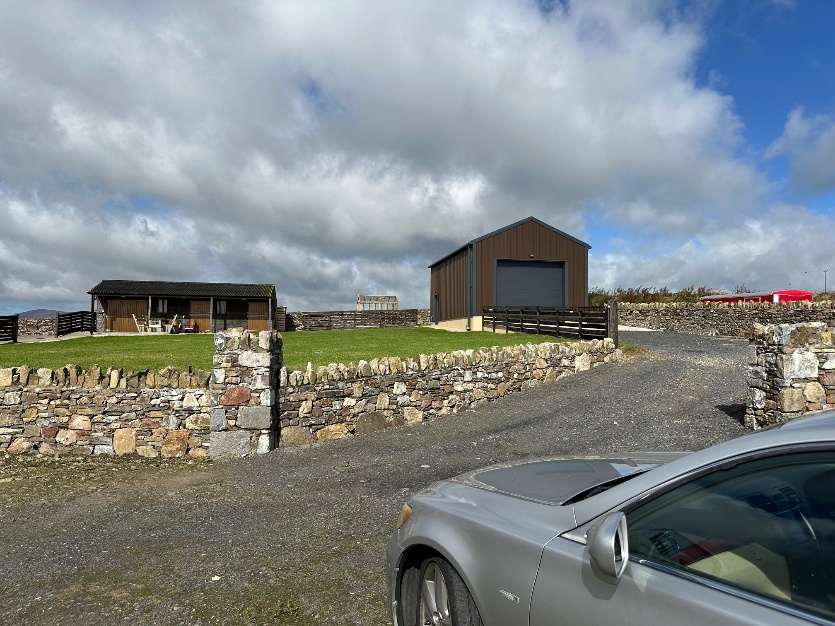
In the case of the stand-alone building proposed here, its design and position accords more fully with planning policy than the boat house does as:
Proposed outbuilding
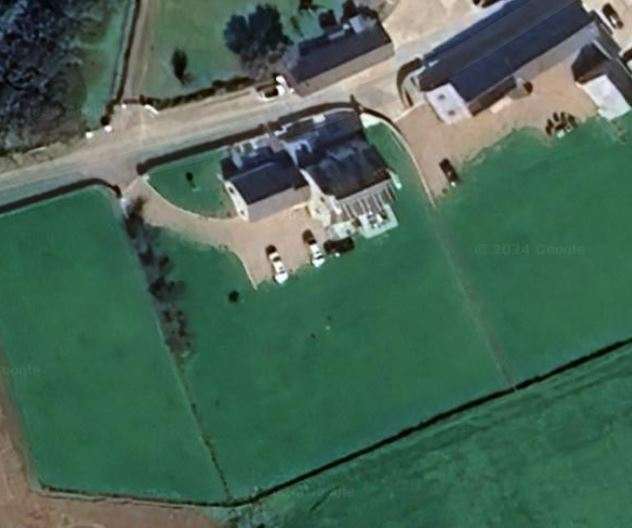


PA 16/01084/B – Hillcrest - Erection of agricultural barn in field adjacent to Hillcrest - APPROVED
Here the proposal was to erect an agricultural building at the northern end of the site, alongside and over the hedge from Hillcrest, overall size13m by 9m and 2.4m to the eaves and 3.2m to the ridge, finished in tanalised timber boarding with metal sheeting on the roof.
In her assessment the planning officer advised the following:
6.3 The siting is as close to the existing dwelling, the closest existing building, as is practicable which will limit its impact, as seen behind Hillcrest rather than as an isolated building in the countryside. The building is also modest in area and height which will assist in the reduction of its impact. The building will be visible from the right of way, but alongside an existing dwelling and of modest size and whose use is compatible with the expected management of the land.
6.5 The introduction of new buildings in the countryside should only be accepted where it is absolutely necessary and whilst it is of concern that this may be necessitated due to property being sold, in this case, the visual impact of the new building is limited due to its size and position and the circumstances around the proposal are considered to justify approval of the application. A condition should be attached which requires the removal of the building should it no longer be required or used for its intended purpose.
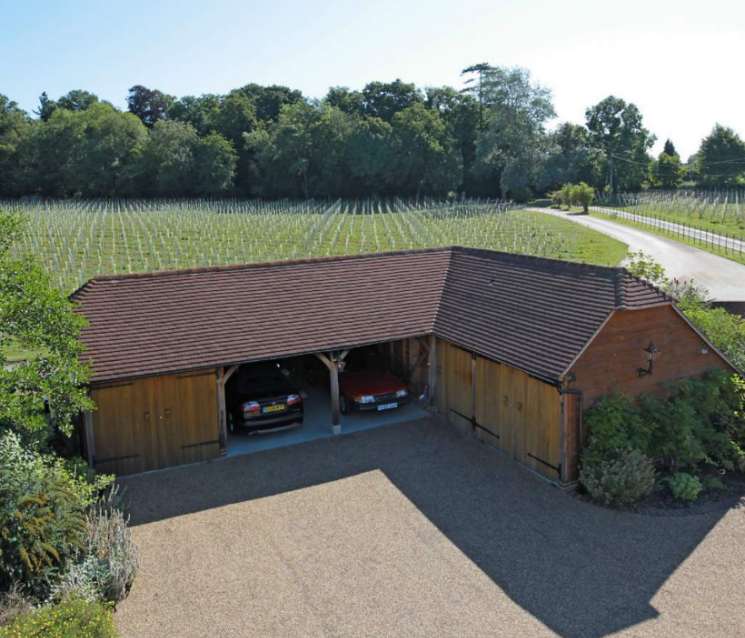
Proposed outbuilding
We believe these proposals here align much better with planning aspirations than the Hillcrest shed that received approval at the outset as:
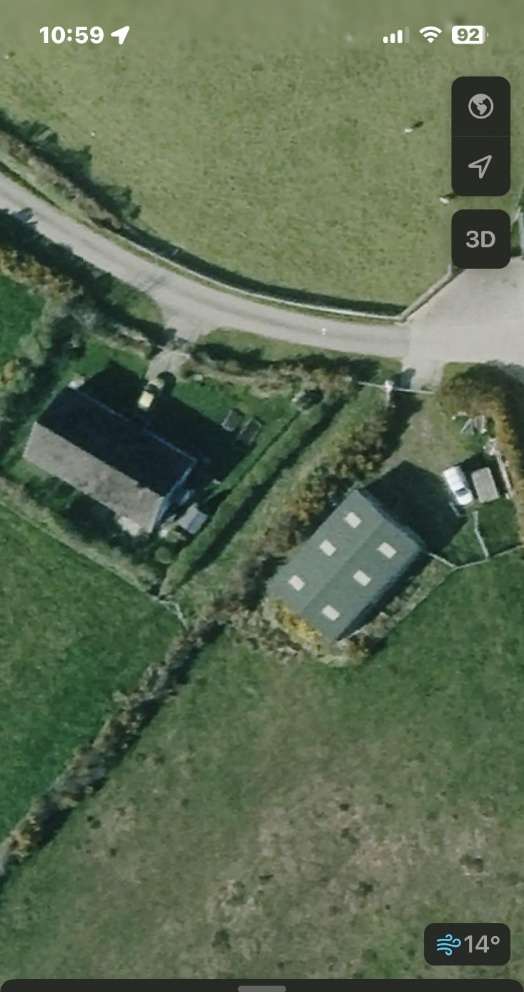
14/01412/B - Cregs Weld -– Erection of a replacement general storage building - APPROVED
Like the application currently under consideration, the propsal here was the replacement of the existing outbuilding with a new building to accommodate storage space for the applicant's tractor, trailers, domestic vehicles and stables.
The size and impact of the proposal were not considered unreasonable and as such was recommended for approval.
Whiles we appreciate the stand alone building proposed here is not replacing anything that exists, its use aligns fully with what was considered appropriate in terms of Cregs Weld, and its more in keeping stable like design, modest size, and position in close proximity to the existing house and hardstanding mean an approval here is equally valid.
With regard to the extension of the house, we believe the following application to be relevant in terms of which planning policies should be applied to this application:
PA 22/00550/B - Yn Rheash, Corlea Road, Ballasalla - Extension to garage annex Extract from the Inspectors Reports
The following policies were considered to be relevant to the application:
However, his assessment and conclusions read as follows:
In summary, the policies that were ultimately considered relevant to that application were limited to EP1 and HP16. As our application is to extend and add an outbuilding within the residential curtilage of a traditional style property in the countryside the corresponding policies that would apply here are EP1 and HP15
Turning again to this application, the design of the existing house is traditional in nature with the existing orangery being an established non-traditional form.
In 6.10 the planning officer advises “there is no particular Policy in IOM SP 16, relating to the provision of outbuildings and ancillary structures in the curtilage of a dwellings in the countryside. With this in mind it is considered the provision of Housing Policy 16 applies. This restricts the extension of nontraditional dwellings where this would increase the impact of the building as viewed by the public – the site, whilst not readily visible from the main road network, is visible from the public road in the approach to Balnahowe from the south-west”
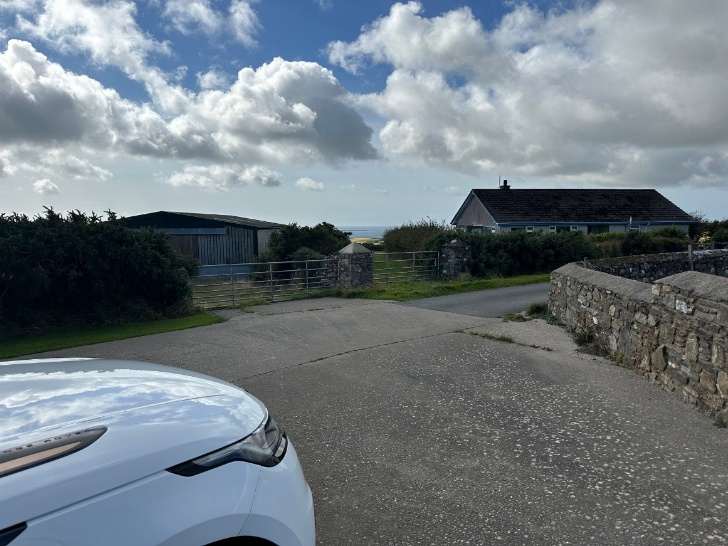
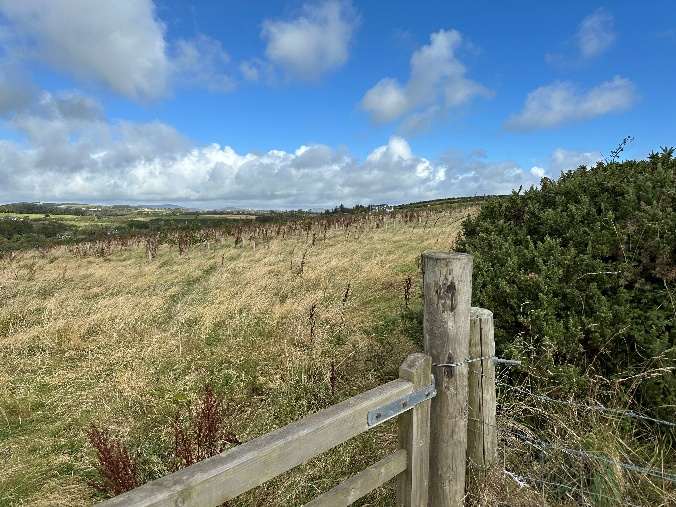
We have several comments to make in this respect. Firstly, we contend this is a traditional dwelling where HP 15 applies rather than the extension of a non-traditional dwelling where HP16 applies. Even if the building is considered non-traditional, the stand-alone building is not attached so cannot be considered an extension to the house. Regardless of both these comments, as can be seen from the photographs that follow, taken at sewage treatment areas where hedgerows otherwise preclude visibility, the site cannot be seen from the nearest public road that leads to Meary Veg. As such there can be no increase in the impact of the building as viewed by the public.
At 6.11 the planning officer then advises “that the provisions of HP15 apply regardless of appearance of the outbuilding which is here being viewed as an extension to the dwelling because it would sit approximately 10.0m from the house, and owing to the ancillary level of accommodation it proposes, and lawful uses which it could be put to”
As previously advised, this outbuilding is stand-alone where no lawful uses could apply.
Single storey side extension (pantry) = 22.68m2 Single storey porch extension = 8.5m2 Single storey, Orangery extension = 30.62m2 Total increase proposed 61.8m2
The previous extensions of 74.08m2 and the extensions proposed now, 61.8m2, total 135.88m2. This is a net increase of circa 39% of the original house size of 348.23m2 and well within the 50% increase referred to in HP15.
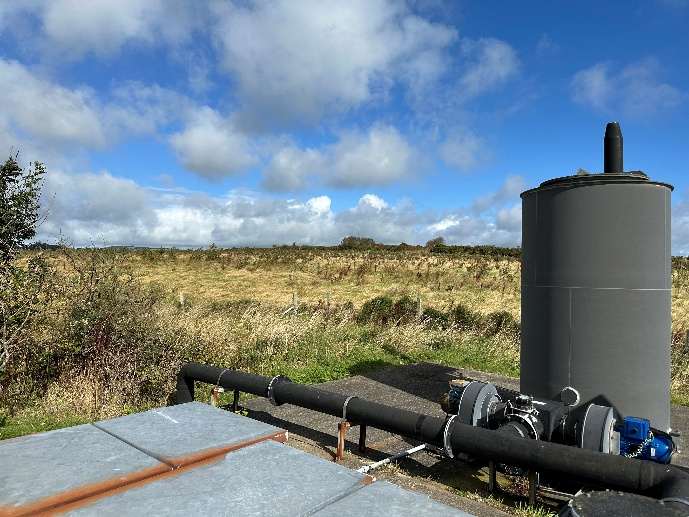
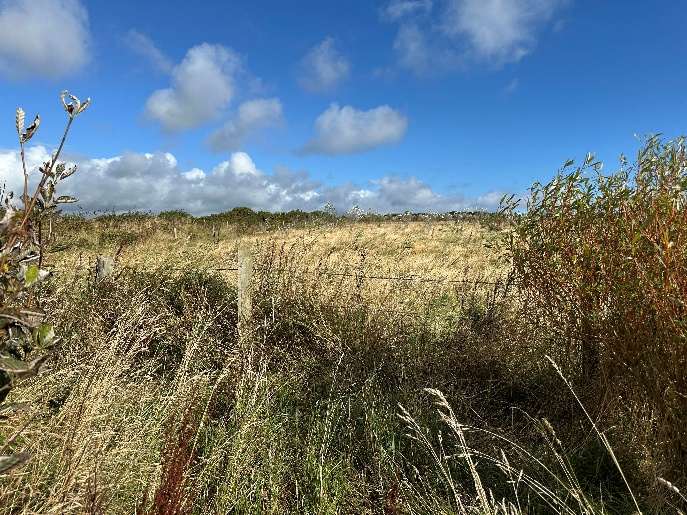
However, as evidenced above, the outbuilding sits within a residential curtilage, it has been positioned as close as it reasonably can to the existing house and hardstanding, its size is modest when viewed in the context of the large three storey house, and its stable like design is very in keeping with its rural setting.
As highlighted in our design report, the proposals were discussed at great length with the planning department. GP2 and HP15 requires the design to be in keeping with the current building. Whilst this was the starting point for the extension to the orangery, through extensive pre-panning consultation the design of the orangery was amended at the planning officer’s behest to reflect what he in consultation with his co-workers wanted to see as the orangery approved in 2016 was no longer considered an appropriate design solution. At no point was a more traditional solution suggested.
Whilst the single storey orangery design is non-traditional in nature, the increase of 30.62m2 of the non-traditional building compared to a final building floor area of circa 484m2 when complete is nominal in the context of the site, and its lack of visibility from anywhere bar from within the site means its impact on the surroundings is nominal.
R1. The principle of development is unacceptable because it would result in the storage building and Orangery extension being out of scale and character with the countryside location. In this case, the close proximity of the storage and garage/workshop building to the dwelling, is read as an extension to the dwelling. Policy H15 of the Isle of Man Strategic Plan 2016, permits up to 50% increase in floor space for rural extensions. The combined floor-space of the new structures, together with those previously approved and implemented, would represent a total increase of 77.95% floor area, which demonstrably exceeds this floor-space limit. Therefore, the proposal would result in an excessive form of development in the open countryside, out of scale for the site and its rural surroundings, and would be contrary to the provisions of Strategic Policy ST2; Spatial Policy SP5; General Policy GP2 b) and c); General Policy GP3 a), b) and c); and Housing Policies H15 and H16 in the Isle of Man Strategic Plan 2016; and, Planning Circular 3/91.
As evidenced above, the starting point for this reason for refusal is incorrect. The storage building is clearly a stand-alone building sitting minimum 5.2m away from the current garage.
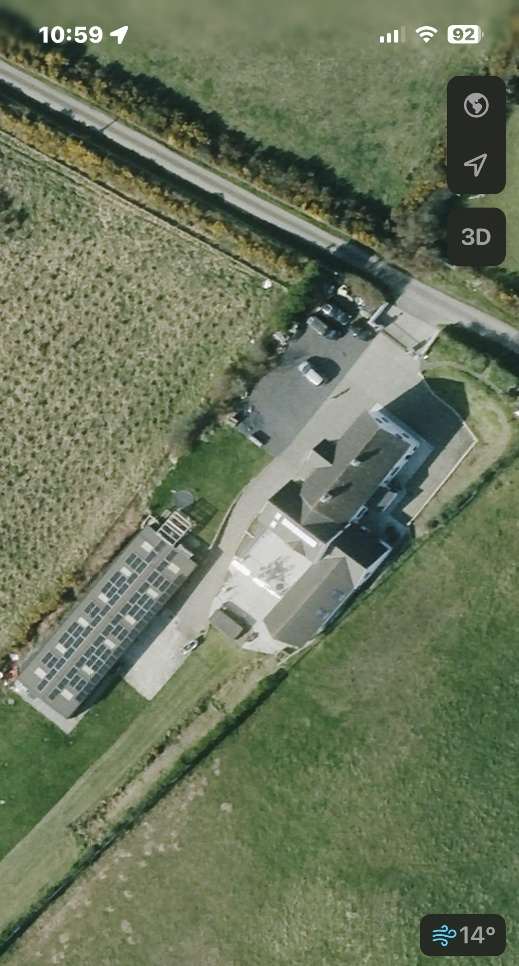
All elements of the proposals are single storey. The overall footprint of the house and outbuilding amount to 413m2 (278m2 extended house + outbuilding of 135m2) compared to a site area of 3950m2 which cannot be seen as “an excessive form of development in the open countryside, out of scale for the site and its rural surroundings”
Our comments in relation to each of the policies cited in this refusal are as follows:
Strategic Policy 2: New development will be located primarily within our existing towns and villages, or, where appropriate, in sustainable urban extensions(2) of these towns and villages. Development will be permitted in the countryside only in the exceptional circumstances identified in paragraph 6.3.
Spatial Policy 5: New development will be located within the defined settlements. Development will only be permitted in the countryside in accordance with General Policy 3.
All works are to be carried out within an accepted residential curtilage and policies concerning new development in the countryside should not apply. As evidenced above, this is borne out by a the Planning Inspector‘s report in relation to PA 22/00550/B where new development in the countryside policies were used to support the planning department’s refusal of an application for the extension of a garage annex within a residential curtilage where that site also sits within the countryside, were deemed not applicable - see quote below.
“40. The starting point in my deliberations must be what has been applied for and that is as set out above. Namely, an extension to the garage annex as set out in the application form. However, the reasons for refusal, officer’s report and subsequent appeal statement have considered the application to be tantamount to a separate dwelling within the countryside.
As such we contend the relevant policies applicable to this application are limited to EP1 and HP15
General Policy 2: Development which is in accordance with the land-use zoning and proposals in the appropriate Area Plan and with other policies of this Strategic Plan will normally be permitted, provided that the development:
As highlighted in our design report, the proposals were discussed at great length with the planning department. The extension to the existing orangery that started off as a like for like addition was amended at the planning officer’s behest to reflect what he and his co-works wanted to see as the orangery approved in 2016 was no longer considered an appropriate design solution. At no point was a more traditional solution suggested.
No concerns re the garage/storage building were expressed other than the applicant should keep it as low as possible, which it is, and keep it within the existing residential curtilage, which it is.
The location of the stand-alone building, which is set forward and to the side of the main house, makes best use of the existing hardstanding, its design is rural in nature and as evidenced earlier, less impactful than others recently approved in the area.
The scale of all elements of the proposals fully accord with the size of the site where once extended the footprint of building occupies just over 10% of the site (416m2 compared to an overall site area of 3950m2)
All elements of the proposals are single storey meaning the overall impact on massing is nominal, and being located on the south side of the house with the garage set as low as possible the effect on the amenity of neighbours is also nominal.
General Policy 3: Development will not be permitted outside of those areas which are zoned for development on the appropriate Area Plan with the exception of:
However, this is not a redundant use site where redevelopment is proposed. All works are to be carried out within a residential curtilage where policies concerning new development in the countryside should not apply.
Housing Policy 15: The extension or alteration of existing traditionally styled properties in the countryside will normally only be approved where these respect the proportion, form and appearance of the existing property. Only exceptionally will permission be granted for extensions which measure more than 50% of the existing building in terms of floor space (measured externally).
As evidenced at the start of our comments in relation to R1, the increase in floor area is within the 50% that would normally be considered acceptable under HP15 and taking into account all matters covered under GP2 including the planning department’s pre-submission advice, we contend the design accords with the ethos of HP15
Housing Policy 16: The extension of non-traditional dwellings or those of poor or inappropriate form will not generally be permitted where this would increase the impact of the building as viewed by the public.
Given the house is deemed to be of traditional form where HP15 applies, we contend this policy cannot apply as well. Regarding Planning circular 3/91, whilst the house is predominantly of traditional design, the orangery that was approved in 2016 is not. As highlighted in or design report submitted with the application extensive pre-planning consultations took place and the planning departments guidance followed. At no point was the applicant advised to follow a more traditional route.
R2. The proposed extension to the 'Orangery' is unacceptable because it would be out of scale and keeping with the dwelling on site. Its poor design would result in it appearing as a visually intrusive, and incongruous addition to the traditional Manx farmhouse appearance of the host dwelling. Whilst views of the site and surroundings are limited it would represent a large, oversized structure which would be poorly related to its rural surroundings and as such it would be contrary to the provisions of Policies GEN2 b) and c); GEN3 c) H15; ENV1 and ENV2 in the Isle of Man Strategic Plan 2016 and, Planning Circular 3/91.
As evidenced above, the design of the extension to the orangery evolved through extensive pre-planning consultations, primarily in order to address the planning officer’s concerns with the style of the orangery that was approved in 2016.
Our response in respect of GP2 remain as follows: The proposals were discussed at great length with the planning department. The extension to the existing orangery that started off as a like for like addition was amended at the planning officer’s behest to reflect what he and his co-works wanted to see as the orangery approved in 2016 was no longer considered an appropriate design solution. At no point was a more traditional solution suggested. No concerns re the garage/storage building were expressed other than the applicant should keep it as low as possible, which it is, and keep it within the existing residential curtilage, which it is. The location of the stand-alone building, which is set forward and to the side of the main house, makes best use of the existing hardstanding, its design is rural in nature and as evidenced earlier, less impactful than others recently approved in the area.
The scale of all elements of the proposals fully accord with the size of the site where once extended the footprint of building occupies just over 10% of the site (416m2 compared to an overall site area of 3950m2)
All elements of the proposals are single storey meaning the overall impact on massing is nominal, and being located on the south side of the house with the garage set as low as possible the effect on the amenity of neighbours is also nominal.
As evidenced earlier and in our appeal request submission, the site cannot be seen from public roads in the area. Taking all the above into account, including the planning departments pre-planning guidance, we contend the proposals accord with the ethos of GP2 In terms of GP3 as stated in our response to R1 this is not a redundant use site where redevelopment is proposed. All works are to be carried out within a residential curtilage where policies concerning new development in the countryside should not apply. Regarding HP15, as evidence in our response to R1 the increase in floor area is within the 50% that would normally be considered acceptable; and taking into account all matters covered under GP2 including the planning department’s pre-submission advice, we contend the proposals accord with the ethos of HP15 In respect of the other policies referred to in this refusal we would advise the following:
As previously stated, all works are to be carried out within an accepted residential curtilage and policies concerning new development in the countryside should not apply.
This applies equally to Panning Circular 3/91 that specifically deals with development in the countryside rather than within an existing residential curtilage.
R3. The proposed erection of the detached storage building is unacceptable because it would result in a large scale, single storey structure in a visually prominent part of the site within this open rural landscape which would be out of scale, character and keeping with this countryside location and its surroundings. As such, it would be contrary to the provisions of Policies GEN2 b) and c); GEN3 c), H15; and, Planning Circular 3/91. Furthermore, this element of the proposals would be contrary to the provisions of Environment Policy ENV1 which seeks to protect the countryside for its own sake; and Environment Policy ENV 2 which indicates that such development will only be permitted where:
a) the development would not harm the character and quality of the landscape; or (b) the location for the development is essential." In this case, neither of these criteria in Policy ENV2 are met.
As per our response to R1 and R2 our comments in respect of GP2 remain as follows: The proposals were discussed at great length with the planning department. The extension to the existing orangery that started off as a like for like addition was amended at the planning officer’s behest to reflect what he and his co-works wanted to see as the orangery approved in 2016 was no longer considered an appropriate design solution. At no point was a more traditional solution suggested. No concerns re the garage/storage building were expressed other than the applicant should keep it as low as possible, which it is, and keep it within the existing residential curtilage, which it is. The location of the stand-alone building, which is set forward and to the side of the main house, makes best use of the existing hardstanding, its design is rural in nature and as evidenced earlier, less impactful than others recently approved in the area. The scale of all elements of the proposals fully accord with the size of the site where once extended the footprint of building occupies just over 10% of the site (416m2 compared to an overall site area of 3950m2) All elements of the proposals are single storey meaning the overall impact on massing is nominal, and being located on the south side of the house with the garage set as low as possible the effect on the amenity of neighbours is also nominal. As evidenced earlier and in our appeal request submission, the site cannot be seen from public roads in the area. Taking all the above into account, including the planning departments pre-planning guidance, we contend the proposals accord with the ethos of GP2 In terms of GP3 as stated in our response to R1 and R2 this is not a redundant use site where redevelopment is proposed. All works are to be carried out within a residential curtilage where policies concerning new development in the countryside should not apply.
Regarding HP15, as evidence earlier and in our response to R1 and R2 the increase in floor area is within the 50% that would normally be considered acceptable; and taking into account all matters covered under GP2 including the planning department’s pre-submission advice, we contend the proposals accord with the ethos of HP15.
Re planning circular 3/91, as previously stated under R1 and R2, all works are to be carried out within an accepted residential curtilage and policies concerning new development in the countryside should not apply.
Aso as stated under R2 in terms of EV1 and EV2 all works are to be carried out within an accepted residential curtilage and policies concerning new development in the countryside should not apply.
All development is proposed within an accepted residential curtilage meaning all policies associated with new development in the countryside should not apply.
As such we contend the relevant policies are primarily General Policy 2 and HP15 The overall increase if floor area of the house is well within the 50% increase considered acceptable under HP15. Whilst the extension to the orangery is more contemporary, the orangery to which it is being attached is non-traditional with extensive pre-planning advice influencing the design of the extension to the Orangery The stable like design of the stand-alone building is in keeping with its rural location with its position making best use of existing infrastructure. No public views of the site are adversely affected, and, due to the location of the extensions and stand-alone building, the proposals have no adverse impact on the amenity of neighbours. As such, we believe the proposals fully accord with all relevant policies associated with of IOM SP 2016
Architecture in Mann September 2025
Copyright in submitted documents remains with their authors. Request removal
View as Markdown