Loading document...
Ian Kelly
Ballanicholas Farm Marown IM42HD
Planning Appeals Secretary DEFA Planning & Building Control Division Murray House Mount Havelock Douglas IM1 2SF
Redacted
23.03.2025
Dear Sir/Madam We hereby submit our formal response to the two points raised by Mr. Stanley on behalf of and from the Whitehouse at the Braaid in their appeal against our planning application No. 24/91306/B.
Redacted Redacted
Over the years, we have actively sought to purchase land from our landlords; however, our efforts have been unsuccessful. Furthermore, we have highlighted the significant disparity between land values and its potential earning capacity, which has become increasingly imbalanced.
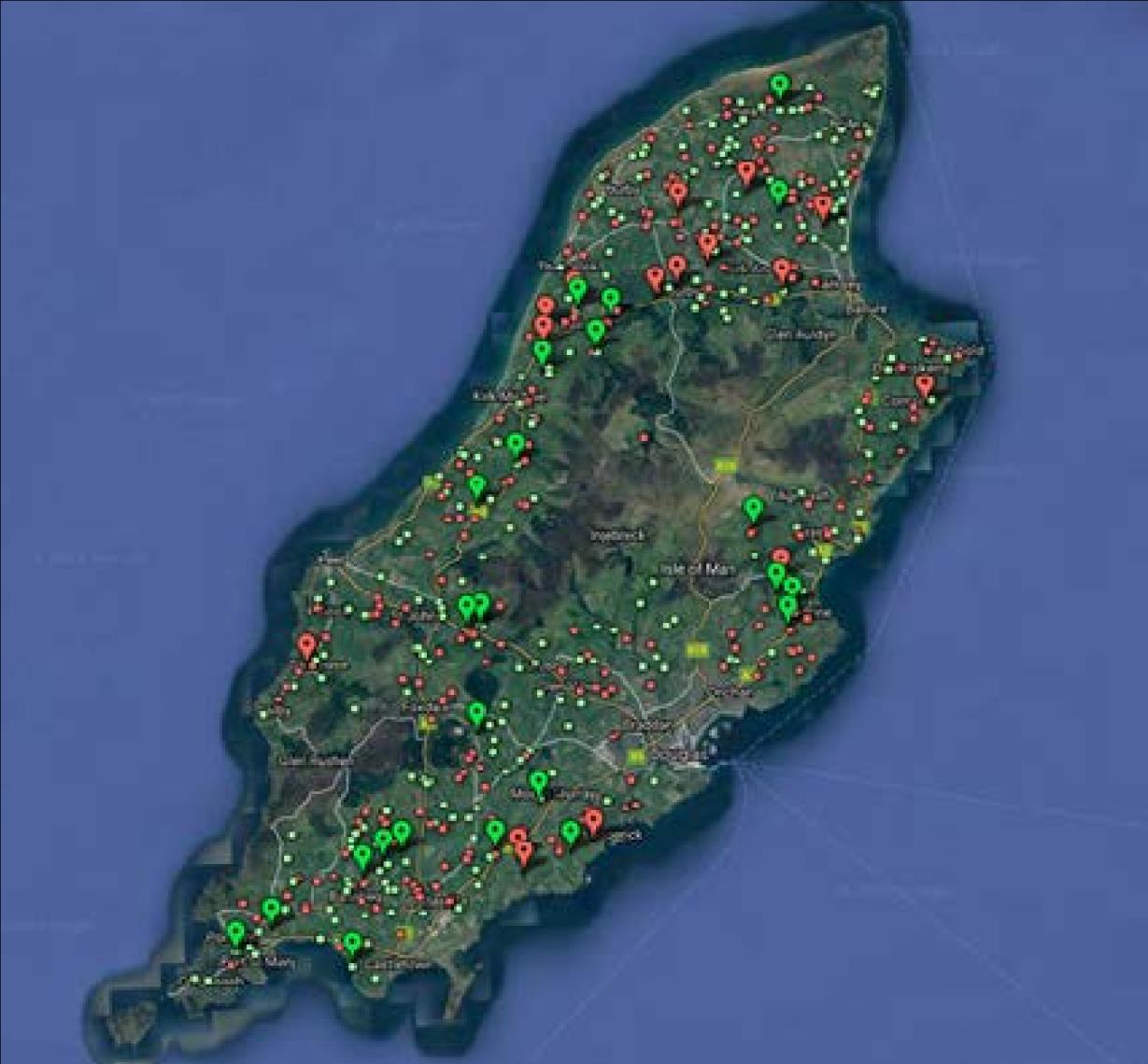
To provide further context, we have attached an excerpt from the Isle of Man Government Cabinet Office, Rural Change & Housing issues Document, evidence policy paper P.EP 02 which highlights the concerning decline in the number of farms and farm dwellings, particularly in the southern region of the island.
recent years, the farm has been fragmented, and the farm steading has been converted into a luxury dwelling, now known as Bluebell House, leading to the loss of its original identity as a farm. Additionally, the smithy was demolished to facilitate the construction of Holmlea House.
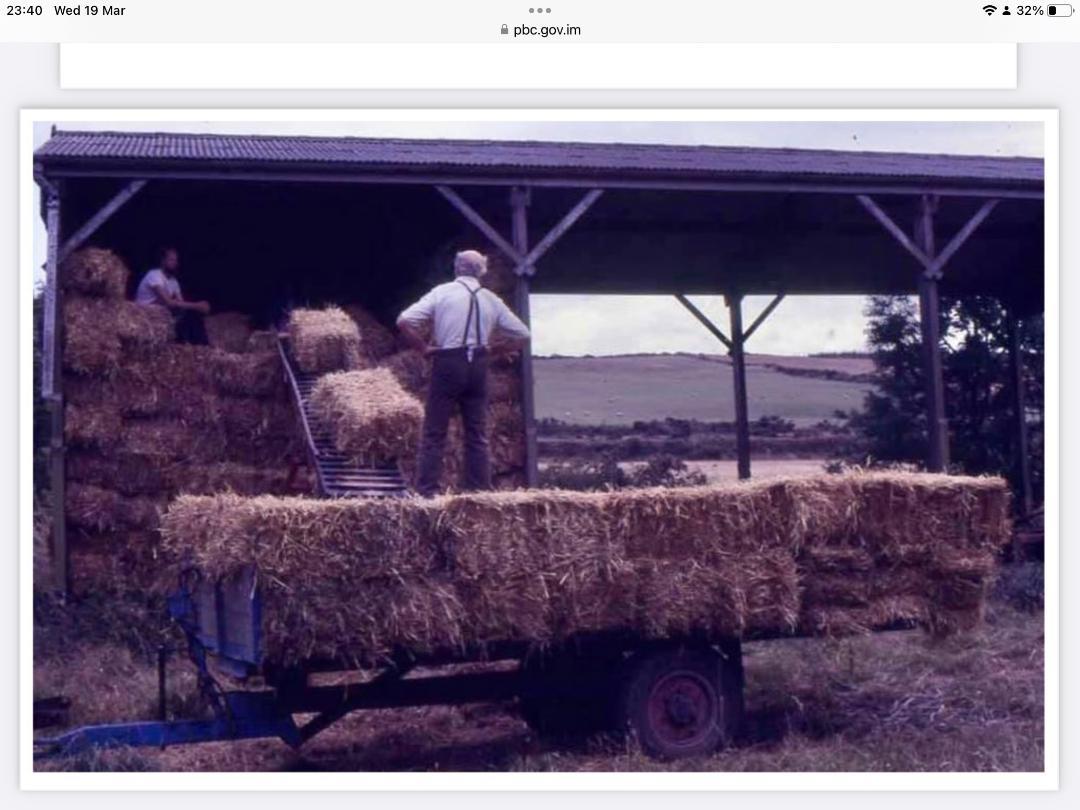
To illustrate this historical context, we have attached a photograph taken in the mid1980s, depicting my father and me stacking bales of straw in the barn at Braaid Farm when it was still a functioning agricultural unit. Unfortunately, the barn has since been demolished, and the area now forms part of the garden of Bluebell House.
It should be noted that, in our initial planning application, we had originally proposed siting the barn approximately 100 meters away from the house. However, at the request of the Planning Committee, this location was amended.
We have collaborated with the Manx Wildlife Trust to develop a comprehensive landscaping plan that will enhance and support local biodiversity. Additionally, it is important to note that Manx National Heritage has raised no objections or comments regarding our application. Similarly, the Society for the Preservation of the Manx Countryside and the Environment, as well as the Isle of Man Natural History and Antiquarian Society, have neither opposed nor commented on the application. The absence of objections from these key organizations suggests that the proposal does not present significant concerns from a heritage, environmental, or historical perspective.
Furthermore, it is pertinent to highlight that and
Redacted Redacted Redacted
(acting on their behalf) previously objected to planning applications numbered 24/00001B and 22/01148B. Their statements indicate that they were fully aware of the likelihood of a subsequent application being submitted before purchasing their property and relocating to the hamlet.
The context in which these objections have been raised should therefore be carefully considered. The absence of opposition from recognized heritage and environmental organizations, combined with the prior knowledge of the objectors regarding potential future applications, should be taken into account when evaluating our planning submission.
During last year’s lambing season, we encountered extremely challenging weather conditions. On the night of April 12th, we endured relentless heavy rain and cold temperatures, leading to the unfortunate loss of numerous lambs. The following morning, we were faced with the soul-destroying task of collecting the deceased lambs for disposal at the animal waste facility. A photograph of the lambs before their transportation to the facility has been attached for reference.
We deeply regret the necessity of submitting such a graphic image to the Planning Department. We had hoped that a reasoned explanation would suffice to convey the necessity of the barn; however, it appears that certain parties have failed to grasp the
severity of our circumstances. This is the stark reality of farming without a proper base equipped with essential facilities.
We are perplexed by continued objection to this application, particularly given his professional role as a veterinary surgeon. Notably, his colleague, Mr. Marty Viljoen BVSc, has submitted a letter in support of our application, emphasizing the necessity of the development on the grounds of animal welfare. The Isle of Man Government Department of Environment, Food & Agriculture has also formally supported our application.
Redacted
It is difficult to reconcile opposition to the construction of a barn intended to enhance the welfare of our livestock with his professional and ethical responsibilities as a veterinary surgeon.
Redacted
Our application has been favorably assessed by two independent planning officers, Mr. Toby Cowell and Mr. Russell Williams, both of whom provided reports recommending approval.
On November 11, 2024, our application was presented to the Planning Committee with a recommendation for approval. However, the committee members expressed concerns regarding the proposed siting of the barn and, following a non-unanimous decision, refused the application. Subsequently, the committee requested a revised plan to position the barn closer to the dwelling. This amended application was resubmitted and received unanimous approval from the Planning Committee on February 10, 2025.
We appreciate your time in reviewing our response and trust that the points outlined above will be duly considered in the evaluation of our application.
Yours sincerely, Ian and Carol Kelly List of Documents Submitted: Planning Appeal Letter of Response Consultation from DEFA Agricultural Policy Manager Illustrative Map Showing Location of Agricultural Dwellings Letter of Support from Milan Veterinary Practice Letter of Support from Raymond Cox Veterinary Surgeon Photo of Barn being loaded with hay Photo of Dead Lambs following one wet night
Agriculture & Food Directorate Thie Slieau Whallian Foxdale Road, St. Johns, IM4 3AS Tel: (01624) 695742 e-mail: [email protected]
Toby Cowell MRTPI Principal Planning Officer Planning and Building Control Directorate Department of Environment, Food and Agriculture (DEFA) Murray House, Mount Havelock, Douglas, Isle of Man, IM1 2SF
04th July 2024
Dear Mr Cowell MRTPI,
I write in response to your query;
Regarding applicants Ian & Carol Kelly Address: Fields 321756, 321755, 321758, adjacent to A26, The Braaid, Marown Application Details: To erect a new farmhouse with an attached garage, and a new agricultural barn.
I would be very grateful if someone from your team could take a look at the above application and advise whether sufficient justification has been provided for the proposed agricultural workers dwelling and barn in this location in Braaid. Please note thata previous application was recently refused, and the agent has provided an updated planning statement and revised the drawings in response.
Kind regards,
Toby Cowell MRTPI
Principal Planning Officer
As the Agricultural Policy Manager, I have assessed the application from Ian and Carol Kelly. The assessment is based on the calculation of standard labour unit requirements, functional requirements for the proposed dwelling, and business requirements for the proposed agricultural development.
Ian and Carol Kelly Labour Requirement
Assessment - does the existing/proposed business justify at least 1900 man hours per year per agricultural dwelling using standard labour data?
Based on the worksheet for the calculation of standard labour unit requirements, the Kellys' farming operations justify the need for a new agricultural dwelling. The calculation details the following;
• Total Crops Hours: 468.0 hours per year
1 | P a g e
Darren Kelly, the applicant’s son will also reside and operate his farming business from the proposed development.
Combined Total:
• Total Standard Man Hours per Year: 6,126.5 hours
This calculation confirms that the Kellys' agricultural operations equate to 3.06 full-time labour units, exceeding the minimum requirement of 1 full-time labour unit (1900 hours/year). Thus, the proposed business justifies the need for at least one agricultural dwelling based only on the labour requirement calculation.
Functional Requirement Assessment - what reasoning is there for the house being on the agricultural unit itself rather than a nearby village/town? The proposed farmhouse and barn would service the functional requirements for the Kellys' farming operations, which include:
Many farmers manage numerous dispersed parcels of land all across the island and do not reside directly on-site, instead utilising remote CCTV, changes to farming practices e.g changing lambing patterns and block sizes, and using out-of-hours contracted labour, however, most do still operate from a single base or farm yard. In my experience this nearly always includes livestock handling facilities and a central livestock shed capable of meeting the farms stocking requirements at key times, e.g. lambing time. The Kellys proposed barn and housing will enable this to be done from a central location.
2 | P a g e
Assessment - Business Requirement
Is there evidence of the business/proposed business being financially secure and viable? This would normally only be considered if the other two considerations appeared marginal.
The financial viability and security of the Kellys' farming business are evident from their detailed planning statement and the long-term commitment to agriculture. Key points include:
Conclusion
Assessment - the validity of the application:
Noting only a small element reaching approximately 5 acres or 3 fields of the applicant's holding is situated adjacent to the site the planning application relates to I still consider the farming enterprise as a whole business unit as it is operated under one farm holding business number and has one livestock holding number associated to it, because of this the application indicates this will function as the primary farming location for the whole business.
The application meets the key requirements of the Departments considerations for the proposed development which states businesses are expected to justify at least 1 full time labour unit (=1900 hours/annum, equivalent to 39 hours per week) for each dwelling house, whilst also taking into account all of the dwellings currently available to the business.
In the Kellys case, they achieve a total of 6126.5 hours based on the 2024 agricultural census returns received by the Department in May 2024
A farmhouse with an attached garage and an agricultural barn is in line with the Agriculture and Food Directorate’s calculation for need based on standard labour units and agricultural practices.
Andy Cooper
Agricultural Policy Manager.
3 | P a g e
Illustrative map showing location of agricultural dwellings extract from Cabinet Office Rural Change and Housing Issues Evidence Policy Paper P.EP 02
green dot: agricultural dwellings associated with an active farm (212 nr.) green mark: agricultural dwellings associated with an active farm and subject to an agricultural occupancy condition (24 nr.)
red dot: former agricultural dwellings no longer associated with an active farm (226nr.)
red mark: former agricultural dwellings no longer associated with an active farm but still subject to an agricultural occupancy condition (16 nr.)
To whom it may concern
This letter is in support of Ian & Carol Kelly from Ballanicholas farm, The Garth, Marown IM4 2HD for their application to build a shelter for their animals and a house for the Herdsman on Field number 324673.
In this letter we will be looking at the importance of good housing facilities to help improve herd health and the need for good observation to detect health problems in stock at an early stage.
Good housing facilities and good observation of the animals help to improve animal welfare and support the five freedoms.
Good housing facilities and good observation of the animals are important in helping Veterinarians in achieving optimum treatment success.
Signed Redacted
B H Viljoen BVSc (Member of the Royal College of Veterinary Surgeons)
Lhannon Shee, School Lane, Santon, IM4 1EG.
16/11/2023
To Whom it May Concern,
Re: Proposed development of a farmhouse and barn at the Braaid adjoining the A26.
I am a Veterinary Surgeon having qualified in 1984 and I have worked on the Isle of Man since 1987, recently retiring from full-time practice. I have dealt with farmers and farm animals during this time, and I have witnessed many changes in Manx farming in the last 36 years. I have known Mr Ian Kelly for over 30 years as a client farmer, farming from a few different premises over the years. Wherever he has been Ian has persevered with farming and he is hard working and dedicated.
Manx farming has been in a steady decline over the decades, but this has become more acute in recent times. The number of productive farms has drastically decreased with very few younger people coming into the industry. The picture of a family run farm with all members actively involved on the farm is rapidly becoming a rarity. More commonly it is the older parent running the operation single handed with the other family members employed elsewhere. This has several concerning ramifications namely the risk to animal welfare, uncertain future food security and the stewardship of the countryside. The countryside is not a theme park but is an extremely valuable resource both for farming and for the enjoyment of the population.
The ideal scenario for a well-run farm is to have a good stockman on hand with adequate infrastructure to ensure good animal husbandry. Farming is a time-consuming occupation, and it cannot be done correctly if one is to keep “office hours” only. Caring for animals, treating sick ones and being on hand for lambing etc frequently requires the attention of a farmer not only during the day but also during the night. Being on-site is a pre-requisite, in my opinion, for optimum management and farms with a resident stockman are generally better run. I feel that the general safety and well-being of stock is better served with a constant presence on the property.
It is important that Manx agriculture is supported, and farmers are encouraged to continue the hard work of food production. Placing obstacles in the way of individuals who have a proven track record with farming does not help this aim. The average age of farmers is 59 years, and this is a real concern for the future of agriculture. The industry cannot afford to have farmers giving up the job and failing to attract younger members.
The countryside is a significant asset, and it is to be enjoyed by all. However, the ideal picture of the Manx countryside is not one that happens by accident. Rather the well-tended scenery that we enjoy is the result of good and constant stewardship by Manx farmers and without their hard work it would be a very different scene. Every parish needs a number of viable productive farms and hard-working
farmers to keep the countryside in the manner that we have come to expect. We should be supporting these.
I would support Ian's application for a new farming development as a positive move for the future of Manx farming and the local area. I urge you to consider this planning application favourably.
Yours sincerely,
Raymond Cox MVB, MRCVS.
Copyright in submitted documents remains with their authors. Request removal
View as Markdown