Loading document...
(Please read in conjunction with documents as per attached issue note)
Introduction This statement has been prepared in support of an application for refurbishment of an existing barn to form a New Dwelling at Briarfield, Grenaby Road, Malew. Site
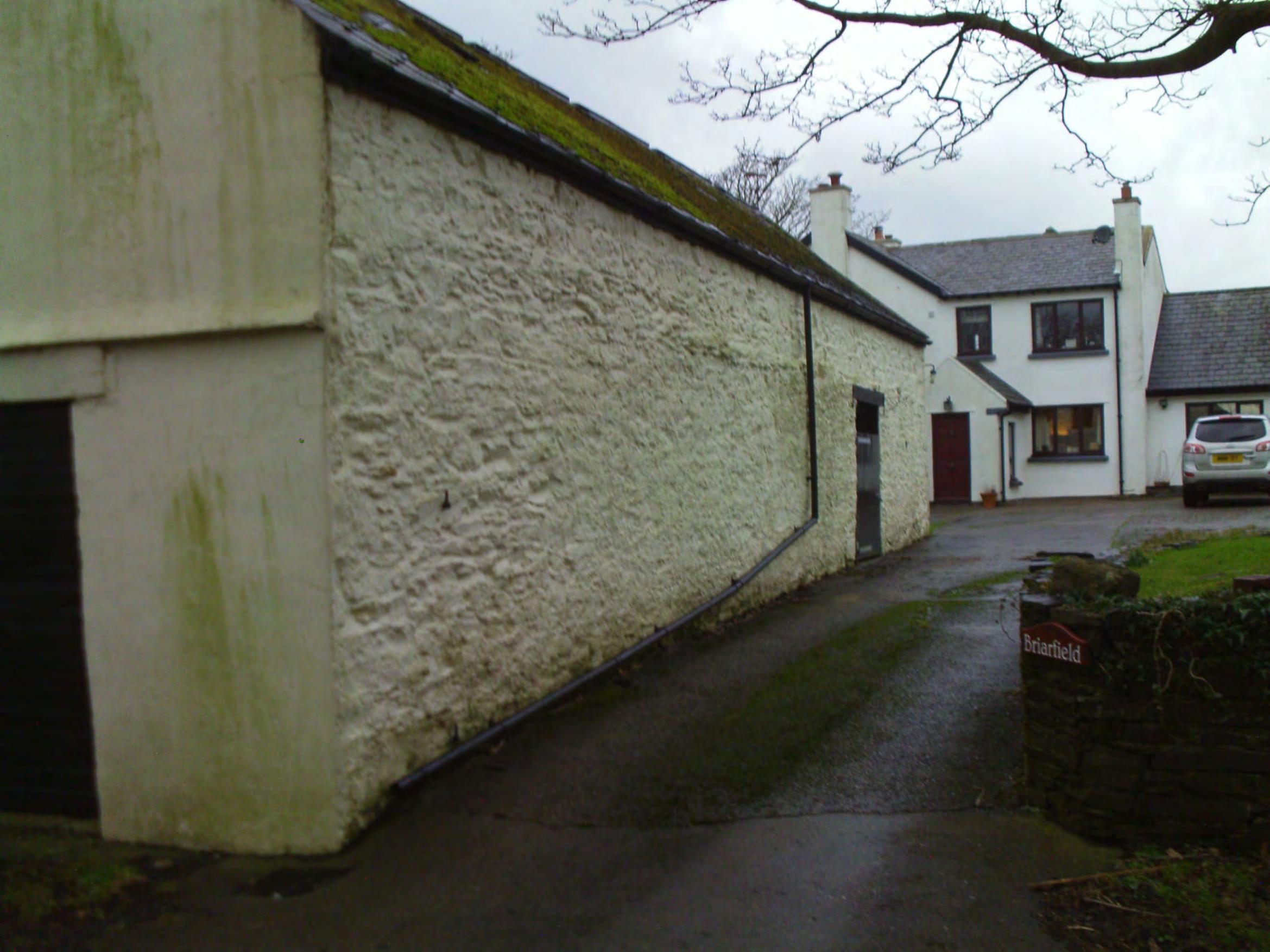
The barn/stables is one of four buildings comprising the smallholding of Briarfield. As well as the house there is a stable block with car port and two stone “barns”. The buildings form three sides of a courtyard, the fourth side abutting the B41 Grenaby Road, with two access points separated by a grassed front lawn. The “barn” which is the subject of this application is on the south side of the courtyard and its south elevation faces onto an orchard which extends as far as Ballavell Farm Road. To the west of the dwelling house is a manege. As well as the area within the immediate curtilage of Briarfield the applicant also owns various fields which are used for grazing and a hay crop. For general views see attached photographs (Appendix 1)
As noted in the Introduction it is proposed to form a dwelling which will provide a Living Room, Kitchen/Dining Room, Utility and WC with two Double Bedrooms, both with en-suite shower/bathrooms on the first floor.
The converted barn will provide separate accommodation for the applicant’s younger daughter. She already lives at Briarfield and it is anticipated that, more and more, she will have to help her parents. Mrs Cryer has osteoporosis which, even now, severely restricts her activities
The barn extends to c 124sqm over two floors, albeit with restricted headroom on the first floor. It has been altered in the past to provide garaging with a modern up & over
Page 2 of 9
door in the east gable end abutting the road. The scheme envisages blocking up this door with a traditionally proportioned window in the new masonry and opening up a former door opening on the south elevation. Otherwise alterations to the building are limited to work to the existing openings and to the roof which is to have the existing asbestos cement slates replaced with natural blue slates. In reroofing the building the structure will be increased to meet modern insulation standards and to improve headroom. As such the ridge height will be raised by c 300mm.
The building will enjoy a south facing garden in what is now an apple orchard with a dedicated parking provision and services which are covered elsewhere in this statement
This application follows on from the earlier scheme for the conversion of the barn (PA 19/01409/B) which was refused both initially and also at Appeal. By official notice dated 30 July 2020 this earlier scheme was refused giving the reasons:
The applicants took this decision to appeal and by official notice dated 01 April 2021 it was again refused for reasons:
Page 3 of 9
Analysis of reasons for refusal With regard to the initial decision: Reason for refusal 1 states:
Not only would what is proposed not comply with HP 11d and sub paragraph a (it would not re-establish the original appearance of the dwelling which is considered desirable in this case as if it were not, then the proposal would fail paragraph c), what is proposed would have a harmful impact on the character of the area due to the unsympathetic alterations to the building which are not in keeping with its current simple form in terms of the new dormers, modern extension with inappropriate doors and canopy and the modern form of glazing in the roadside gable. The proposal therefor also contravenes Environment Policy 1 of the Strategic Plan.
The current scheme is simplified and omits all the items previously considered unacceptable. It respects the original form of the building
Page 4 of 9
Reason for refusal 2 states:
The proposal would result in an intensification of substandard existing accesses and would result in a detrimental impact on highway safety, contrary to General Policy 2h and i of the Strategic Plan.
The current scheme is takes account of the earlier concerns and varies in detail so as to meet General Policy 2h and i of the Strategic Plan.
With regard to the official notice issued following the appeal the reasons for refusal vary slightly from the initial reasons, although there is some duplication it is felt that these, together with any other comments/findings of the inspector require to be addressed in detail.
Reason for refusal 1 states:
The proposed development would, if approved, adversely affect the character and interest of the existing building contrary to Housing Policy 11 of the Isle of Man Strategic Plan 2016.
As noted above the current scheme is simplified and omits all the items previously considered unacceptable. It respects the original form of the building and so complies with Housing Policy 11 of the Isle of Man Strategic Plan 2016.
Reason for refusal 2 states:
The proposed development would, if approved, detract from the open, undeveloped character of this rural landscape contrary to Environment Policy 1 of the Isle of Man Strategic Plan 2016 which seeks to protect the countryside for its own sake.
The current scheme is simplified and omits all the items previously considered unacceptable. It respects the original form of the building and so complies with Environmental Policy 1 of the Isle of Man Strategic Plan 2016.
Page 5 of 9
Reason for refusal 3 states:
The proposed development is contrary to Environment Policy 1 of the Isle of Man Strategic Plan 2016 as no over-riding national need for the proposed development has been demonstrated.
While there is “no over-riding national need” the current scheme meets the other criteria of Environment Policy 1.The building already exist and the scheme only modifies it marginally so this reason should not now apply
Reason for refusal 4 states:
The proposed development would, if approved, be detrimental to highway safety would result in hazardous movements in this section of Grenaby Road as adequate sight visibility splays at the point of access/egress to/from Grenaby Road cannot be achieved in accordance with published guidance.
As noted above the current scheme takes account of the earlier concerns and varies in detail so as to meet traffic safety requirements. In particular we would refer to the submission of HMTC Highways Mann Traffic Consultants included in this application
Notwithstanding the previous references to various Policies the justification for this application is based on Planning Circular 3/89 – RENOVATION OF BUILDINGS IN THE COUNTRYSIDE
Page 6 of 9
of the building and its replacement with blue slates is considered a more sympathetic treatment. Otherwise all finishes are consistent with traditional materials
From the above it can be seen that the barn meets the requirements of the circular
Structural Stability & Redundancy A structural survey by Curtins Consulting Engineers submitted in conjunction with the earlier application is again included (Appendix 2) This was accepted as showing the building as sound and suitable for conversion.
The removal of a mature sycamore tree close to the north elevation of the barn has permitted the widening of the access and this is as recommended by the Highways Authority so it is considered to answer the earlier concerns regarding road safety.
There is already generous parking available on the site and additional allocated parking spaces are included on the site plan. An electric charging point will be installed
In his report, the Inspector also makes reference to concerns regarding the possibility of bats and nesting birds. Our clients have commissioned a Bat Survey which reveals
Page 7 of 9
that there are no bats located in the area. With regard to nesting birds, swallows were/are seen to nest in the barn. There are other buildings within the complex which are already utilised for nesting, so alternative nesting sites are available but provision will be made in any refurbishment to allow nesting to continue on the exterior of the building.
The report by Manx Bat Group is attached (Appendix 3) Trees
In the earlier application a tree survey was submitted to show how adjacent trees would be protected. This is again included but it should be noted that, with approval three palm trees have been, with official approval, removed.
The current scheme omits the extension into the orchard so reduces any potential damage to the adjacent trees. The line of the proposed foul drain connection is marked on the site plan and this respects the tree safety zones recommended by the tree specialist
The Report and recommendations by Manx Roots is attached (Appendix 4)
Services & ancillary facilities Mains Water and Electricity services are available to the barn The existing septic tank has been checked and is adequate for more than one property so the foul drain has been routed to this installation Surface water disposal will all be as existing A bicycle store, bin store and car charging point will be housed in a small out building positioned by the car parking bays
Page 8 of 9
Given the concerns regarding the earlier design approach the current concept is to largely retain the existing building. Planning Circular No 3/89 – Renovation of Buildings in the Countryside sets out the criteria for such work. There are no extensions on plan and in re-roofing the building the ridge will rise by only 300mm. The existing asbestos slate roof will be replaced by more traditional blue slates and the garage door opening on the east gable will be blocked up, while a former door opening on the south elevation will be re-opened. Otherwise the simple form is considered to meet both Housing Policy 11 and Environment Policy 1 as it answers the Inspector’s concerns regarding complying with the relevant Planning Policies and the effect of the proposed works on the appearance of the converted building. It is considered that this scheme supported by all the documents submitted answers the objections to the earlier proposals. It is felt that it complies with planning policy, it answers road safety concerns and makes use of a redundant building and therefore should be granted approval
Page 9 of 9
.
.
.
Curtins Ref: IM2842 (B073532).001/WCF/EF Revision: Issue Date: 19 August 2019
Client Name: Mr James Cryer Client Address: Grenaby Road Malew, Isle of Man IM9 3DP
Curtins House, 2011 Stone Street Stonport, Isle of Man, W1 7PZ Tel: 01554530000 www.curtins.org @CurtinsBarn, 754800107721400000, M10001000772140000, 01554530000000000000000000000000000000000000000000000000000000000000000000000000000000000000000000000000000000000000000000000000000000000000000000000000000000000000000000000000000000000000000000000000000000000
This report has been prepared for the sole benefit, use, and information for the client. The liability of Curtins Consulting Limited with respect to the information contained in the report will not extend to any third party.
| Rev | Description | Issued by | Checked | Date |
|---|---|---|---|---|
| 00 | Issue to the Client | CF | CF | 19/08/2019 |
| Author | Signature | Date |
|---|---|---|
| Cecil Fulton | ||
| BSc CEng MIStructE | 19/08/2019 | |
| Technical Director |
| Reviewed | Signature | Date |
|---|---|---|
| Cecil Fulton | ||
| BSc CEng MIStructE | 19/08/2019 |
1.0 Introduction ..... 3 2.0 Observations ..... 4 3.0 Discussion ..... 5 3.1 Structural Comment ..... 5 3.2 Architects proposals ..... 6 4.0 Conclusion ..... 1 5.0 Photographs ..... 1
Curtins Consulting were commissioned by Mr James Cryer to inspect and report on the suitability of existing outbuilding to accommodate conversion work to create ancillary accommodation at Briarfield.
Architectural drawings referenced MCA -S1- O5 and MCA sk05B showing the existing buildings and the proposed conversion work have been prepared by John Cryer RIBA copies of which have been issued to Curtins to assist with the preparation of this report.
Our Mr C. Fulton inspected the outbuilding on Friday 26th July 2019. The weather on the day of the inspection was fine and dry and had been similar in the week prior to the inspection.
The following report deals with the structural condition of the building and it's suitability to accommodate the conversion work and is to accompany a planning application to be made by John Cryer RIBA.
The outbuilding is situated on the western side of the B41 road between Grenaby and Ballasalla. The outbuilding is adjacent the roadside, with an access road leading to the main property being located on the northern side of the outbuilding.
The plan shape of the outbuilding is rectangular, the internal floor plan measuring approximately 14 metres long by 4.2 metres wide. The building is two storey, albeit the headroom at first storey level is compromised by the collars of the A frame roof trusses. Photographs 1-3 inclusive record the north, south and east elevations.
The ground floor space is divided into two rooms, the internal division wall being of stone construction. The first floor space is not sub-divided. The duo pitched roof is clad with asbestos cement shingle slates supported on timber sarking boards which span onto timber purlins 100 millimetre deep millimetre wide located near the eaves, midslope and ridge level.
The purlins span parallel to the long side walls and are supported on the gable walls and internally of the timber A frames, there being four frames spaced equidistant along the length of the building. The rafters of the A frames measured 200 millimetres deep millimetres wide and the collar tie was measured at 180 millimetres deep millimetres wide.
The first floor is of timber joisted construction, the floor joists spanning the width of the building measuring 175 millimetres deep millimetres wide and covered with 25 millimetre deep floor boards.
The ground floor is of solid concrete construction. The external and internal walls are of Manx stone construction. The external walls are lime washed on the gables and laneway elevation, the remaining south side elevation has exposed stonework.
The roadside gable wall has a garage door opening at ground storey level and a personnel door at first storey level. The rear gable wall has a personnel door at first storey level.
The laneway/north elevation has a single opening at ground storey level. The south facing side wall has two door openings and three window openings at ground storey level. External ground level is level with the roadside and rises gently from the roadside to the rear of the building resulting in the ground floor being slightly below external ground level.
Lintels over the openings in the external walls are of stone on the external section of the wall and timber on the internal sections generally however the odd external lintel is of timber construction.
The following structural issues were noted with respect to this outbuilding :- > Condition of the asbestos cement shingle slates > Lean in rear gable wall. > Condition of roof purlins supported on the west facing gable. > Timber inner lintels > Limited headroom at first floor level. > Cracking to the external walls. > Timber wall-plate at first floor level.
The asbestos cement shingle slates have a whiteish appearance and in our opinion look aged and worn. We would suggest the cladding is approaching it's end of life and in need of replacement.
There is a pronounced outward lean in the west facing gable wall. The outward lean was measured at 125 millimetres over the full height of the wall with the top section of the wall being more out of plumb than the ground storey section.
Further evidence of the lateral movement of the western gable is provided by discolouration of the ends of the timber purlins supported on the gable wall were the wall has pulled away from the bearing ends of the purlins.
The western gable faces onto the prevailing winds and the ends of the purlins embedded into this wall have succumbed to fungal decay due to water ingress. The restraint afforded to the gable wall has been significantly reduced due to the degradation of the timber which has resulted in the wall succumbing to the lateral wind loading leading ultimately to it's current misalignment.
The gable peak is particularly poor, and we would recommend it be dismantled, the stones salvaged and incorporated in the rebuilding of this gable peak.
The west facing gable wall is exposed to the prevailing weather and over time the ends of the timber purlins embedded in the wall have been subject to rainwater ingress which has led to decay of the timber ends embedded in the wall. Staining is evident in the timber and movement of the gable has taken place as a result of diminished restraint to the wall, refer to photograph 4.
The roof purlins on the end bay adjacent the west facing gable requires replacement.
The lintels over the external openings have a timber lintel internally the condition of which could deteriorate should the timber become wet.
Some of the lintels are already showing signs of decay as a result of water ingress. Photograph 5 is representative of a typical inner timber lintel.
We would recommend that the timber lintels be replaced with Stressline precast concrete lintels.
This issue has been addressed by the Architect via extending the eaves level and raising the ridge line. In our opinion the existing walls and subsoils can accommodate the increased load as a result of the proposed eaves extension.
Cracking was recorded to the external walls namely on the north and south facing walls near the both gable walls. The cracks are due to lateral movement of the gable via wind loading and we would advise that concrete stitches be employed to tie the walls together and the remaining voids filled with a cementitious grout. Photograph 6 and 7 record cracking to the north and south walls respectively at their junction with the west facing gable.
A timber wall-plate was recorded below the first floor timber joists running the length of the northern and southern walls, refer to photograph 8. The condition of the wall-plate is poor resulting from water ingress through the external walls and requires to be replaced during the renovation works, The wall-plate should be removed in short lengths and the resulting void filled with slate bedded in sand lime mortar.
The proposals by and large sympathise with the existing buildings layout in respect of re-using the existing door and window openings.
The west facing gable wall proposals infill the existing garage door and create a small window aligned with the existing first storey window. Structurally this will strengthen the gable. The gable requires to be strapped to the first floor and new roof structure to afford restraint to the gable wall.
The east facing gable should have the gable peak demolished given the magnitude of the out of plumbness this wall currently exhibits. A new ground storey window opening is proposed, and this should be accommodated by the removal of a small section of retained stonework.
The north elevation is to have a window constructed using the existing door opening which requires to be slightly enlarged and these works should be easily accommodated.
The south elevation utilizes three existing openings but does require the removal of a section of wall to provide access through to the proposed extension. Given the proximity of adjacent existing openings in our opinion it may be prudent to demolish up to these openings and construct new masonry sections to infill between these openings and the proposed opening to link the existing to the proposed extension. The proposal to increase the height of the building adds additional weight however in our opinion this can be accommodated by the retained walls and by the sub soil material.
In general, the Architect has planned the new spatial arrangements to sympathize with the current openings provided by the existing building and the alteration works to accommodate the new proposals in our opinion can be accommodated by the existing structure.
Conducted on Tuesday 6th July 2021 Conditions: Calm, overcast and temperature about 10 degrees Celsius. Surveyed by: William Dunlop BSc (Hons) Zoology, PGCE, DASE Elizabeth Jill Dunlop BSc (Hons) Marine Biology, PGCE Joined Manx Bat Group in 1991 and have assisted with bat surveys since then.
Survey to accompany a planning application
Briarfield, Grenaby Road , Grenaby {{image:113790}}
Barn being surveyed.
Old barn constructed of slate, with 2 stories, garage door to road and barn door to driveway. Has been lime rendered on the outside until 2020 when the lime render was removed to inspect the stone work.
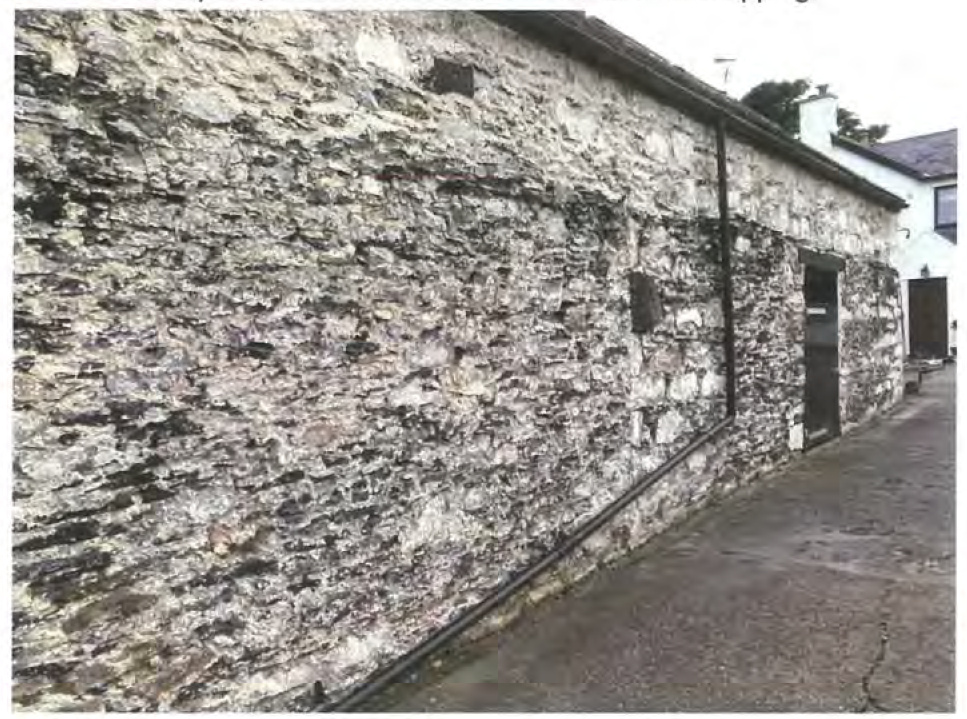
Several nooks in the stonework that could be used as temporary roost sites by one or two bats. No evidence of any use; no bats observed in nooks and no droppings.
Light and airy throughout the building. No bat droppings observed; no places for them to hide.
Sufficient windows downstairs to provide good lighting, and barn door has large gap above it. 3 swallow nests in use.
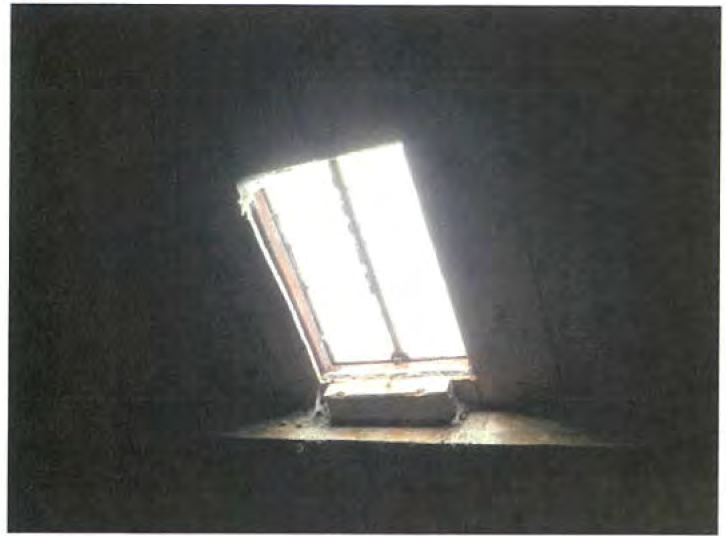
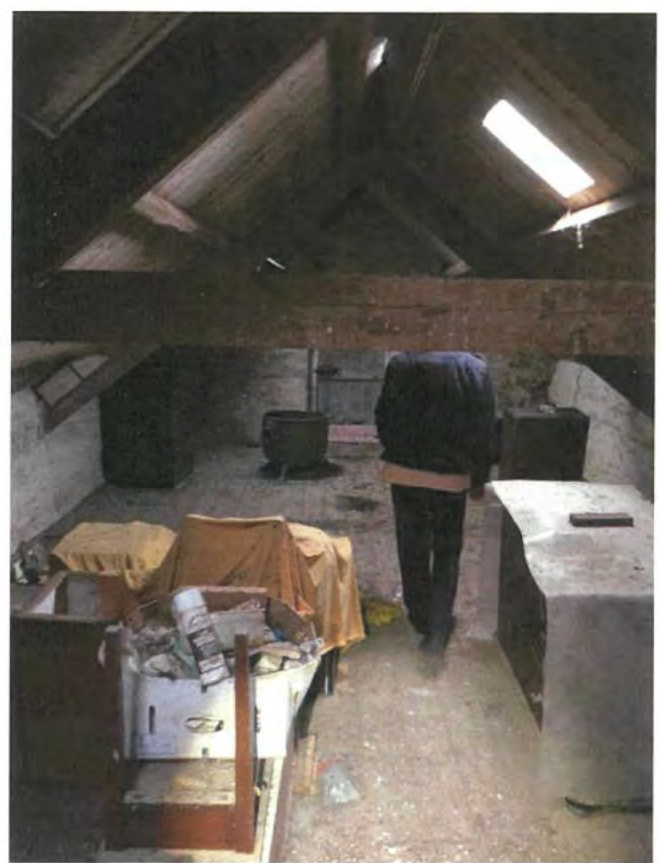
Access through a small opening via a ladder.
The underside of the roof is wooden boards with the slates nailed to them directly Roof lights make the upstairs light. There is no ceiling - barn is open up to the inside of the roof. A couple of swallow nests in use.
On site observations took place from 21:00 until 22:47
No bats seen to emerge from any part of the building
One Common Pipistrelle bat picked up on bat detector at 22:15, 25 mins after sunset. Heard and observed until 22:47. Bat was feeding high up around the mature trees by the road. During the observation period it flew three times alongside the barn's south side by the garden, flying at gutter height.
Building of low probability of bat use – unheated, quite well lit, few potential roost features, no evidence of bat occupation, no emergence seen and little bat activity.
Mitigation not required.
Mr. Ben Brooker L4 DipArb (ABC), TechArborA Consulting Arborist Manx Roots Ltd. Tel: 07624259720 Em: [email protected]
The Client or Client's agent has requested that a tree survey be carried out in respect of a planning application for development activities.
The survey follows the recommendations contained in BS 5837:2012 - Trees in relation to design, demolition and construction - and the data has been collected and presented in accordance with that Standard.
Outputs include a report describing the current state of trees within the proposed development site and the likely impact of the proposal upon those trees.
Additional detail, where necessary, provide guidance on how the trees are to be protected during the development.
A full BS 5837:2012 survey and report comprises of three stages:
The tree data was collected from ground level by a suitably competent arboriculturist. Only trees with a stem diameter greater than 80mm at 1.5m were recorded. Only trees likely to impact or be impacted by the proposed development were recorded. The tree constraints have been presented to the Client or Client's agent in order to influence the final design.
Based on the final design, the development related tree impact has been clearly identified and presented. This section of the report will be required to accompany the planning application to which it relates.
This section of the report provides clear guidance on how the retained trees are to be protected during demolition and construction phase. This section, where necessary, includes a monitoring schedule which could form all or part of a planning condition. This section of the report will be required to accompany the planning application to which it relates.
The data collected was that required to meet the British Standard 5837:2012 - Trees in relation to design, demolition and construction - Recommendations. However, it should be noted that not all of that data is contained within the written report.
Drawings provided by the Client or Client's agent had plotted the trees within the development boundary and, therefore, were used to plot the location of surveyed trees and form the necessary drawings.
This survey is not intended as a detailed assessment of tree risk or to cover the tree owner's duty of care with regard to tree risk.
Manx Roots Ltd. Ramsey, Isle of Man, IM8 2PH T: 07624 259720 | E: [email protected] | W: https://trees.im
3.1. A Tree Constraints plan; Tree Impact plan; and, where required, Tree Protection plan have been provided in the AIA and AMS. Their scale is 1:500 @ A3 (unless stated otherwise) and have been produced by the author. 3.2. The scale drawings are based upon one or more drawings provided by the Client or the Client's agent. 3.3. The tree data displayed on each drawing and contained within the reports is the intellectual property of Manx Roots Ltd. and may not be used or replicated by any other applicant or party without prior written agreement.
4.1. A BS 5837:2012 tree survey and report must not be interpreted as a tree risk assessment. The data recorded and presented in these reports relates entirely to the impact of and upon the trees from and to the proposed development. A follow-up tree assessment, as outlined by the National Tree Safety Group , must be carried out immediately following completion of the development to identify and assess foreseeable risks. 4.2. Trees are living organisms and can decline in health rapidly due to biotic and abiotic influences. Therefore, failure of intact trees can never be ruled out due to the laws and forces of nature (Mattheck \& Breloer). An example being extreme wind speeds. 4.3. The project arboriculturist must be formally engaged into any site monitoring process following receipt of planning consent. This will include a pre-development site meeting to discuss protection measures and a programme of works. The project arboriculturist will not be responsible for any breach of condition resulting from lack of communication or deviation from the arboricultural method statement or tree protection plan.
5.1. The table below provides descriptions of the key terms and abbreviations used found in the accompanying reports.
| Key | Description |
|---|---|
| Tree ID | The tree's identification number for that site. • T – Tree (a single stem or multiple stems emanating from a single root plate), • G – Group (one or more trees forming a stand which is uniform in age, size and species). |
| Species | Tree species, often the common name. |
| Height | Approximation of tree height measured in meters. |
| Dia. (diameter in mm) | A measurement taken at 1.5 meters above ground level of a single stem, or the sum of multiple stems, unless noted otherwise. |
| Crown spread | Measured at four cardinal points around the tree, unless noted otherwise. |
| Age class | Y - Young (in the 1/3rd of its life span), Mi - Middle aged (in the 2/3rd of its life span), M - Mature (in the 3/3rd of its life span), Ov - Over mature (in the 3/3rd of its life span and is showing symptoms of decline), V - Veteran (a tree that is mature, provides visual and ecological amenity and of considerable age for its species). |
| Condition (physiological and structural) | • Good - Full healthy canopy. Possibly some minor defects but requires little or no remedial work. • Fair - Slightly reduced leaf cover. Minor deadwood or isolated major deadwood. Requires some remedial work. • Poor - Overall sparse leafing or extensive deadwood. Requires significant remedial work to allow for retention. • Very Poor - Large proportion of die-back. Major defects. Extensive remedial work required or removal. |
| ERC (estimated remaining contribution) | An estimate of the trees retainable life measured as less than 10 years, 10 to 20 years, 20 to 40 years or greater than 40 years. |
| RPA (root protection area) | A circle with a radius which is 12 x the tree's diameter at 1.5m, used to denote the rooting zone of a tree and an area which may require protective measures when in close proximity to development, as described in BS5827:2012. |
| Category/ grading | A categorisation of tree quality based on Table 1. of BS5837:2012: Category U – Unsuitable for retention Those in such a condition that they cannot realistically be retained as living trees in the context of the current land use for longer than 10 years. Trees that are dead or are showing signs of significant, immediate, and irreversible overall decline. Category A - Trees of high quality Trees that are particularly good examples of their species, especially if rare or unusual; or those that are essential components of groups or formal or semi-formal arboricultural features (e.g. the dominant and/or principal trees within an avenue). Trees, groups or woodlands of particular visual importance as arboricultural and/or landscape features. Trees, groups or woodlands of significant conservation, historical, commemorative or other value (e.g. veteran trees or wood-pasture). Category B - Trees of moderate quality Trees that might be included in category A, but are downgraded because of impaired condition (e.g. presence of significant though remediable defects, including unsympathetic past management and storm damage), such that they are unlikely to be suitable for retention for |
| beyond 40 years; or trees lacking the special quality necessary to merit the category A designation. Trees present in numbers, usually growing as groups or woodlands, such that they attract a higher collective rating than they might as individuals; or trees occurring as collectives but situated so as to make little visual contribution to the wider locality. Trees with material conservation or other cultural value. <br> Category C - Trees of low quality <br> Unremarkable trees of very limited merit or such impaired condition that they do not qualify in higher categories. Trees present in groups or woodlands, but without this conferring on them significantly greater collective landscape value; and/or trees offering low or only temporary/transient landscape benefits. Trees with no material conservation or other cultural value. | |
|---|---|
| Priority class | - 1 - poses major risk to safety, requires immediate attention, should be placed above all other work and given emergency status. <br> - 2 - requires attention before the defect has chance to deteriorate, should be placed second to emergency status. <br> - 3 - requires attention before the next inspection cycle. <br> - 4 - no work required. |
| Next Insp. <br> (next inspection) | The recommended number of months between the current and following tree inspection. |
9.1. With the exception of any further investigation recommended in the findings, the trees contained within this survey must be re-inspected, for the purpose of managing tree risk, immediately following completion of the development or within 18 months of the survey, whichever is sooner.
10.1. BS 5837:2012 - Trees in relation to design, demolition and construction Recommendations. 10.2. BS 3998:2010 - Tree work - Recommendations. 10.3. BS 8545:2014 - Trees: from nursery to independence in the landscape Recommendations. 10.4. National Tree Safety Group (NTGS) - Common sense risk management of trees. 10.5. Claus Mattheck \& Helge Breloer - The Body Language of Trees
11.1. Report produced by Ben Brooker L4 DipArb(ABC), TechArborA, PTI 11.2. Manx Roots Ltd, 78 Greenlands Avenue, Ramsey, Isle of Man, IM8 32PH 11.3. Professional indemnity - 11.4. T: 07624 259720, E: [email protected], W: https://trees.im
May 2020
Briarfield - AMS
Page 2 of 4
The following Arboricultural Method Statement and associated Tree Protection Plan provide details on the specification and position of the required tree protection measures for this site.
These protection measures will most likely form all or part of a planning condition for this development and, therefore, must be adhered to in full at all times unless agreed otherwise.
If there is any deviation from the Arboricultural Method Statement and/or Tree Protection Plan, the project arboriculturist (tree specialist) and/or planning authority must be informed immediately.
Manx Roots Ltd. Ramsey, Isle of Man, IM8 2PH T: 07624 259720 | E: [email protected] | W: https://trees.im
Site:
Briarfield, Grenaby Road Isle of Man
Produced for:
Mr. Jim Cryer Briarfield Grenaby Road Ballasalla Isle of Man
Report produced by:
Mr. Ben Brooker L4 DipArb (ABC), TechArborA
Consulting Arborist Manx Roots Ltd. Tel: 07624 259720 Em: [email protected]
May 2020
Briarfield - AMS
Page 2 of 4
The following Arboricultural Method Statement and associated Tree Protection Plan provide details on the specification and position of the required tree protection measures for this site.
These protection measures will most likely form all or part of a planning condition for this development and, therefore, must be adhered to in full at all times unless agreed otherwise.
If there is any deviation from the Arboricultural Method Statement and/or Tree Protection Plan, the project arboriculturist (tree specialist) and/or planning authority must be informed immediately.
Manx Roots Ltd. Ramsey, Isle of Man, IM8 2PH T: 07624 259720 | E: [email protected] | W: https://trees.im
May 2020
Briarfield - AMS
Page 3 of 4
Temporary protective fencing (as shown in Fig.1) will be installed to demarcate a Construction Exclusion Zone (CEZ) represented in the accompanying Tree Protection Plans (TP-5520).
The fencing will be positioned as per the magenta line in the accompanying Tree Protection Plans (TP-5520).
The fencing will be installed for the purpose of excluding all construction activity and will consist of: 2m x 3.5m heavy duty metal fencing panels fastened together and supported with manufacturer recommended ties and stays.
The fencing will be fully installed prior to any construction activity and remain in place and fully effective until work is complete.
All weather notices will be attached to every second panel, clearly displaying words such as CONSTRUCTION EXCLUSION ZONE - NO ACCESS.
The protective fencing will not be moved or disassembled without prior approval from the project arboriculturist.
Materials will not be stored within the CEZ.
Site personnel will not be permitted access within the CEZ without prior written approval from the project arboriculturist.
The project arboriculturist must be invited to inspect the protective fencing prior to work commencing and that inspection will be documented.
The project arboriculturist must be informed by the site manager if the fencing is moved or if its specification differs from that described above.
Manx Roots Ltd. Ramsey, Isle of Man, IM8 2PH T: 07624 259720 | E: [email protected] | W: https://trees.im
MANX ROOTS
TREE MANAGEMENT
| PROJECT | Sriarifufo, Gwendry Road |
| DRAWING NAME | Tote Protection |
| DWG by DB | DATE 05/05/20 |
| SCALE 1:200 (1) A3 | DWG No. TP-0220 |
DB 0137-2012 - Tote Protection Plan This drawing is to accompany an American Fuel Method Statement. Tote returns and Black Protection Areas (BPAs) are selected in accordance with the Statement. BPAs are received for easier interpretation. Recommended base protection during combination has been adopted. Please refer to American Fuel Method Statements. For further information relating to this survey, please contact the Surveyor Box Solicitor (202-220-722) - [email protected]
Legend:
{{image:113798}} {{image:715503}} {{table:387884}}
| DWG by DB | DATE 05/05/20 |
|---|---|
| SCALE 1:210 @ A3 | DWG No. 74-0520 |
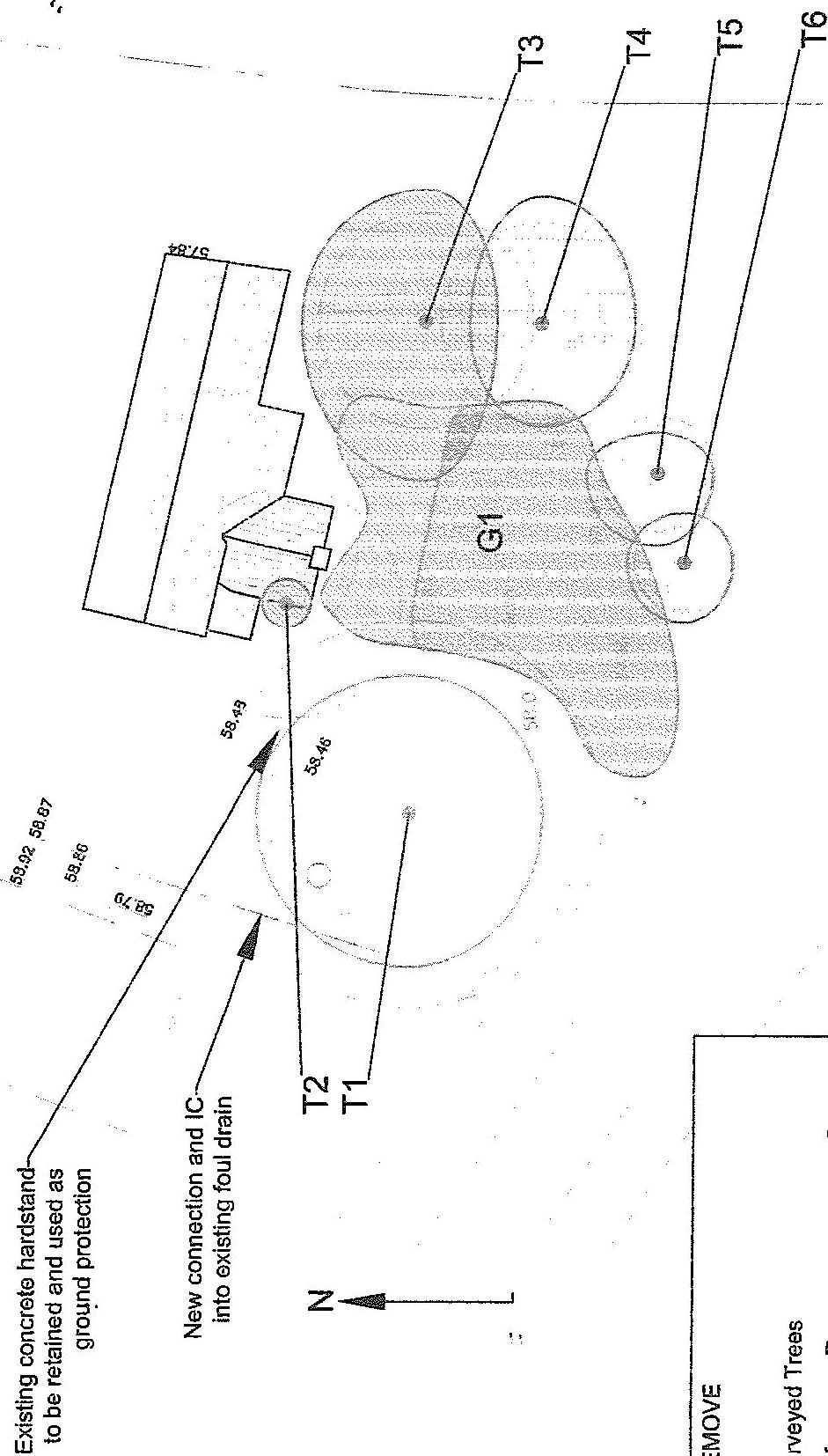
TO: 6137 2112 - Tien Removal
This drawing is in accordance with an Administration/Project Assessment.
Notes of information/illustrations were retained in AIPLE.
For further information relating to this survey please contact the Surveyor Vans Poon Ltd. - 07424 255220 - [email protected]
Legend:
Tien Removal
Bristfold, Grimsby Road
Tien Removal
Existing concrete hardstand to be retained and used as ground protection
New connection and IC into existing foul drain
Surveyed Trees
Reference Type Category T2 Palm C T3 Cherry C TG1 Apple, pear, plum C
Copyright in submitted documents remains with their authors. Request removal
View as Markdown