Loading document...
the Site, further action to remove/avoid disturbance of such species may be required.
Bats - Roosting habitat 5.5.1 The survey of the tree T1 and those within G1 were constrained by ivy and their suitability to support roosting bats could not be confirmed. The current proposals indicate that these trees will be retained as part of the proposed development and as a result, no further surveys of these trees to determine the presence/likely absence of roosting bats are required. However, if at any point the proposals change or it is identified that any of these trees are to be removed as part of the proposed development then further actions to determine the presence of roosting features should be conducted. In the first instance, this should extend only to the removal of the ivy that constrained the survey, after which the trees should be re-inspected by a suitably experiment ecologist, looking for features suitable for use by bats. 5.5.2 To avoid indirect impacts, proposed Site lighting should seek to avoid illumination of any retained trees and a Site lighting plan should be produced in accordance with guidance produced by the Institution of Lighting Professionals (ILP) and Bat Conservation Trust (BCT); https://www.theilp.org.uk/documents/guidance-note-8-bats-and-artificial-lighting/.
5.5.3 The vegetated banks, scrub, scattered trees, woodland and watercourses all provide suitable commuting and foraging habitat for bats. However, with the exception of minor removal of trees to create access around the Site, the majority of these habitats are to be retained. However, the proposed development has the potential to result in significant light spill into suitable bat foraging and commuting habitat and to determine the Site's use by bats and how the development may impact this species group, bat activity surveys of the Site should be carried out in accordance with best practice guidance (Collins, 2016) for habitats with 'Low' suitability for foraging and commuting bats.
5.5.4 The scrub, woodland, hedgerows, grassland and scattered trees are all suitable to support nesting birds and records of protected and notable bird species within 1 km of the Site were returned within the desk study data. However, with exception of the grasslands, the majority of these habitats are anticipated to be retained and application of a full suite of nesting bird surveys in accordance with the Common Bird Census (CBC) methodology is considered disproportionate.
5.5.5 Monitoring of the Site's nesting bird status should however, be conducted whilst conducting the Schedule 7 protected plant species presence/likely absence surveys noted above. In the event that rare or notable bird species are recorded breeding within the Site, this should be mitigated accordingly. 5.5.6 To ensure the welfare of nesting birds are maintained, works to areas deemed sensitive to the presence of nesting birds should conducted outside the core breeding period for birds of late February - August (inclusive). Should this timeframe be unobtainable, a thorough search for the presence of nesting birds should be conducted by a suitably experienced ecologist prior to the start of works. Should evidence of breeding birds be recorded, works within 5 m of the nest, or works that have potential to destroy the nest, should stop until the eggs have hatched and the chicks fledged, or the nest is deemed by a suitably experienced ecologist to have been abandoned. 5.5.7 To mitigate the loss of grassland, the retained habitats in the north of the Site should be managed to encourage a diverse range of sward heights and habitats. The detail of such management extends beyond the scope of this report and would be best set out within the content of a stand-alone management strategy which could be secured by way of planning condition. 5.5.8 Nesting opportunities for birds should be retained within the Site through the installation of a range of bird boxes. Such boxes should be selected from integrated boxes such as those available from reputable sources such as Habibat and a range of open fronted and hole fronted nesting box such as those available from the Nest Box Company. To maximise suitability, boxes should be installed on sheltered aspects close to vegetation at a height of 23 m , preferably on north, north-east or north-west facing elevations.
5.5.9 Waterbodies identified as suitable to support common frog are present both within and surrounding the Site, suitable terrestrial habitats and refugia are likely to be affected by the proposed development and records of common frog within 1 km of the Site were returned within the desk study data. 5.5.10 It is however, anticipated that the majority of suitable habitats within the Site are to be retained as part of the proposed development and as a result, further surveys to determine the presence/likely absence of common frogs are not considered a requirement.
5.5.11 In order to make them unsuitable for common frogs and discourage any herpetofauna from entering the construction area, therefore minimising the risk of killing/injuring common frogs during the construction period, habitats within the construction zone will be cleared in a phased manner prior to any construction. This vegetation clearance will be carried out under the supervision of a suitably experienced ecologist (SEE) and as described below:
5.5.12 Providing the above mitigation is adhered to, the welfare of common frogs that may reside within the Site will be maintained.
5.5.13 Should the waterbodies suitable to support common frog be affected by the proposed development then further surveys to determine the current status of frog should be conducted. Such surveys should be conducted of waterbodies within 250 m of the application boundary during the period March/April in any given year. The search should determine the presence/likely absence of common frog through the observation of spawn clumps. The number of spawn clumps recorded should also be used to assess population estimates. If present and deemed a requirement, mitigation for the loss of any common frog habitat/breeding opportunity should be compensated for within the retained habitats to the north.
5.5.14 Suitable habitats and refugia for common lizard are present within the Site and historic records of common lizard within 1 km of the Site were returned within the desk study data. 5.5.15 However, it is anticipated that the majority of suitable habitats within the Site are to be retained as part of the proposed development and as a result, further surveys to determine the presence/likely absence of common lizards are not considered a requirement. 5.5.16 Common lizards are protected under the Wildlife Act 1990 from killing and injury and the recommendations to minimise the risk of killing and/or injuring of common frog provided above, should also be implemented to mitigate the potential presence of common lizards. So long as the above mitigation is adhered to, the welfare of potential of common lizards within the Site will be maintained.
5.5.17 Habitats within the Site are considered suitable to support a range of common and widespread invertebrate species. The habitat types to be affected are well distributed within the wider area and application of invertebrate specific surveys are not considered a requirement. Enhancement for invertebrates within the development should however, include a varied habitat management strategy for retained habitats, as well as the inclusion of a nectar rich planting strategy and the installation of a variety of insect hotels within and around the built environment
5.5.18 Habitats within the Site are suitable to support European hedgehog and to ensure the welfare of this species is maintained, the removal of any habitat likely to support hibernating hedgehog should be conducted during the period March - October (inclusive). The free
movement of hedgehog within and around the built environs should be encouraged through the installation of hedgehog access gates within the base board of any boundary fencing. The installation of hedgehog houses within retained vegetation will also serve to ensure the Site maintains suitable refuge for this species both during and post development. 5.5.19 Beyond those noted above there are no field signs indicative of the Site's use by protected species. Therefore, no further surveys to determine the presence of other protected species are required in this instance. Should at any point during the development a protected or notable species be identified within the Site, all works should stop, and the appointed ecologist consulted on the appropriate manner in which to proceed.
6.1 Opportunities to include biodiversity enhancements within the Site exist and the following recommendations are considered appropriate for the Site:
7.1 In response to the proposed residential construction at Milntown, Ramsey, the Site has been subject to a Preliminary Ecological Appraisal (PEA). 7.2 Development of the Site will have no detrimental impact upon designated sites of nature conservation or areas of Ancient Woodland. 7.3 Although none were recorded, potential exists for botanical species listed on Schedule 7 of the Wildlife Act (1990) and invasive species such as giant hogweed to be present within the Site and further surveys have been recommended. To ensure suitability, such surveys should be conducted at the appropriate time of year. 7.4 Retained trees should be protected in accordance with BS: 5837:2012 and measures to mitigate the deposition of materials into watercourses will be required prior to the start of works. 7.5 The survey of trees within the Site was constrained and if to be affected, further surveys to determine the presence/likely absence of roosting bats within trees T1 and within G1 should be conducted. Habitats suitable to support foraging and commuting bats have been identified and bat activity surveys for Site with Low suitability are required. 7.6 Suitable nesting habitat exists and recommendations in regard to timings and methods of best practice have been provided. Measures to mitigate the loss of nesting habitat include the provision of nest boxes and the management of habitats within the retained northern area of the Site. 7.7 Habitats suitable for common frog and common lizard are to be affected and to ensure the welfare of these species is maintained a phased clearance strategy has been provided. 7.8 Should common frog breeding habitat be lost then further surveys to determine the presence/likely absence and population densities of the species will be required. 7.9 The likelihood of other protected and notable species to occur within the Site is considered Negligible and no further surveys for other protected species are required. 7.10 Should at any point a protected or notable species be identified, all works should stop, and the appointed ecologist consulted on an appropriate manner in which to proceed. 7.11 Recommendations to enhance the Site's suitability for wildlife have been provided.
Bat Conservation Trust and the Institute of Lighting Professionals (BCT\&ILP) 2018. Guidance Note 8; Bat and Artificial Lighting in the UK. https://www.theilp.org.uk/documents/guidance-note-8-bats-and-artificial-lighting/
CIEEM (2017). Guidelines for Preliminary Ecological Appraisal. (2nd Edition). Chartered Institute of Ecology and Environmental Management. Winchester.
Collins, J. (ed.) (2016). Bat Surveys for Professional Ecologists: Good Practice Guidelines (3rd Edition). Bat Conservation Trust, London.
Eaton et al. (2015). Birds of Conservation Concern 4: the population status of birds in the UK, Channel Islands and Isle of Man. British Birds 108.
English Nature. (2004). Reptile Mitigation Guidelines. English Nature. Peterborough.
Herpetofauna groups of Britain and Ireland (HGBI). (1998). Evaluating Local Mitigation / Translocation Programmes: Maintaining Best Practice and Lawful Standards. Suffolk.
Isle of Man Government. (2012). Manx Hedgerow Management Code of Best Practice. Department of Environment, Food and Agriculture. https://www.gov.im/media/277574/manx hedge management.pdf
JNCC (2010). Handbook for Phase I Habitat Survey; A Technique for Environmental Audit. Peterborough. Manx Wildlife Trust; www.manxwt.org.uk Stace, C. (2019). New Flora of the British Isles (4 Edition). C \& M Floristics. Cambridge. Wildlife Act. 1990. https://www.gov.im/media/1363689/wildlife-act-1990.pdf
Milntown, Lezayre Road, Ramsey, Isle of Man J20855
Figures
Greenspace Ecological Solutions Ltd
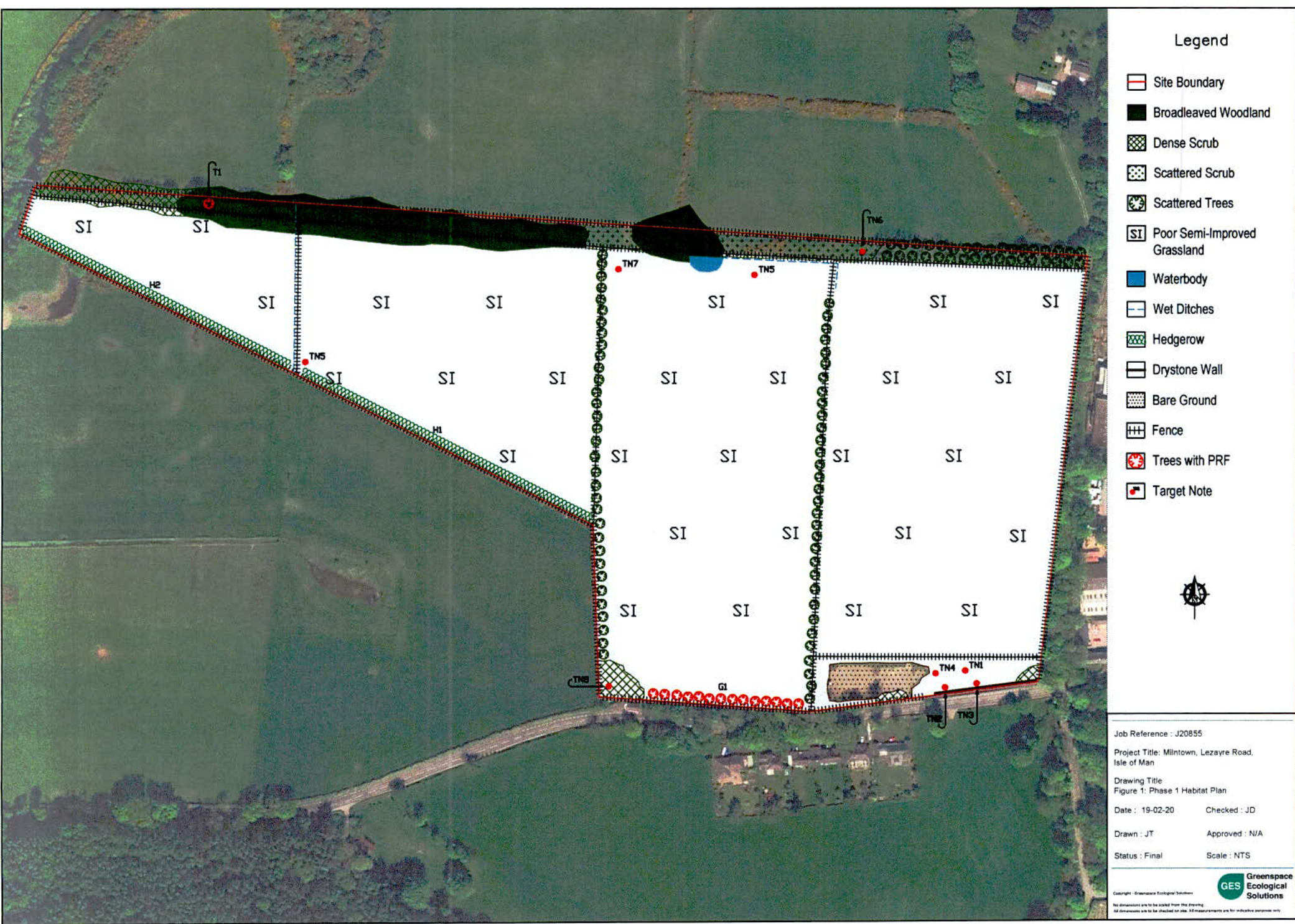
Job Reference: J20855 Project Title: Mörtown, Lezayne Road, Isle of Man Drawing Title: Figure 1: Phase 1 Habitat Plan Date: 19-02-20 | Checked: J20 Drawn: J7 | Approved: N/A Status: Final | Scale: NTS Grassland Ecological Solutions Grassland Ecological Solutions
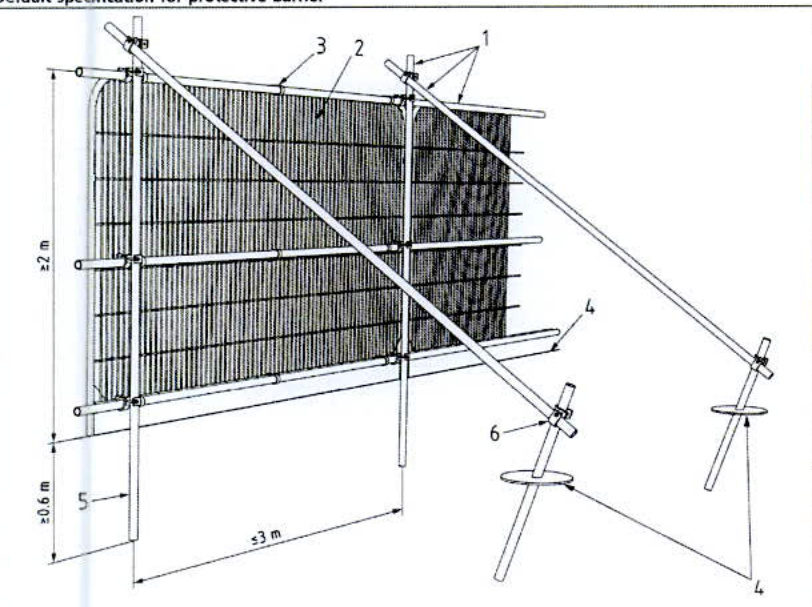
{{image:111755}} a) Stabilizer strut with base plate secured with ground pins {{image:111756}}
Copyright in submitted documents remains with their authors. Request removal
View as Markdown