Loading document...
George Hotel, The Parade, Castletown Replacement Cornice/Parapet - Design Statement File Ref: 24-086 Purpose of Issue: Information Prepared by: M. Johnson Issue Number: 1.0 Date: 24th October 2024
24-086 George Hotel – Repalcement Cornice/Parapet Design Statement
BB Consulting Engineers (BBCE) have been instructed by Stewart Clague Services Ltd (SCS), on behalf of Heron and Brearly (H&B), to undertake the design and replacement of the cornice/parapet structure for the George Hotel, The Parade, Castletown.
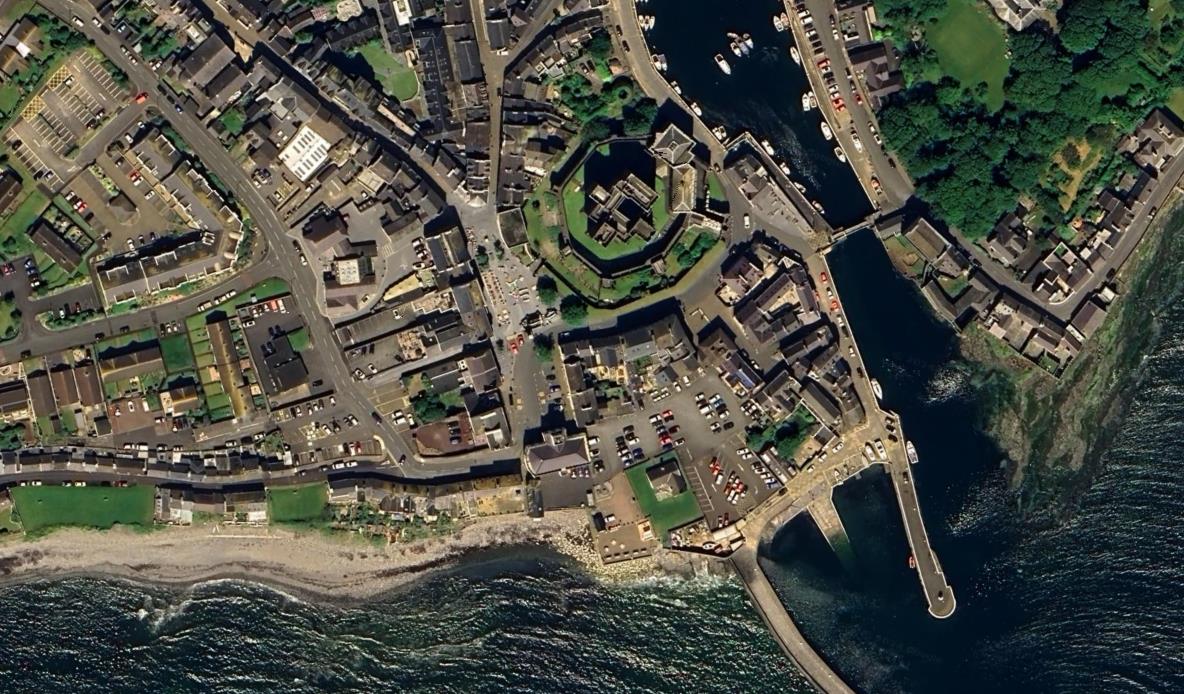
The site location is outlined within the below mapping extract:
| George Hotel<br><br>The Parade, Castletown |
|---|
N
Location Plan – copyright Google Earth / IOM Government
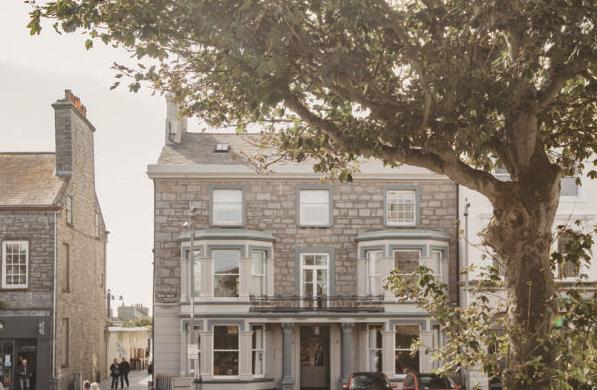
The George Hotel is a registered historic building (Registered Building No. 38) dating back to 1833 and located within the Castletown conservation area. It is a public house and hotel.
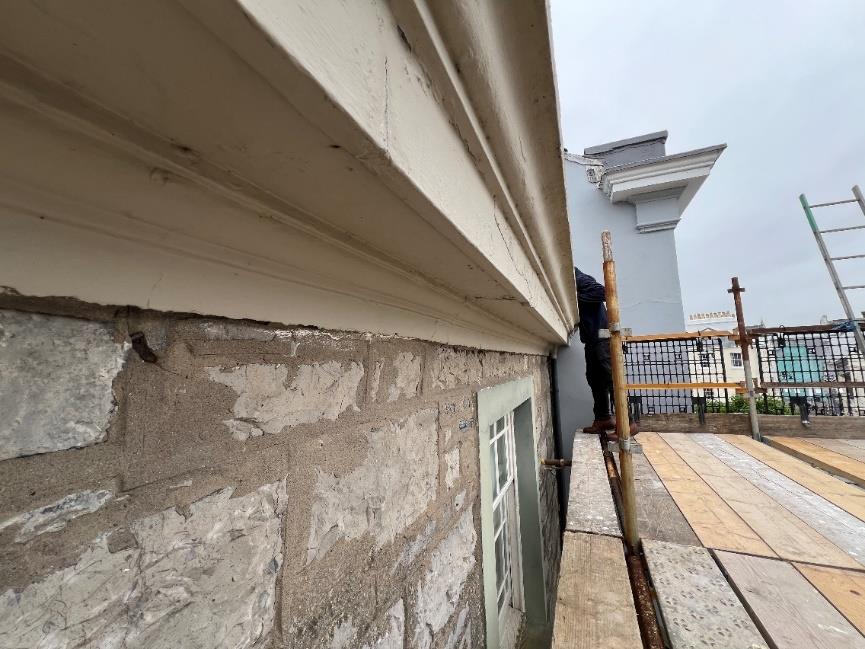
The front elevation of the George Hotel had a cornice/parapet with integral gutter at the eaves level, this structure was constructed of stone, concrete brick and plaster work. The original cornice detail, constructed of stone has been extended in the recent past with the introduction of concrete brickwork. It is considered that this extension was to house a larger gutter than that originally constructed, reference is made to the photographic schedule which demonstrates the two forms of construction. The original cornice/parapet structure was tied back in to the main envelope of the structure with metal ties embedded in to the wall. Expansive corrosion of these metal ties has occurred and this has resulted in the partial collapse of the cornice/parapet.
BB Consulting Engineers attended site to review the cornice/parapet following the partial collapse. Inspection of the remaining section of the cornice/parapet structure demonstrated horizontal cracking along its length and this element was leaning outwards, away from the building. The horizontal cracking present was indicative of expansively corroded metal ties. It was therefore considered that the defect which caused the partial collapse was present across the cornice/parapet to the front elevation. Discussions were held with the Registered Building Officer and it was agreed that the remaining section was removed from the building due to health and safety risks.
Review of the condition of the building structure highlighted that it was not feasible to reinstate the parapet in its existing arrangement of stone, brick and plaster as the lime mortar is friable and was not deemed competent to support a replacement like for like structure. It is proposed to utilise a lightweight moulding and aluminium gutter to replicate design intent. This solution would be tied back to the existing rafters and would not be reliant on the masonry bed joints.

Working with a specialist architectural mouldings supplier we have selected Stone-Coat, a lightweight architectural stone product made from high density EPS polystyrene material, finished with a stone texture has been chosen.
Due to the lightweight nature of the product, it is capable of being adhered to the building with adhesive.
The Stone-Coat product has successfully been used on registered buildings and in conservation areas in the UK. Reference is made to the following case study, viewed via this link https://www.buildliteuk.co.uk/an-easy-way-to-match-old-and-new-building-materials/
Reference is made to BB Consulting drawing number 24-086-100
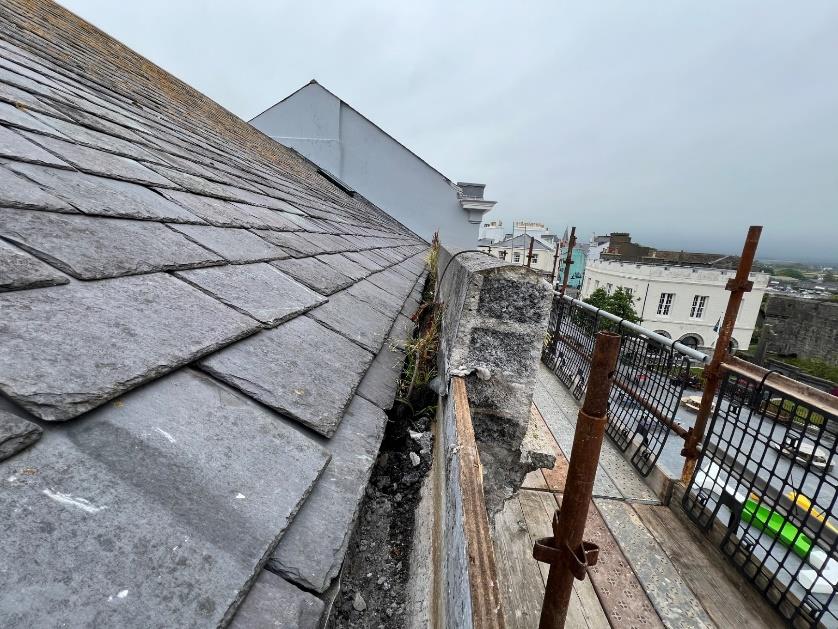
| IMG_24086-1 Image showing the original parapet and ply gutter | |
|---|---|
| IMG_24086-2 – Image showing the underside of the original ply gutter and parapet. | |
| IMG_24086 3 Image showing the original profile of the parapet. |
|---|
Copyright in submitted documents remains with their authors. Request removal
View as Markdown