Loading document...
| Skipton/TM/MS01 | ||||||
|---|---|---|---|---|---|---|
| <br><br> | Document | Authorised by | Issue / Rev | Date | Page | |
| --- | --- | --- | --- | --- | ||
| PCS-HS– Method Statement | BB | 1a | Aug 2020 | 1 of 18 | ||
| <br><br>Uncontrolled copy once printed from its electronic source<br><br>Paul Carey & Sons Ltd Government Registered Plant Hire & Civil Engineering Contractors Ballasalla Farm Jurby West Isle of Man IM7 3AS<br><br>METHOD STATEMENT<br><br>Client: Manx Utilities Site name: RSTS Peel Contract number: TBC<br><br>Document reference: Pedestrian & Traffic Management Description of work: Pedestrian & Traffic Management<br><br>Originated by PCS: Name: Brian Barnett Date: 20-11-24<br><br> | Date | Revision | Created by | Revised by | Issued to | Checked by |
| --- | --- | --- | --- | --- | --- | |
| 20-11-24 | Tender | Brain Barnett | Brain Barnett | Anthony Young | Aaron Carey | |
| <br><br>Distribution Client (Reference copy only) File Copy (Reference copy only) Site Copy (Live Copy) -<br><br> | ||||||
| --- |
Pedestrian & Traffic Management
There is a need for a new sewage treatment works on the west coast of the Isle of Man to provide first-time sewage treatment for the Peel catchment and improve water quality in Peel Bay.
This is one of the main objectives of Phase 2 of the Isle of Man Regional Sewage Treatment Strategy (Ph2 RSTS).
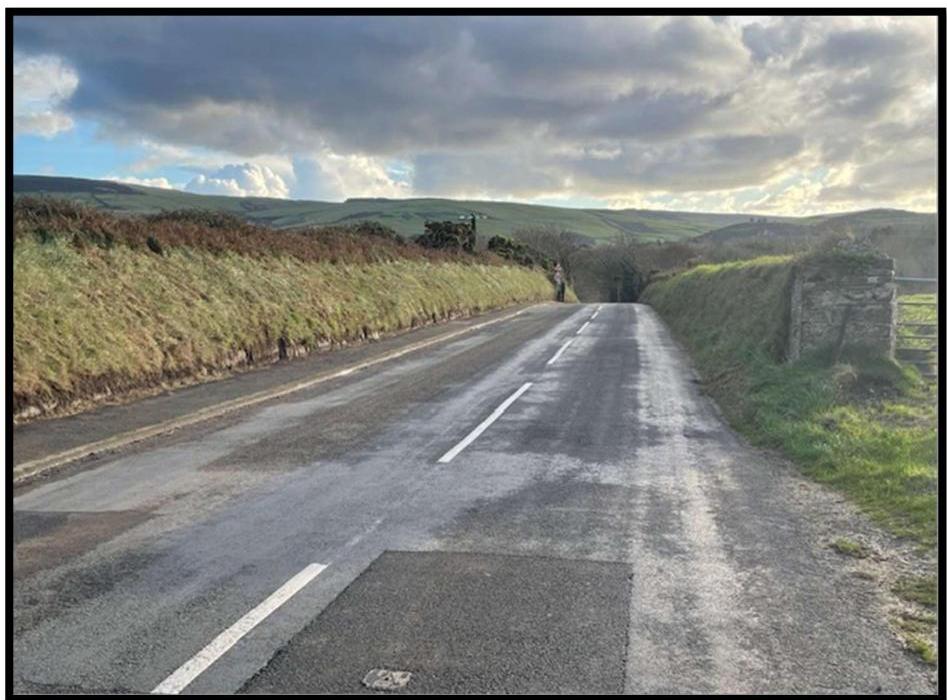
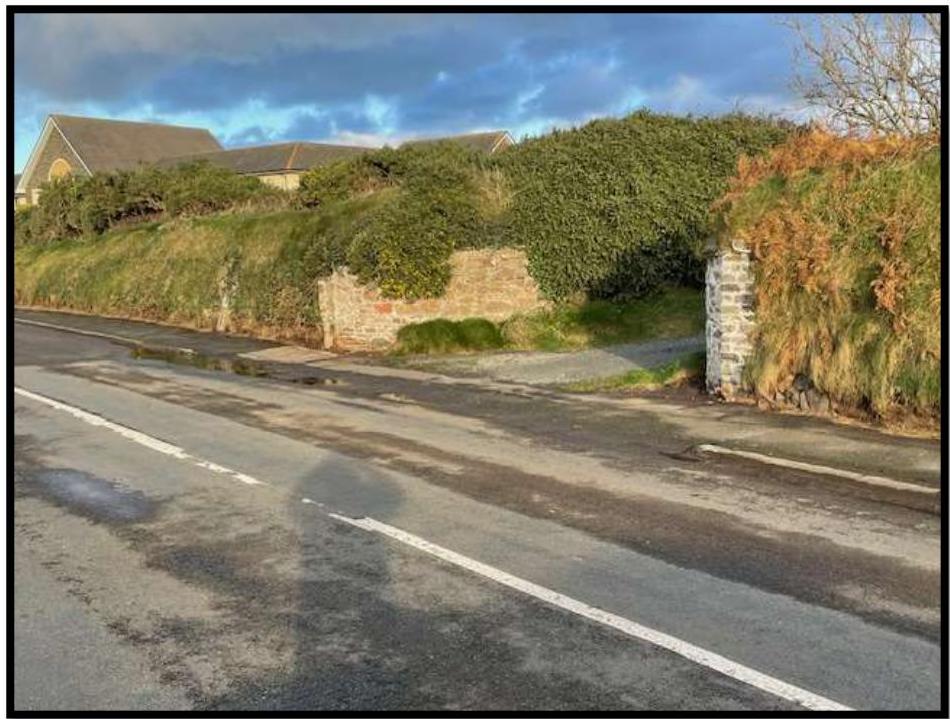
The new preferred location is 'Northeast of Glenfaba', a site on the southern boundary of Peel, within land that was zoned for industrial use on the Peel Local Plan 1989. The site comprises three agricultural fields on the west side of the A27 Glenfaba Road. The main part
Uncontrolled copy once printed from its electronic source
| Document | Authorised by | Issue / Rev | Date | Page |
|---|---|---|---|---|
| PCS-H5– Method Statement | BB | 1a | Aug 2020 | 3 of 18 |
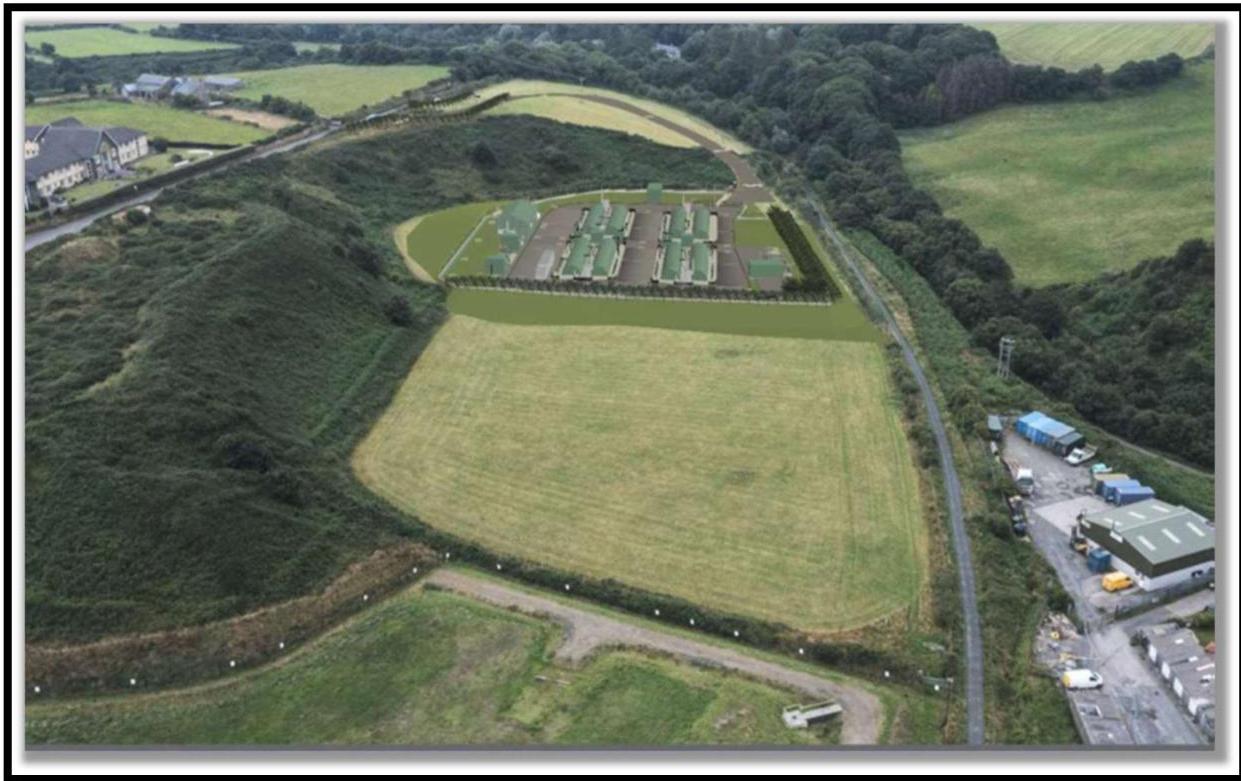
of the sewage treatment works will be in field 311835.
This field slopes downwards west of the A27 towards the River Neb. The steepest site topography is a bracken and scrub escarpment separating field 311835 from field 311836 to the south.
The main part of the sewage treatment works will occupy a footprint of 1.05ha. There will also be a gated access road in the field to the south to provide tankers and other vehicles with access from the A27.
Prior to the commencement of works a PCS – “Permit to Break Ground” MUST BE ISSUED. No picks or sharp tools should be used in areas of soft ground around services.
Hand Tools and Clothing MUST be Arc Flash
Extreme care must be taken when digging around an assumed line of a service. All efforts should be made to dig alongside the service rather than directly above to expose it.
All Excavations in the vicinity of services are to be carried out with due diligence, whilst adhering to the guidance contained in HSG 47 (Also see PCS – Guidance on Underground Cables).
In accordance with 'Safety at Street Works and Road Works – A code of practice' it is our responsibility to:
| Document | Authorised by | Issue / Rev | Date | Page |
|---|---|---|---|---|
| PCS-H5– Method Statement | BB | 1a | Aug 2020 | 7 of 18 |
Uncontrolled copy once printed from its electronic source
| Document | Authorised by | Issue / Rev | Date | Page | |
|---|---|---|---|---|---|
| PCS-HS– Method Statement | BB | 1a | Aug 2020 | 4 of 18 | |
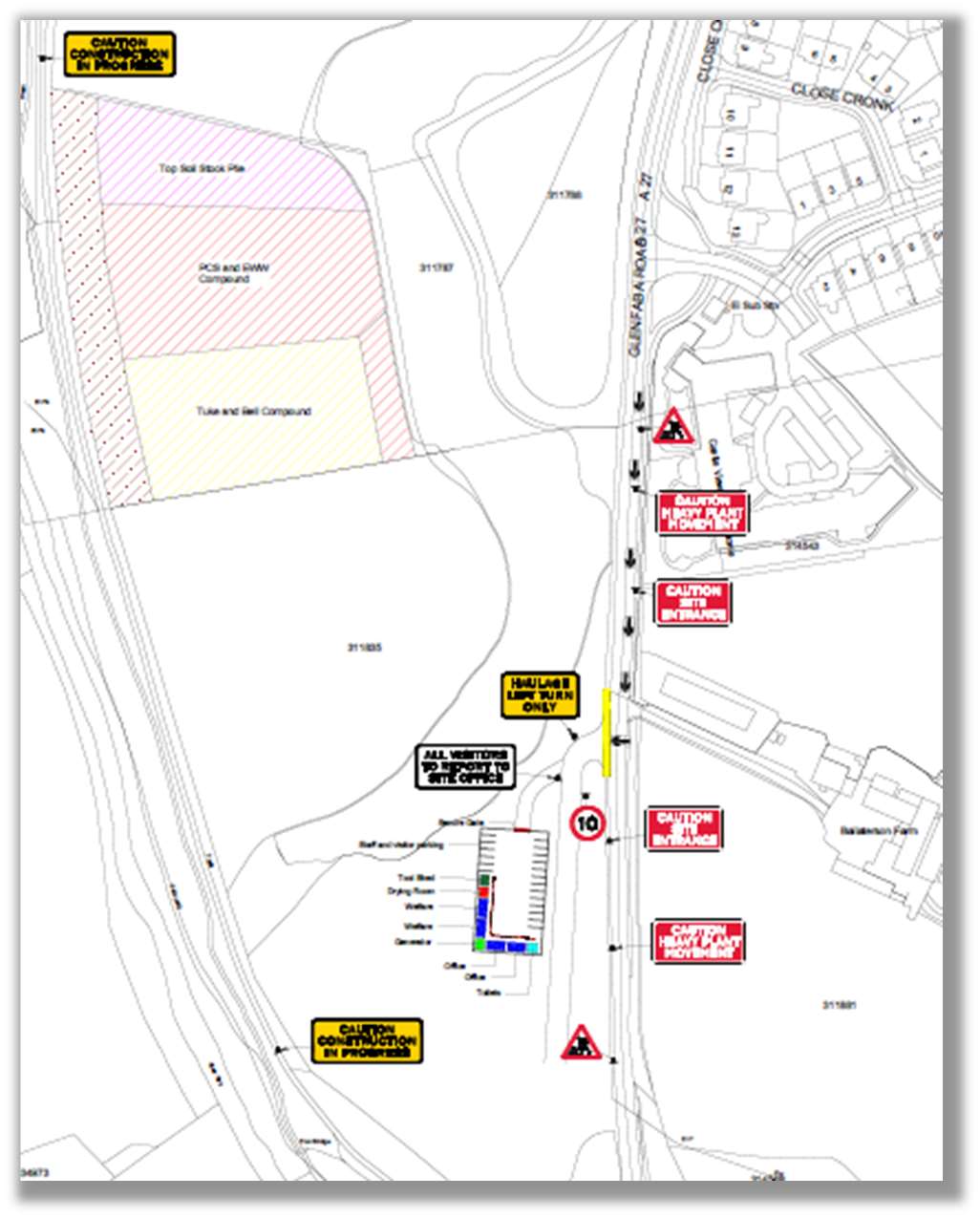
| <br><br>Uncontrolled copy once printed from its electronic source<br><br> Ensure before we start that a site-specific risk assessment has been carried out, paying particular attention to the requirements of highway users, including pedestrians and vulnerable users such as disabled people. If circumstances change, we will consider whether the risk assessment needs revising.<br> Ensure before we start that the works site layout has been planned, necessary equipment has been identified and that we know how we’re going to set the traffic management out.<br> Understand and implement pre-planned site safety requirements before starting the works.<br> We will …Sign, light, guard and always maintain our works safely.<br> We will… Ensure that our works remain compliant and safe as works progress or following agreed alterations.<br> We will…. Ensure that the safety of our personnel and others who pass near or through the works is not compromised.<br> Our staff are actively encouraged to contact their supervisor, manager, or other competent person immediately if they’re unsure about any requirements.<br> We will ensure that our team understands all key safety issues and the risks have been fully assessed for each activity.<br><br><br>Example Traffic Management Plan<br><br> | |||||
| --- | |||||
| --- |
| Document | Authorised by | Issue / Rev | Date | Page | |
|---|---|---|---|---|---|
| PCS-HS– Method Statement | BB | 1a | Aug 2020 | 5 of 18 | |
| <br><br>Uncontrolled copy once printed from its electronic source<br><br>Risk Assessment<br><br>A daily site briefing (And review of the RAMS) WILL be carried out (for all works) before they begin, and as they progress. The risk assessment WILL take account of road layout and speed of traffic, the works to be undertaken, location, duration, and reinstatement works. The risk assessment or method statement may identify additional signing, lighting, and guarding that is needed to ensure the safety of road, recreational users and operatives.<br><br>Look at the road.<br><br> Are there awkward or complex junctions?<br> Are the road or footway widths too narrow to allow the safe use of the standard layouts?<br> How much visibility do approaching road users have? – consider bends, crests of hills, trees and bushes, parked vehicles and visibility.<br> Are there any level crossings or traffic lights that will be affected?<br> Are there any overhead cables?<br> Are there any other works going on, or other traffic management measures in place, nearby?<br> Are the works near permanent traffic signals or signs? If so, could they obstruct above ground or sub-surface detectors, signal heads or signs. Contact the DOI Highways is this is a possibility.<br><br><br>Look at the traffic.<br><br> Is the intended type of traffic control appropriate for the prevailing traffic flow? – what about the number of heavy or large vehicles passing?<br> What is the speed limit, and does a significant amount of traffic appear to be travelling faster than the speed limit?<br> What is the type or make up of the traffic? – e.g., cars, heavy or large vehicles?<br> Is there a cycle lane? Are there many cyclists using the route?<br> Will bus routes or bus stops be affected?<br><br><br>Look at the local area.<br><br> Are there likely to be frequent deliveries to units or premises? – delivery vehicles may park in a way that blocks signs etc. or reduces road width.<br> Will the works restrict access to premises that have a lot of traffic entering or leaving? e.g., schools, large stores, car parks, fast-food stores – particularly consider turning right traffic.<br> What are the needs of the emergency services? – e.g., are there nearby police, ambulance or fire stations?<br> Are there facilities for disabled people, e.g., parking bays, and can these be avoided?<br><br><br>Look at pedestrians.<br><br> Consider both safe routes and the standards of fencing/barriers that are needed to protect pedestrians from risks from inside the work area.<br> Is there a high level of pedestrian traffic? – consider users of pushchairs, wheelchairs, and mobility scooters.<br> Are there significant numbers of people with reduced mobility or walking difficulties (who may have problems with steps, cable protectors, or uneven surfaces), or blind and partially sighted people? – consider any nearby hospitals, surgeries, residential homes etc.<br> | |||||
| --- |
| Document | Authorised by | Issue / Rev | Date | Page | |
|---|---|---|---|---|---|
| PCS-HS– Method Statement | BB | 1a | Aug 2020 | 6 of 18 | |
| <br><br>Uncontrolled copy once printed from its electronic source<br><br> Are there many children around? – consider nearby schools, parks, playgrounds etc.<br> Will pedestrian crossings or school crossing points be affected?<br> Are there other pedestrian risks, such as people leaving pubs, sports matches, or events?<br><br><br>Look at what might change.<br><br>Estimate how long the works may be in place, then think about how any of the above issues might change within that time, e.g.:<br><br> Traffic flows.<br> Farm/Home access.<br> Street lighting levels.<br> Site deliveries.<br> Weather and surface conditions.<br><br><br>Remember<br><br> Use the signing, lighting and guarding that is necessary for the risks, not just use the equipment you happen to have available at the time. Work WILL not start until PCS have the right equipment set up correctly.<br> For emergency works, full signing, lighting and guarding must be provided as quickly as possible.<br> Ensure the works team are given a formal briefing on all key safety issues and local site risk assessment related to the activity.<br> If you have any concerns, contact your supervisor, manager or other competent person.<br><br><br>3. Contact Details.<br><br> | Name: | Position | Tel: | ||
| --- | --- | --- | |||
| Paul Carey | Managing Director | 07624-495711 | |||
| Aaron Carey | Project Director | 07624-376395 | |||
| Brian Barnett | Contracts Manager | 07624-308646 | |||
| Brian Kelly | Quantity Surveyor | 07624-437815 | |||
| Anthony Young | CITB Site Manager & Engineer | 07624-417162 | |||
| Dan Sayle | CITB Site Supervisor | 07624-255444 | |||
| Leo Dunnigan | CITB Site Supervisor | 07624-254885 | |||
| Brian Barnett | Health & Safety Advisor | 07624-308646 | |||
| <br><br>4. Site PPE Requirements<br><br><br>The following PPE shall be worn as the absolute minimum on this site:<br><br> Hi-viz clothing.<br> Safety boots.<br> Safety helmet.<br> Safety glasses for light eye protection.<br> Gloves (task specific).<br> | |||||
| --- |
Uncontrolled copy once printed from its electronic source
| Document | Authorised by | Issue / Rev | Date | Page |
|---|---|---|---|---|
| PCS-H5– Method Statement | BB | 1a | Aug 2020 | 7 of 18 |
| Document | Authorised by | Issue / Rev | Date | Page |
|---|---|---|---|---|
| PCS-H5– Method Statement | BB | 1a | Aug 2020 | 8 of 18 |
| Document | Authorised by | Issue / Rev | Date | Page | |
|---|---|---|---|---|---|
| PCS-HS– Method Statement | BB | 1a | Aug 2020 | 9 of 18 | |
| <br><br>Uncontrolled copy once printed from its electronic source<br><br>SITE H&S REQUIREMENTS<br><br> All operatives involved in the works will be briefed on this Method Statement & Risk Assessment prior to participating in any of the activities.<br> A record is to be kept on the Briefing Record Sheet at the back of this Method Statement.<br> All Utility Drawings are included and will be held in the site CPHSP.<br><br> Liaison with MUA Water – NEC Supervisor.<br><br><br>6. Methodology/ Sequence. Start Up:<br><br>1. Induct All Staff.<br>2. Go through the proposed scope of works & PCS H&S Documentation.<br>3. Ensure that all personnel have read, UNDERSTOOD, and signed the RAMS.<br><br>4. Maintain communication with The Client.<br>5. Only currently competent suitably trained, experienced, and certified personnel are to be employed.<br>6. All plant will be regularly checked, inspected, and certified.<br>7. A pre-condition photographic survey is to be carried out by PCS Limited.<br>8. Erect fencing and signage as agreed.<br>9. Ensure that there is suitable and sufficient segregation between the works area and the public.<br>10. Set up traffic management in accordance with the Traffic Management Plan.<br><br><br>7. Recourses.<br><br> Labour – CITB Site Manager and/or Supervisor.<br> Trained Operatives.<br> Signage.<br> Traffic Lights/Road Closure<br> Fencing/Barriers<br><br><br>8. Details of Supervision.<br><br><br>The work will be carried out by competent personnel who have received suitable and sufficient training for the tasks being undertaken. They will be under the direct supervision of a Certified PCS NRSWA and CITB Supervisor/Manager. | |||||
| --- |
| Document | Authorised by | Issue / Rev | Date | Page |
|---|---|---|---|---|
| PCS-H5– Method Statement | BB | 1a | Aug 2020 | 10 of 18 |
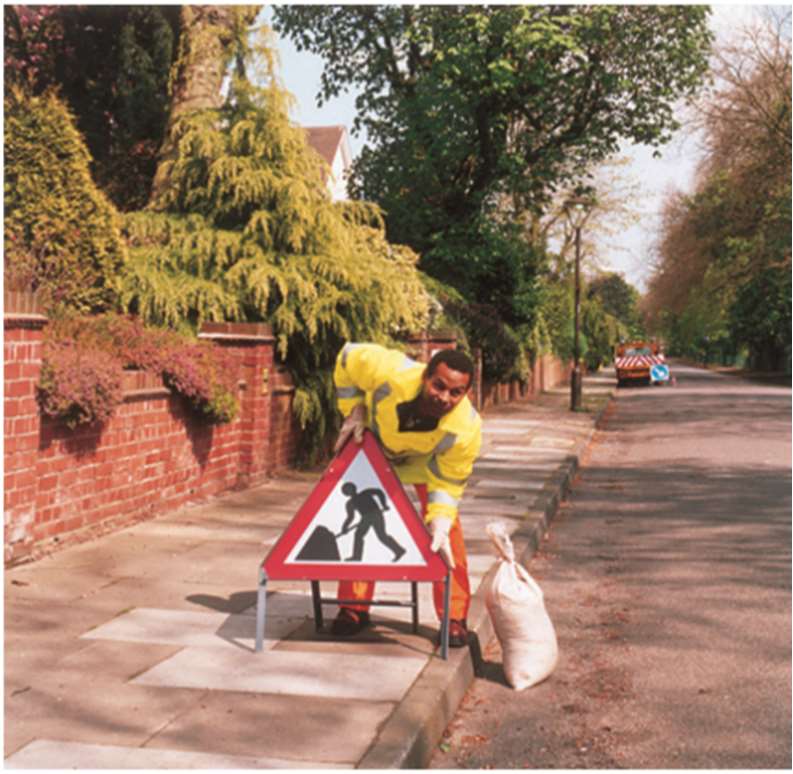
You are at increased risk when setting out signing, lighting and guarding, so great care is needed to ensure that you can see the traffic and the traffic can see you.
On arrival, or at any stop to set out signs, you must park your vehicle safely before you unload or set up signs, lights and barriers. Where possible the vehicle should be parked off the road in a position that does not obstruct a footway or cycle route. If you cannot park off the road, the vehicle must be clearly visible to other road users.
Turn on your roof-mounted amber beacon(s), and aim to ensure that any high visibility markings on the vehicle are facing on-coming traffic. It will be safer to get out of the vehicle on the passenger side, rather than stepping into the traffic stream.
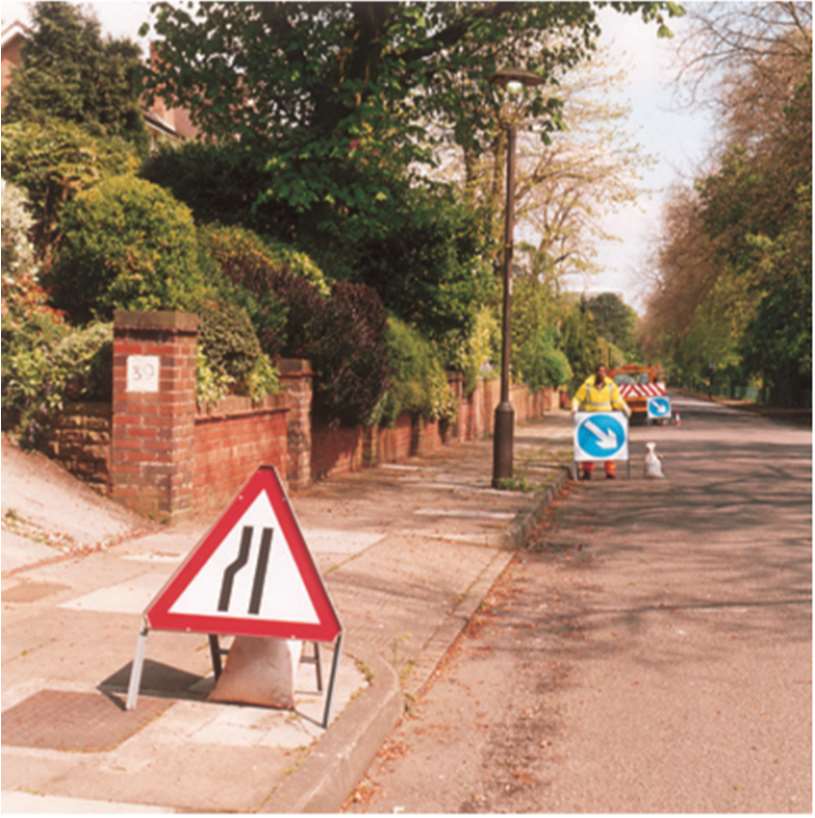
When the 'Road works ahead' sign is more than 440 yards (1/4 mile) from the works, or when extra advance signs are needed because visibility is limited, set up the initial and then the additional advance signs you need before moving on to the works site and setting out the rest of the layout. Face the traffic when you set out signs and take particular care when crossing the road to place them.
When setting out the works, face oncoming traffic and take particular care when crossing the road to place signs. You must not be distracted by mobile phones (including hands-free phones), radios, or other devices during this operation.
| CourseName | StartDate | EndDate | CourseLocation | Name | CompanyName | Results |
|---|---|---|---|---|---|---|
| NRSWA 5 Days - Supervisor Course | 06/11/2023 | 10/11/2023 | Isle of Man | James MacDonald | PAUL CAREY & SONS LTD | Pass |
| NRSWA 5 Days - Supervisor Course | 06/11/2023 | 10/11/2023 | Isle of Man | Daniel Sayle | PAUL CAREY & SONS LTD | Pass |
| NRSWA 5 Days - Operative Course | 06/11/2023 | 10/11/2023 | Isle of Man | Andrew Clucas | PAUL CAREY & SONS LTD | Pass |
| NRSWA 5 Days - Operative Course | 06/11/2023 | 10/11/2023 | Isle of Man | Leo Dunnigan | PAUL CAREY & SONS LTD | Pass |
| NRSWA 5 Days - Operative Course | 06/11/2023 | 10/11/2023 | Isle of Man | Gavin Oates | PAUL CAREY & SONS LTD | Pass |
| NRSWA 5 Days - Operative Course | 06/11/2023 | 10/11/2023 | Isle of Man | Nathan Swift | PAUL CAREY & SONS LTD | Pass |
| NRSWA 5 Days - Supervisor Course | 13/11/2023 | 17/11/2023 | Isle of Man | George Sharp | PAUL CAREY & SONS LTD | Pass |
| NRSWA 5 Days - Supervisor Course | 13/11/2023 | 17/11/2023 | Isle of Man | Anthony Young | PAUL CAREY & SONS LTD | Pass |
| NRSWA 5 Days - Operative Course | 13/11/2023 | 17/11/2023 | Isle of Man | Adam Fenton | PAUL CAREY & SONS LTD | Pass |
| NRSWA 5 Days - Operative Course | 13/11/2023 | 17/11/2023 | Isle of Man | Curtis Phillips | PAUL CAREY & SONS LTD | Pass |
| NRSWA 5 Days - Operative Course | 13/11/2023 | 17/11/2023 | Isle of Man | Robert Richards | PAUL CAREY & SONS LTD | Pass |
| NRSWA 5 Days - Operative Course | 13/11/2023 | 17/11/2023 | Isle of Man | James Grant | PAUL CAREY & SONS LTD | Pass |
| NRSWA 5 Days - Operative Course | 13/11/2023 | 17/11/2023 | Isle of Man | Allan Ware | PAUL CAREY & SONS LTD | Pass |
Uncontrolled copy once printed from its electronic source
| Document | Authorised by | Issue / Rev | Date | Page | |
|---|---|---|---|---|---|
| PCS-HS– Method Statement | BB | 1a | Aug 2020 | 11 of 18 | |
| <br><br>Uncontrolled copy once printed from its electronic source<br><br>2. Set out the ‘Road works ahead’ sign. Measure out the appropriate distance (D) from the point where your lead-in taper will begin. Then put one sign on the left-hand side (viewed from the perspective of traffic facing the sign) and another on the right-hand side of the road if your risk assessment deems it necessary.<br><br>3. Using the appropriate diagrams in the Code of Practise/Traffic Management Plan to help you, work back towards the site, placing more signs as necessary. Keep on the verge or footway if you can. If you are on a two-way road, repeat this procedure and place signs for traffic going in the opposite direction.<br><br><br> | |||||
| --- |
| Document | Authorised by | Issue / Rev | Date | Page | |
|---|---|---|---|---|---|
| PCS-HS– Method Statement | BB | 1a | Aug 2020 | 12 of 18 | |
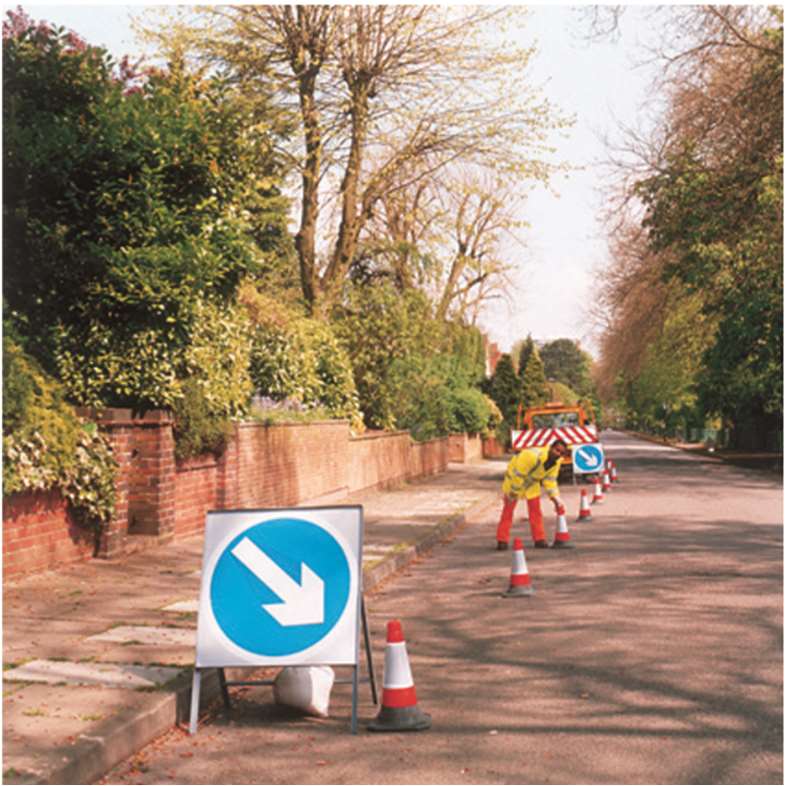
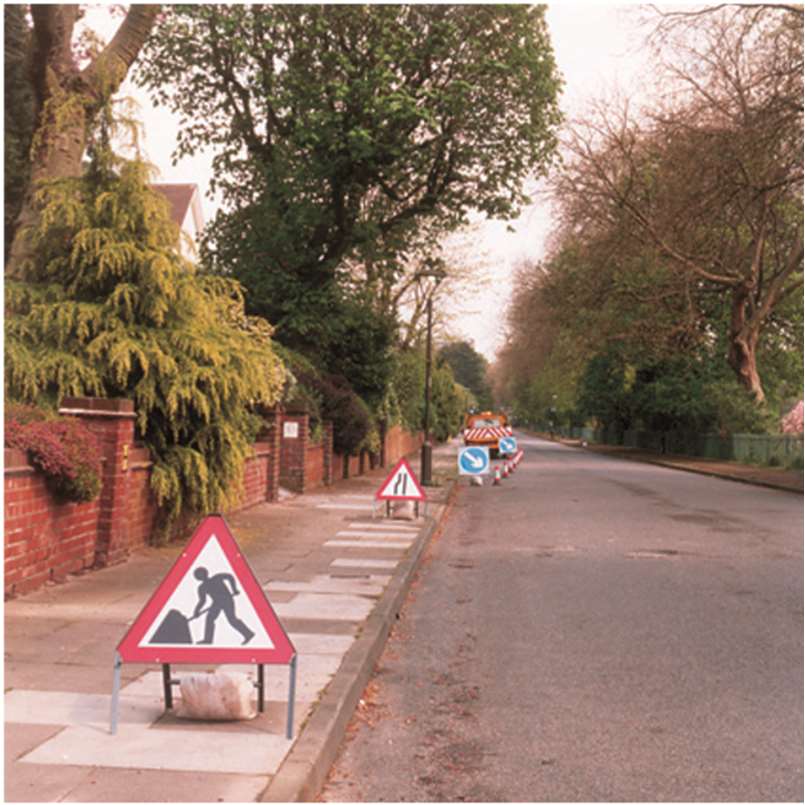
| <br><br>Uncontrolled copy once printed from its electronic source<br><br>4. Always face the oncoming traffic when you set out the cones for the lead-in taper. Start from the kerb or road edge, working out towards the works. Complete the coning around the works, leaving enough room for working space and safety zones.<br><br>5. Use cones, ‘Keep right’ signs, barriers and road warning lights, and an information board to complete the warning, guidance and protection for the works.<br><br>6. Where appropriate, set up an ‘End of road works’ sign.<br><br><br> | |||||
| --- |
| Document | Authorised by | Issue / Rev | Date | Page | |
|---|---|---|---|---|---|
| PCS-HS– Method Statement | BB | 1a | Aug 2020 | 13 of 18 | |
| <br><br>Uncontrolled copy once printed from its electronic source<br><br>Footway and footpath works – look after pedestrians<br><br>Where footways and pedestrian areas are affected by street works and road works, it is your (PCS) responsibility to make sure that pedestrians passing the works are safe. This means protecting them from both the works and passing traffic.<br><br>You (PCS) must take into account the needs of children, older people and disabled people, having particular regard for visually impaired people. In order to do this you must provide a suitable barrier system that safely separates pedestrians from hazards and provides a safe route suitable for people using wheelchairs, mobility scooters, prams or pushchairs. Always be on the lookout for pedestrians who seem confused or who are having difficulty negotiating a temporary route, and be prepared to offer assistance.<br><br>Safe Routes for Pedestrians<br><br>If your (Our) work is going to obstruct a footway or part of a footway, you must provide a safe route for pedestrians that should include access to adjacent buildings, properties and public areas where necessary. This route must consider the needs of those with small children, pushchairs and those with reduced mobility, including visually impaired people and people using wheelchairs or mobility scooters.<br><br>You should always try to enable pedestrians to remain safely on the footway if at all possible. Ideally, the footway should be a minimum of 1.5 metres wide for temporary situations but if this cannot be achieved, the existing footway can be reduced to an absolute minimum of 1 metre unobstructed width. Where the existing footway is narrower than 1 metre, you are not required to provide an alternative footway wider than the existing footway, but you should consider whether this is possible.<br><br>If it is not possible to maintain safe pedestrian access on the footway, consider whether there are other safe alternatives. This could mean, for example, closing the footway and placing a ‘Footway closed’ sign at the works and an advance ‘Footway closed ahead’ sign at a location where it is safe for people to cross the road (possibly with the use of portable pedestrian crossing facilities). It may be necessary to provide footway ramps on either side of the road at this location. Another alternative, at attended sites only, could be to preserve safe access for the majority of pedestrians and to offer assistance to those who might find a reduced width more difficult to navigate, including wheelchair or mobility scooter users, visually impaired people, or people with pushchairs.<br><br>If it is not possible to maintain safe pedestrian access on the footway and a safe off-carriageway alternative cannot be found, you should provide a walkway in the carriageway. In general a minimum 1.2 metre width of walkway should be provided (this allows for a visually impaired person being guided), with an absolute minimum of 1 metre unobstructed width. It is recommended that a wider walkway be provided if it can be done without resulting in a road closure or a reduction to shuttle working.<br><br>*It is not permitted for barrier feet or other equipment to obstruct this space.<br><br>All pedestrian routes must be fit for purpose and able to be used safely by all pedestrians, including older people and disabled people. These routes should be properly drained and have adequate headroom. Surfaces should be reasonably smooth without steep gradients or crossfalls. A suitable barrier should be placed between a pedestrian route and any adjacent drops or steep slopes.<br><br> | |||||
| --- |
| Document | Authorised by | Issue / Rev | Date | Page | |
|---|---|---|---|---|---|
| PCS-HS– Method Statement | BB | 1a | Aug 2020 | 14 of 18 | |
| <br><br>Uncontrolled copy once printed from its electronic source<br><br>Footway boards may be used on footways to maintain a route for pedestrians and provide light vehicle access to premises during excavation works.<br><br>Walkways in the Carriageway<br><br>You should provide a walkway in the carriageway only if it is not possible to maintain safe pedestrian access on the footway and a safe off-carriageway alternative cannot be found. When temporary pedestrian routes have to be placed in the carriageway, make sure the signing and guarding barriers are put into place before the footway is blocked. Make sure the sideways clearance (S) of the safety zone is on the traffic side of the barriers.<br><br>When pedestrians are diverted to temporary walkways in the carriageway, suitable ramps or raised footway boards must be provided to enable people using wheelchairs or pushchairs to negotiate kerbs safely. The layout should allow wheelchair and scooter users to enter and exit a temporary walkway safely. Ramps and boards must be fit for purpose.<br><br>Protecting Pedestrians During Works<br><br>If the works are on or near a footway, then there is a risk that pedestrians might enter the working space. This could happen if they trip and fall into the working space, because they make a mistake and take the wrong route, or because they deliberately enter the space.<br><br>The working space will often contain a number of hazards that could harm pedestrians. For example, pedestrians might trip over material, fall into excavations or be struck by moving or falling equipment. You must ensure that they are adequately protected against being exposed to these risks. You must also take into account the needs of children, elderly people and people with disabilities, having particular regard to visually impaired people.<br><br>At all static works, pedestrians must be protected by a continuous system of barriers. Where a works site can be approached by pedestrians crossing from the opposite side of the road, you should place barriers all around the excavation, even when pedestrians are not diverted into the carriageway. Most barriers are designed to be put up as part of a system. If not properly erected, they will not be sufficiently stable and could be blown or knocked over. You must follow the manufacturer’s instructions when erecting barriers. If you are unable to correctly install the barriers available, you should contact your supervisor, manager or other competent person before starting work. Whilst you are working at a site:<br><br> Keep checking that signs and barriers are still in place;<br><br> Make sure that materials or machinery do not go above or move into the pedestrian space;<br><br> If you need to move barriers or signs to allow access to the works, replace them as soon as possible (whilst they are open you must have someone at the opening to prevent pedestrians from entering); and<br><br> Keep a lookout/banksman and if you see pedestrians entering the working space, stop all machinery movements immediately and escort the pedestrians back onto a safe route.<br><br><br>Unattended works<br><br>If it is necessary to leave a site unattended, then remove as many hazards from the site as you can before leaving it. For example:<br><br> remove or securely immobilise all plant and machinery; | |||||
| --- |
| Document | Authorised by | Issue / Rev | Date | Page | |
|---|---|---|---|---|---|
| PCS-HS– Method Statement | BB | 1a | Aug 2020 | 15 of 18 | |
| <br><br>Uncontrolled copy once printed from its electronic source<br><br> remove as much equipment and material as possible. Make sure any that is left on site is stored in a tidy manner and in such a way that it cannot fall, be knocked over or tampered with.<br><br>If an unattended site contains an open excavation within 2 metres of a temporary or permanent footway, then you should consider either:<br><br> putting temporary covers over the excavation or<br><br> providing an enhanced barrier around the excavation;<br><br><br>unless a site specific risk assessment shows that such additional protection is not justified. Short Delays on Footways<br><br>Sometimes works are required that temporarily restrict or prevent the free passage of pedestrians past the works (traffic-sensitive times are to be avoided whenever possible). Such activities include the collection and delivery of materials, and limited excavation or reinstatement activities. In some circumstances it will not be possible to provide an alternative footway because of restricted widths or other factors. A temporary obstruction of the footway is permissible if ALL the following apply:<br><br> No alternative footway is available or can be provided;<br><br> The footway is closed for no longer than absolutely necessary, and in any case no longer than 15 minutes in every full hour;<br><br> Sufficient operatives are available at all times to advise, assist and direct footway users safely past the works;<br><br> Pedestrians requiring assistance need wait no longer than 5 minutes for help;<br><br> All overhead operations are suspended when assisted pedestrians pass the works;<br><br> Temporary footway closure signs are placed a recommended minimum of 20 metres in advance of the works; and<br><br> DoI Highways has been notified and agrees with the use of this measure.<br><br><br>Special consideration must be given to disabled people (including wheelchair or mobility scooter users) and people with pushchairs or prams at all times.<br><br>Cyclists<br><br>We WILL ensure suitable provisions are made for the safety of cyclists passing or crossing the works. Particular care is needed where cycle lanes or cycle tracks are affected by street works or road works because these routes may be especially popular with cyclists.<br><br> | |||||
| --- |
| Document | Authorised by | Issue / Rev | Date | Page | |
|---|---|---|---|---|---|
| PCS-HS– Method Statement | BB | 1a | Aug 2020 | 16 of 18 | |
| <br><br>Uncontrolled copy once printed from its electronic source<br><br>Cyclists might have to use other parts of the carriageway, a temporary cycle track, or an alternative route. You (PCS) should consider whether access on the carriageway can be preserved for cyclists, even if it needs to be closed to motor vehicles.<br><br>Where the carriageway is closed but the footway remains open, a ‘Cyclists Dismount And Use Footway’ white-on-red temporary sign can be used. Your supervisor, manager or other competent person may need to discuss these alternatives with the DoI Highways Authority.<br><br>Equestrian Routes – Look After Horse Riders<br><br>If the route is used by equestrians you must ensure suitable provisions are made to ensure the safety of people riding or leading horses past the works. Consideration should be given to suspending all operations when horses are passing the works.<br><br>Your supervisor, manager or other competent person may need to discuss the situation with the DoI Highway Authority before work starts.<br><br>9. Site Emergency Response Plan.<br><br> All accident & environmental incidents must be reported immediately.<br> First aider to be identified at induction.<br> Where the PCS Working Team are a mobile / maintenance call-out team, their First aid box will be kept in the works van.<br> On discovering an emergency such as fire, structural collapse, trapped personnel, serious injury or any environmental incident, raise the Alarm and report the emergency immediately to the following personnel:<br> PCS Site Manager/Supervisor.<br> Site Personnel.<br> Note: for serious emergencies such as a serious injury or large fire outbreak also contact emergency services directly 999.<br> Give clear details of the incident and location.<br> Do not hang up until requested to do so.<br> Tackle small fires using portable fire extinguishers only if safe to do so. Never put your own safety at risk.<br> If a person is trapped but is not in anymore danger, no attempt will be made by site personnel to remove the victim until the emergency response team arrives on site.<br><br><br> | |||||
| --- |
| Document | Authorised by | Issue / Rev | Date | Page | |
|---|---|---|---|---|---|
| PCS-HS– Method Statement | BB | 1a | Aug 2020 | 17 of 18 | |
| <br><br>Uncontrolled copy once printed from its electronic source<br><br> If however there is severe danger that the situation might become worse before the emergency services arrive, the area will be secured by whatever means required. Once the area is secure, a trained first aider can administer first aid to the casualty.<br> The PCS Site Supervisor will appoint a person to wait at the site entrance to escort the Emergency Response Team to the injured person.<br> An PCS Manager will formally contact the Client & PCS H&S Advisor and inform them of the accident /incident so that an accident / incident investigation can commence.<br> PCS Staff will provide any help necessary as requested in the accident investigation. General Items<br><br><br>The location of the nearest A&E Hospital to the works is as follows:<br><br>Nobles Hospital Braddan<br><br>In case of an emergency contact the (ESJCR) Emergency Services Joint Control Room on 999<br><br>Important Contacts:<br><br> PCS Limited Main Office (Fault Reporting) = 01624 880581<br> Plant &Transport Manager (Paul Carey) = 07624 495711<br> Projects Director (Aaron Carey) = 07624 376395<br> Managing Director (Paul Carey) = 07624 495711<br> Contracts Manager (Brian Barnett) = 07624 308646<br> PCS Limited Safety Officer (Brian Barnett) = 07624 308646<br> Manx Utilities (Elec) = 01624 687687<br> Manx Utilities (Water) = 01624 695949<br> Manx Utilities (Meary Veg Waste) = 01624 685885<br> Manx Telecom = 01624 624624<br> Manx Gas = 01624 644444<br><br> Environmental Protection Unit DEFA = 01624 685885<br><br> Fisheries Directorate = 01624 685857<br> Isle of Man Health & Safety Inspectorate = 01624 685952<br> E-mail address for service plans<br><br><br>o [email protected]<br><br>o [email protected]<br><br><br> | |||||
| --- |
| Skipton/TM/MS01 | ||||||
|---|---|---|---|---|---|---|
| <br><br> | Document | Authorised by | Issue / Rev | Date | Page | |
| --- | --- | --- | --- | --- | ||
| PCS-HS– Method Statement | BB | 1a | Aug 2020 | 18 of 18 | ||
| <br><br>Uncontrolled copy once printed from its electronic source<br><br> | METHOD & RISK ASSESSMENT BRIEFING RECORD | METHOD & RISK ASSESSMENT BRIEFING RECORD | METHOD & RISK ASSESSMENT BRIEFING RECORD | METHOD & RISK ASSESSMENT BRIEFING RECORD | METHOD & RISK ASSESSMENT BRIEFING RECORD | |
| --- | --- | --- | --- | --- | --- | |
| By signing this briefing record, I confirm that I have fully read and UNDERSTOOD this Method Statement and the associated Risk Assessment(s) as highlighted within this document.<br><br> | By signing this briefing record, I confirm that I have fully read and UNDERSTOOD this Method Statement and the associated Risk Assessment(s) as highlighted within this document.<br><br> | By signing this briefing record, I confirm that I have fully read and UNDERSTOOD this Method Statement and the associated Risk Assessment(s) as highlighted within this document.<br><br> | By signing this briefing record, I confirm that I have fully read and UNDERSTOOD this Method Statement and the associated Risk Assessment(s) as highlighted within this document.<br><br> | By signing this briefing record, I confirm that I have fully read and UNDERSTOOD this Method Statement and the associated Risk Assessment(s) as highlighted within this document.<br><br> | ||
| Name | Signed | Signed | Company | Date | ||
| Document reference | Document reference | Document reference | RSTS Peel – Traffic Management | RSTS Peel – Traffic Management | RSTS Peel – Traffic Management | |
| Activity | Activity | Activity | Pedestrian & Traffic Management | Pedestrian & Traffic Management | Pedestrian & Traffic Management | |
| List of documents used / Record of issue<br><br> | List of documents used / Record of issue<br><br> | List of documents used / Record of issue<br><br> | Method Statement, Risk Assessment, Traffic Management Plans, | Method Statement, Risk Assessment, Traffic Management Plans, | Method Statement, Risk Assessment, Traffic Management Plans, | |
| --- |
Copyright in submitted documents remains with their authors. Request removal
View as Markdown