Loading document...
A high status building in a prominent setting, the Castle Mona Hotel is set centrally on the sweeping bay of Douglas, the capital of the Isle of Man.
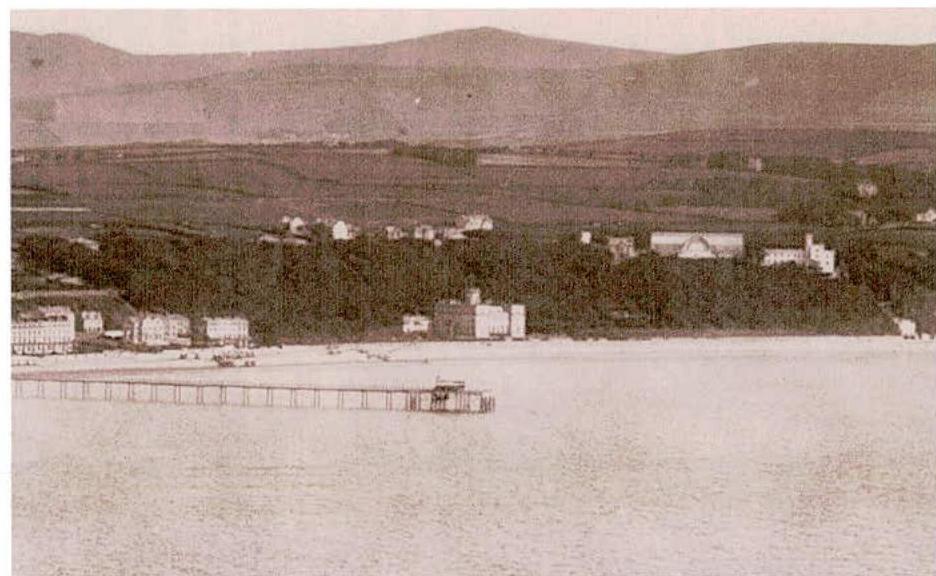
Originally the building was set within extensive landscaped gardens with promenades surrounding the house, a heavily wooded slope behind and the sea shore in front below a balustraded stone faced retaining wall containing bastions. This has long been lost with the development of the promenade shops immediately in front of the main building, adjacent to the promenade and shore; tall Victorian boarding houses, now largely converted into flats, to the south west; The Palace Cinema immediately behind on higher ground to the north and the Palace Hotel on the promenade to the north east.
Although developments have encroached on the Castle Mona Hotel and do detract from it, the building does remain an important part of the townscape.
Only the core part of the Castle Mona Hotel and the hard standing to the front of the building, including the railings but excluding the shops below, are registered with the wings to both the south west and north east excluded. The registration area is defined by the red line on the adjacent plan, with the registered area of the building hatched in pink and the non registered area hatched in grey.
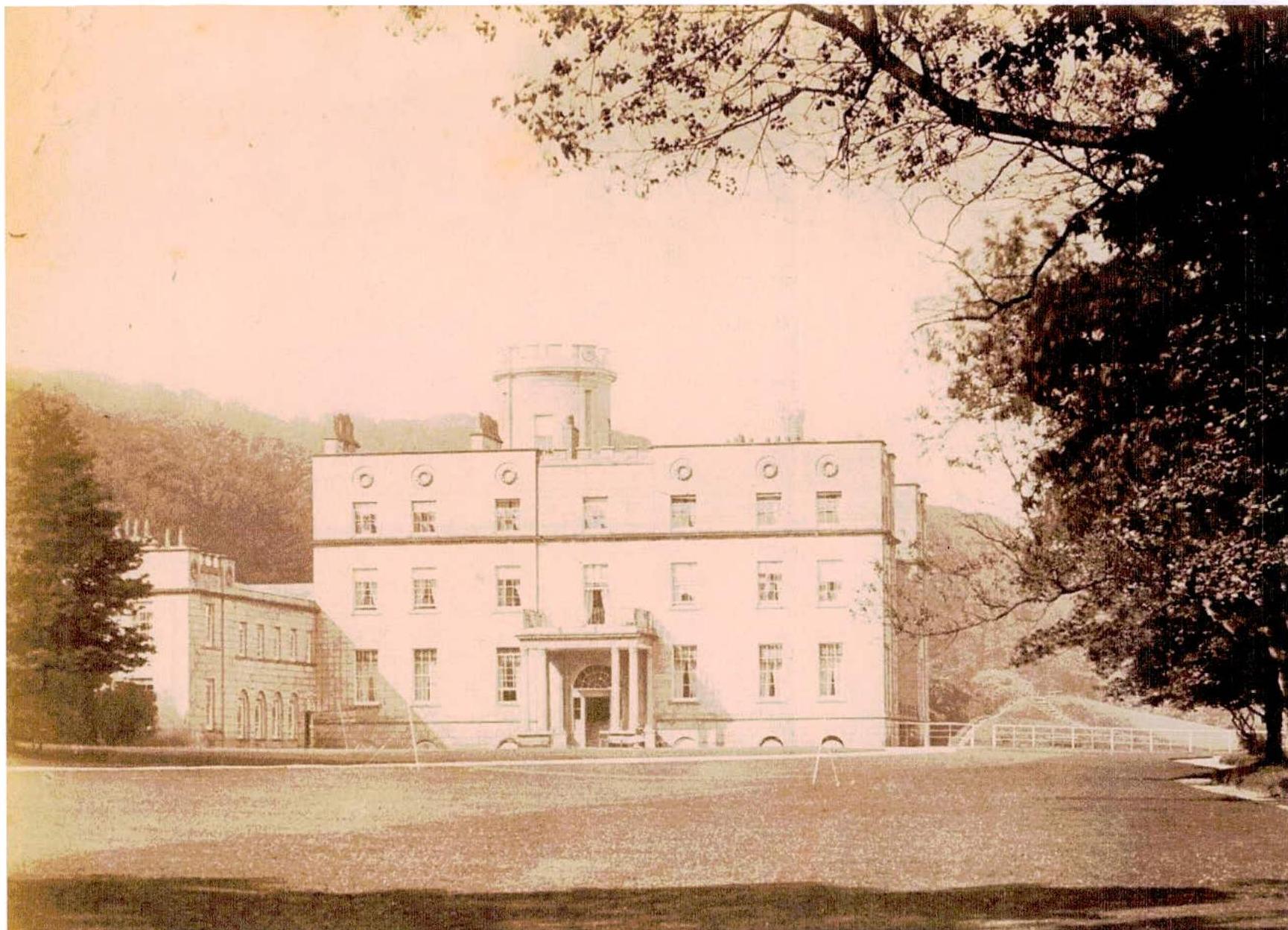
The core of the building and the lower level of the south west wing (not registered) dates from 1804 and comprises an essentially symmetrical three-storey building with a two-storey linking piece at the front and a rear side wing. A tower is placed centrally when viewed from the front but seen to be set towards the rear when viewed from the side.
Converted to a hotel in 1831, the building has, over several ownerships, been extensively altered internally with the south west being extended upwards in the late 1800s, a large bedroom and dining wing added to the north east in 1960/61, this being further extended in 1993/94 with accommodation for a nightclub and bowling alley.
The registration document dated 1985 describes the building (number 82 on the list of protected buildings) as having:
"...parapets decorated with roundels and garland motifs except over the entrance where castellations indicate the... porch.... The well proportioned rectangular windows decrease in their vertical dimension with each succeeding storey..."
The whole of the Castle Mona building and its curtilage are included within the Douglas Promenades Conservation Area, designated in 2002. The Castle Mona together with the Galety Theatre are the most important buildings in the conservation area and, along with the Sea Terminal and Villa Marina form the most important landmarks. The remainder of the conservation area is, largely, Victorian.
Manx National Heritage • unknown date (pre 1898) • ref PG/8758
Manx National Heritage • c.1880 • ref PG/8224/18/24
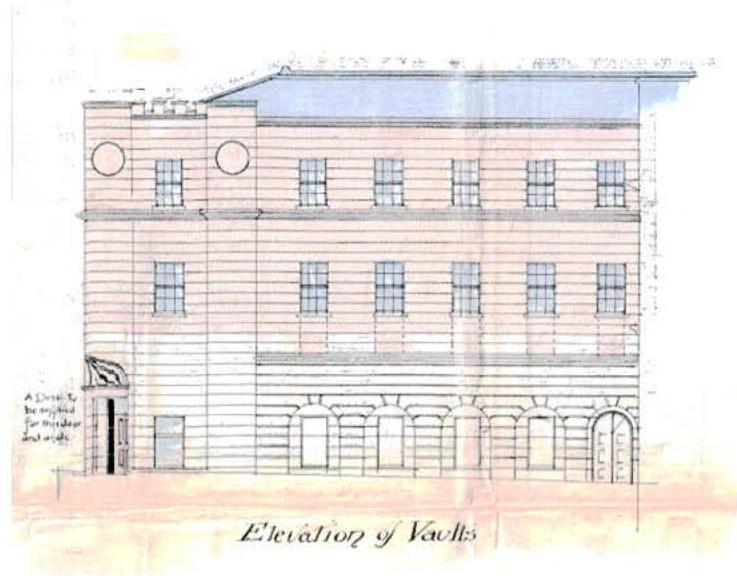
Drawing of south west wing alterations • Architect Daniel Arkell • 1898
Drawing of proposed alterations + Architect Daniel Arkeit + 1898
The Castle Mona Hotel is set centrally on Douglas bay and is immediately surrounded by the tramwreck car parking with a wooded slope at the rear of the property. The ground slopes upwards from the south to the north.
Over time, the majority of the estate has been sold off piecemeal and developed. This encroachment, particularly on the south-west entrance elevation, has had a detrimental effect on the setting of the Castle Mona Hotel, which is now less visible and hemmed in by overbearing structures.
No historic features survive of the extensive grounds, landscaping, earth bund, and retaining wall with bastions to the sea side elevation.
The early 19th century core section of the house is formed of, generally, three storeys on top of a rusticated basement half plinth level. Two storeys form the principal storey and are visually divided horizontally from the third, attic storey, by a projecting cornice.
Each of the main elevations is also split vertically into three bays. On the seaside elevation, two side bays are set marginally forward either side of the bathroom, visually book-ending the principal space. These projections are further subdivided vertically into three, with the central panel containing windows (one window wide) and finishing at the parapet level in the castellations. The windows decrease in height with each succeeding storey.
The building is built of rubble stone and clad in an Arran Freestone, a white sandstone, with the Caade stone medallions and carved awag decorations within the attic storey. There are inset, slender, clustered columns on the sea side, projecting bays for the height of the principal storey, either side of the windows. The clustered columns are repeated on the entrance porch and, internally, in the entrance hallway and dining room.
The roof is a series of complex low-pitched roofs, largely hidden by parapets, which are castellated in areas to provide emphasis, for example over the main entrance portico, and at the double-height ball room. The bathroom facade only extends to the height of the first floor; the attic area above being within the pitched roof space, the only area of pitched roof visible from the surroundings.
At the rear of the building are projecting wings. To the south-west, the original two-storey 'office' wing, originally containing a back-of-house accommodation, has been extensively altered. A third storey was added in the late 1800s with the original upper storey being rebuilt to an increased height. Although motifs from the original building were replicated, medallions and castellations for example incorporated into the end bay, the original proportions have altered, being narrower. An original collonade was infilled (the arched windows in this area are shown, on the original plans as being open to outside and with a vaulted ceiling, the collonade originally running the width of the building) and the ground floor in this area area opened up to form a saloon bar.
In the twentieth century, further alterations occurred, the most significant being the north-east bedroom and dining-wing extension. Although largely set back from the side elevation of the house, leaving the side elevation of the house is still visible, the extension is set at the same height of the parapet of the core building with a flat roof, so fairly dominant, particularly as the bedroom wing turns through ninety degrees and projects forward at the end. This creates a book-end to the sitting of five balconies. Like the alterations to the south-west wing, the book-end, which is clad in stone, also reflects the style of the earlier building, albeit plainer. Again, the proportions are not as the original building being narrower. Of its time, this extension it is of poor quality construction, below modern standards, and is in poor condition.
The lower floors of this extension were themselves extended in the early 1990s, along with the lower bedroom floor being converted into a nightclub. This intrusive late twentieth century two-storey rendered extension projects toward the dining room/bedroom extension, compromising and obscuring the north-east elevation of the house. Again, references to the original building have been incorporated with the use of castellations and book-ends but appear further diluted and bear little resemblance to the quality and character of the original.
Pozicard • aerial photograph by Ailigraph (Hooton Airport, Wimal) • 1928 Mana National Heritage • 1880s • ref PG/3861
The basement consists of a network of rooms that are a level below ground level and corresponding with the core of the early nineteenth century house.
Despite alterations over time such as the installation of a modern commercial kitchen, stores, and toilets which have ended or obscured historical detailing, the layout is still legible. Elements of note include the cellars and main circulation hall featuring stone vaulting above a modern ceiling; a small section of stone slab flooring in a lobby that once served the butler's pantry (now toilets accessed from the ground floor); a stone cantilevered service stair providing access from the servants hall (now beer cellar) to the main entrance and upper floors. The base of the circular tower originally contained a staircase.
The core ground floor of the house retains a number of historic details, despite being heavily remodelled throughout its history. At ground floor level, the principal rooms are focused on the sea side elevation, leading off the grand entrance hall. The principal rooms include what is now known as the Westgewold room, the ballroom, and the dining room.
The grand entrance is via a substantial flat roofed portico and up an internal flight of stairs, flanked by lions. At the top of the stairs, either side, an slender clustered columns, a Stewart motif that appears throughout the building. This area contains a comicing and relief panels to the walls. A further set of columns, in line with the Westgewold room, separate this vestibule area from the main hall itself, which is set on a south-west to north-east axis running from one side of the building to the other. These columns are repeated at the other end of the hall in line with the dining room. The main hallway has been remodeled with additional sets of columns introduced, unbalancing the symmetry of the plan. A lift, telephone booths, reception desk, and lowered ceiling have also been introduced. Some historic coving and ceiling is still evident, visible through access hatches in the modern ceiling. The main staircase within the circular tower is accessed centrally along the south-west north-east axis, and off the main hall, but the stair has been replaced and its direction reversed.
The double-height ballroom is accessed directly from the main hall opposite the circular tower and possesses a highly decorated scheme to the ceiling. Early to mid-twentieth century photographs illustrate that the ceiling is, as a whole, unchanged although the frisos at the clerestomy window level have been overpainted with a different design. The decoration scheme to the walls below the frisos has also been altered. Other intact features include comicing; dado railing; relief panels above dado level; two marble fireplaces with overmarble mirrors; door surrounds and doors (apart from the main entrance door) which include clustered columns at the main entrance to the room; and the windows which retain their shutters. Intrusions include the food lift within an original doorway; a small kitchenette area; modern flooring; door ironmongery; services such as speakers, power points, radiators, and fire escape signage. The stone balcony immediately outside the ballroom has been more recently altered, replacing the end section with a set of steps to serve as a fire escape.
Adjacent and interconnected to the ballroom is the Westgewold room, also accessed via a small lobby from the entrance vestibule area. The room features comicing, dado railing, relief panels above the dado, a marble fireplace featuring clustered columns; doors and the windows retain their shutters. Intrusive elements include services such as power points and radiators plus door ironmongery.
The remaining principal room, the dining room, is accessed from both what was the main hall/near vestibule, now part of the hotel bar, and from the ballroom. This room retains a marble fireplace; dado rail; comicing; relief panels above the dado; door and door surrounds; windows with shutters and, at the springing points of the curved section of wall in each corner, a clustered column. Modern intrusive elements include the food lift within a previous doorway, although the door surround and some panelling to the opening appear intact; and services. The modern decorative scheme has been vandalized.
The north-east rear section of the hall retains its comicing, but, north-west of the hall and main axis, much historic detailing and, to a large extent, the layout has been lost due to modern interventions. Original courtyard spaces have been lost, internal and external sections of wall removed and ceilings lowered. A number of relatively short and ill-proportioned editions of the original columns appear in the main bar area where earlier walls have been replaced. Exceptions through include the service stair (refer to notes on basement) and the office's either side of the main entrance steps. Although the office spaces are compromised by modern ceilings, timber stud walls and new stairs to basement toilets, they do appear to retain, above suspended ceilings, original comicing, picture rails, historic wall paper, and the windows which retain their shutters and panelling below.
From relatively early in the building's history, the upper floors have been utilized as hotel accommodation. This has resulted in the insertion of a large number of partitions for ensuite bathrooms; lowered ceilings; a staircase within the main corridor behind a glazed screen; the creation of corridors to connect to more modern bedroom extensions at the rear of the building; and the omission of the original first to second floor staircases from either end of the main south-west to north-east corridor to provide further bedrooms. This has impacted the legibility of the plan. Despite this, however, some historic detailing remains. On the external elevations windows and their shutters generally remain, although secondary glazing has been introduced; some historic comicing is evident at higher level; the tower features ornate comicing with derill detailing and a surround with its opening to the corridor; room 105 retains a small area of wall panelling to what was a door opening to an adjacent room.
An intact + clearly legible element of exceptional historic interest, making an important contribution to the wider significance and understanding of the building's heritage; important at national or international level. It will have high cultural value, greatly contributing towards the building's character and appearance. Alteration or removal of such features will be strongly resisted.
An intact + clearly legible element of high historic interest, making an important contribution to the wider significance and understanding of the building's heritage; important at national or international level. It will have high cultural value, greatly contributing towards the building's character and appearance. Alteration or removal of such features is likely to be strongly resisted.
An element of lower historic interest, making less of a contribution to the significance and understanding of the building's heritage; important at regional level, possibly higher. It will have some cultural importance and play an important role in defining the building's character and appearance. Greater flexibility should be allowed in terms of alteration than for items of high significance.
An element of little historic interest making moderate contribution to the significance and understanding of the building's heritage. Alteration is more likely to be possible than for items of high or medium significance.
An element of little or no historical importance or cultural value but having no impact on the heritage of the building. Alteration or removal is likely to be possible.
An element of no historical importance that has a harmful impact on the heritage of the building, detracting from the values of the site and its character and appearance. Efforts should be made to remove such elements.
Castle Mona Hotel is number 82 on the register of protected buildings as well as being within the Douglas Promenades Conservation Area. These designations are official recognition of the high heritage significance of the building.
Historical value concerns the ways in which past people, events, and aspects of life can be connected through a place to the present—it tends to be illustrative or associative by nature.
The historic value of Castle Mona lies predominantly in its historic associations and its documented past. Completed in 1804, it was built as the private residence of the 4th Duke of Athol, the Governor General of the Isle of Man, 1793-1830, by his architect George Steuart as a more fitting residence. When the Duke left the island, the property was sold off and converted to a hotel in 1831.
The hotel was not particularly successful, and the building was sold. The estate was gradually sold off piecemeal for development in the late 1880s and the building changed ownership several times, being subsequently adapted and extended over time to increase its viability as a hotel. The Castle Mona Hotel closed in 2006. It was eventually sold at auction in 2018.
The historical value of the building is considered high.
Evidential value comprises the potential of a place to yield evidence about past human activity. This can be gleaned from archaeological, architectural, and intellectual or documentary evidence.
The residential value of the Castle Mona lies in its potential to provide further information on the building and its setting, which may enhance understanding and contribute to its heritage significance.
The Castle Mona has been altered quite considerably, and internally and has lost the physical evidence of its setting, although the building itself does still retain a number of original spaces and details.
In terms of archaeological potential, it is likely that an archaeological investigation would reveal little given that considerable works were undertaken by the Victorians, with the construction of the promenade shops in front of the seaside elevation, the Palace Hotel, Colliseum, and Ballroom to the north-east plus the construction of the boarding houses, now generally flats to the south, and the north-east bedroom wing extension, all within the original landscaped grounds.
The residential significance of the estate in terms of archaeological potential is therefore considered to be low.
A significant amount of documentary evidence survives, however, from some of Steuart's original drawings; a set by local architect John Taggart prepared just twenty-two years after the building's completion for the purpose of conversion to a hotel (designed by Hansom & Welch); 1888 portfolio undertaken for selling off sections of the estate, which illustrate the building's original setting; plus various articles regarding the Arran Freestone cladding and numerous sales and purchases of the estate.
The Castle Mona itself also has the potential to tell us more about the former layout, construction, and decorative detailing through analysis of the surviving fabric in tandem with careful removal of modern false ceilings and linings.
The historic development plans contained within "The Castle Mona Hotel," Registered building no. 82, "Identification of development stages throughout the building" produced by the Planning Department, based on historic plans, has been utilized as basic source material and updated following further research. This starts to unravel the evolution of the building.
The residential significance of the building in terms of historic building archaeology is considered medium.
Communal value is, in essence, centred on the importance of a place to the people who use, experience and value it. Therefore, it is important to consider the public perception of use of the site and translate this into an understanding of communal value.
The communal value is considered to be moderate.
Originally, the Castle Mona and its estate was designed and operated as a single residence for the 4th Duke of Athol, supported by a workforce. However, within 30 years it had been converted to a hotel and was therefore opened up to public use. Over the course of its history the hotel evolved and was adapted to incorporate uses ranging from a casino, nightclub and eaterie to bowling alley.
Although remembered with fondness by many, the building is not the focal point. It once was and has struggled and declined over the years. It has operated for most of its life as a hotel providing public access and its continued usage, until 2006 when it closed, and social value give it a clear sense of identity, belonging and place retaining its historical relevance.
The aesthetic value of a building or landscape refers to the ways in which people draw sensory and intellectual stimulation from a place and its architectural quality.
A formal design by a known architect, Steuart, for a known patron, the 4th Duke of Athol, the original exterior form and materials that the building are constructed from are distinctive and of good quality.
The Arran Freestone, a white sandstone cladding to the walls generally, with Coada Stone medallions below carved stone swags on the seaside elevation, is particularly noteworthy.
A strong form with, originally, an essentially symmetrical square floor plan with a circular stair tower in a courtyard and projecting side wings at the rear. The principal rooms are on the front, seaside elevation, with the anterooms projecting forward either side of the saloon, or ballroom.
Elevationally, the building has a rusticated half basement plinth, with 3 storeys above. The low pitched roofs are hidden behind parapets which are castellated in parts. The circular stair tower rises above the rest of the building, giving it a distinctive silhouette. A recurring Steuart theme of slender, clustered columns appear externally and internally. Both the clustered columns and castellations appear after this elsewhere in Manx architecture, as noted by Patricia Tutt in her book, 'An Introduction to the Architecture of the Isle of Man'.
Internally, original late Georgian painted decoration survives in the double height ballroom space.
Despite subsequent incongruous extensions to the north east and various alterations to accommodate additional and new uses, there are no comparable buildings on the island.
There is the potential to improve the aesthetic quality of the house through considerate repair, conservation and removal of unsympathetic extensions and alterations and their careful replacement.
The aesthetic quality of the building is considered to be high.
There are a number of features that detract from the heritage value of the house. These features are considered to be intrusive and some offer the opportunity for considered enhancement.
These include:
Copyright in submitted documents remains with their authors. Request removal
View as Markdown