Loading document...
Registered Charity No 443
Author: Kevin Wells Prepared for: Mr R. Bhadouria Bridge House West Baldwin IM4 5HA Ref:- 22/00314/Mit/KPW
Manx Bat Group were engaged to carry out a bat survey for planning application 22/00314/B, which is for a 2-storey extension to the southern end of the property. The survey found that bats were roosting in the roof of the property and were seen to be emerging from multiple points around the property. These were at all of the dry verge ridge caps and from behind the wooden cladding at point D. It was also noted during the survey that all joints in the dry verge system provided gaps that allow entry to bats.
Due to the presence of bats, it has been noted as part of the planning consent that a method statement of how to provide mitigation for the bats would be required before any work can be carried out.
This document provides the information on what mitigation must be put in place, in what order and during what periods certain works can be carried out.
If at any stage of the works a bat is discovered or disturbed, work should cease immediately and DEFA contacted for further guidance.
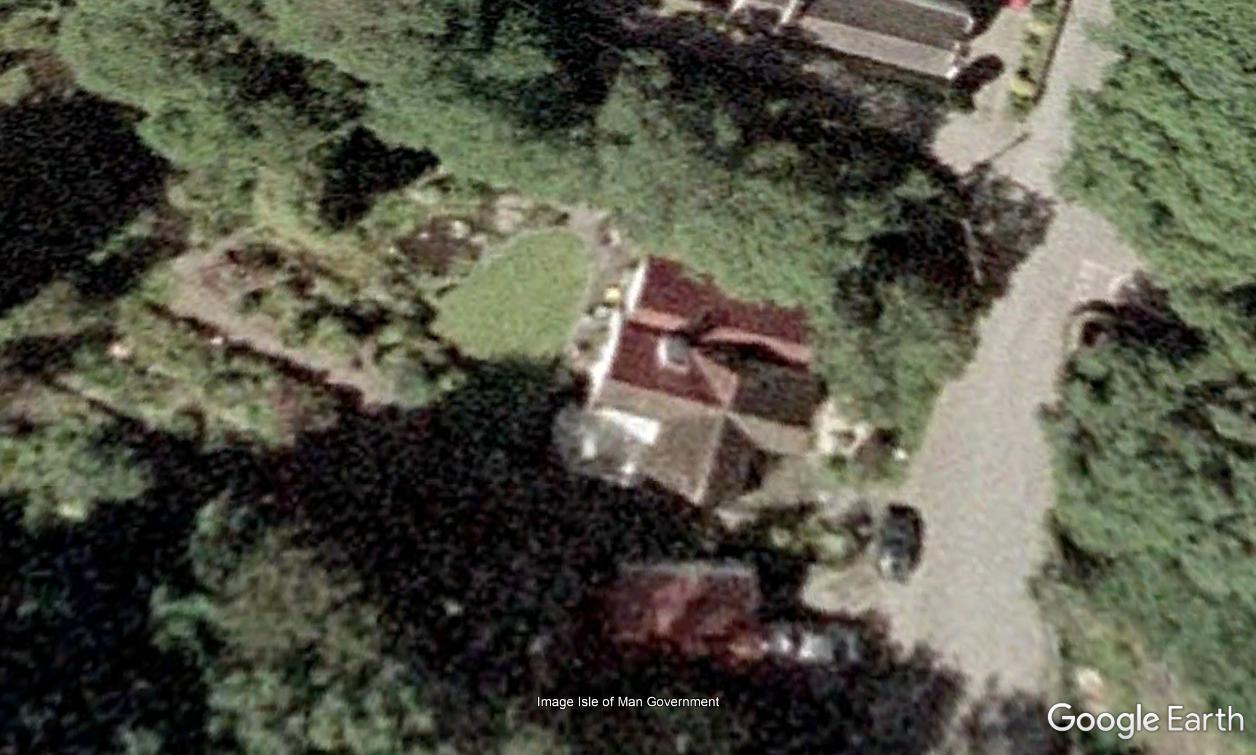
The property is seen in the satellite image below (letters are referenced later in this report). The property fronts onto West Baldwin Road. The property lies on a South-South-West – NorthNorth East line, shortened to north, south, west and east for this report. The front of the property on the eastern side. The property has two distinct pitched roof lines. The biggest part of the property, located to the southern end, is 2-storey and has a pitched cross shaped tiled roof running north-south and east to west. This roof has one loft space for this with 4 gables marked C, D, E and F. There is a single-story section of the building towards the northern end which again has a pitched roof running east-west with 2 gable ends, marked A and B. Again, it has a single loft space. All of the gable ends have wooden cladding. There is a further small single storey storage area to the northern end with a sloping roof, which starts at the guttering line of the roof running from A-B and slopes downwards towards the outside, northern wall. There is a large glass roofed conservatory to the rear south west corner of the building
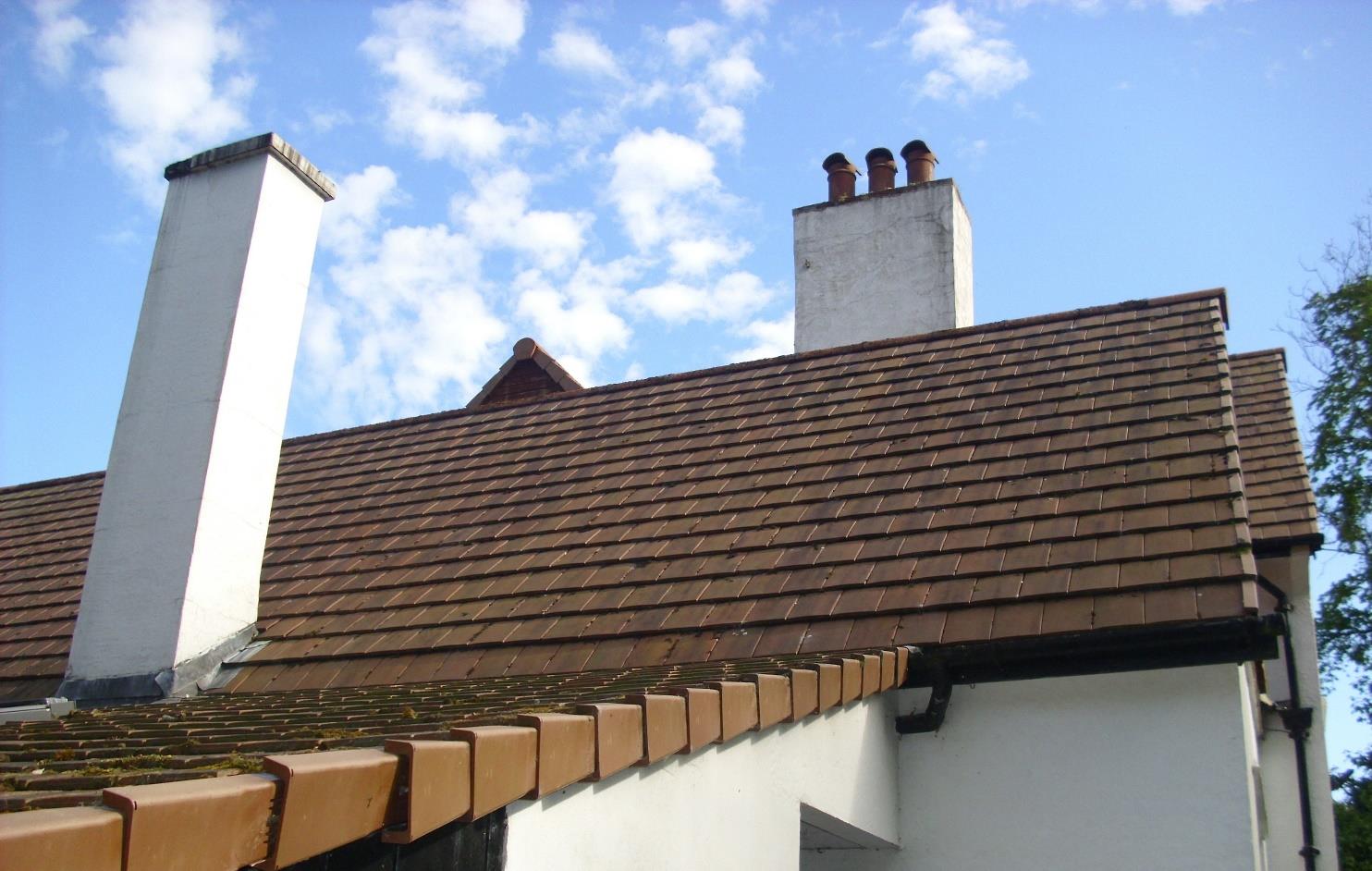
The roof of the property Is red tiles, which were replaced by a previous owner sometime between 2014 and 2016. The roof edges are all plastic dry verge. Directly below the tiles is a roof membrane of an undetermined type, sited directly under the tiles and the joists. The single storey northern loft has been boarded to the underside of the joists leaving a gap between the boarding and the tiles. There are small square holes cut out of this boarding in various places along the length of this boarding and at the eastern end there is a large area where the boarding appears to have been removed / fallen down. The loft space to the southern end roof has the same membrane lining, but does not have the extra boarding to the underside of the joists.
F
B
Satelite image of property
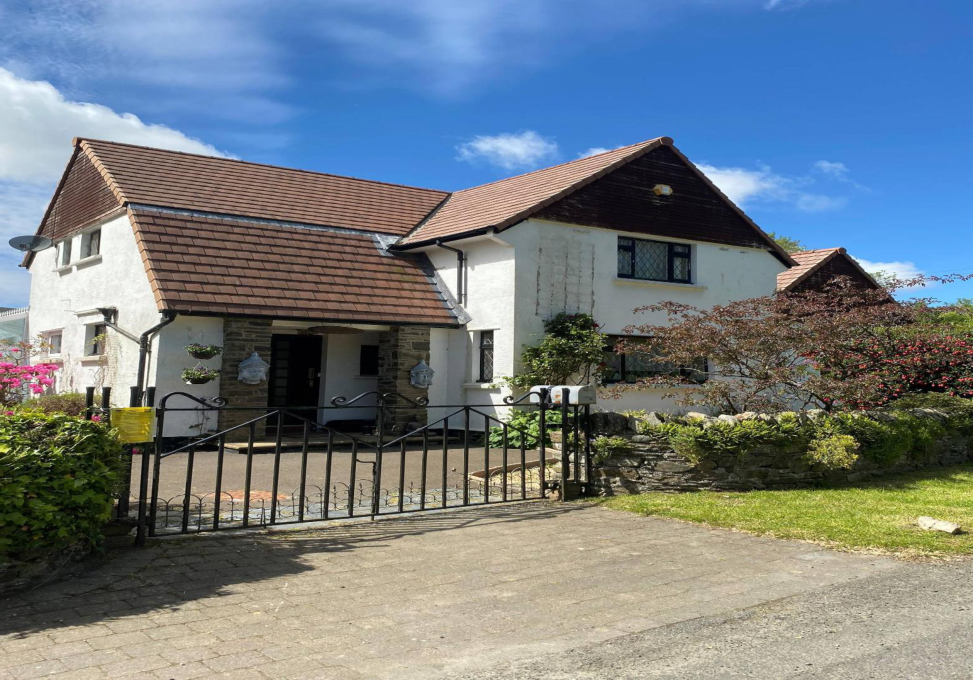
View of eastern (front of property) with Gable ends B, C and D visable (right to left)
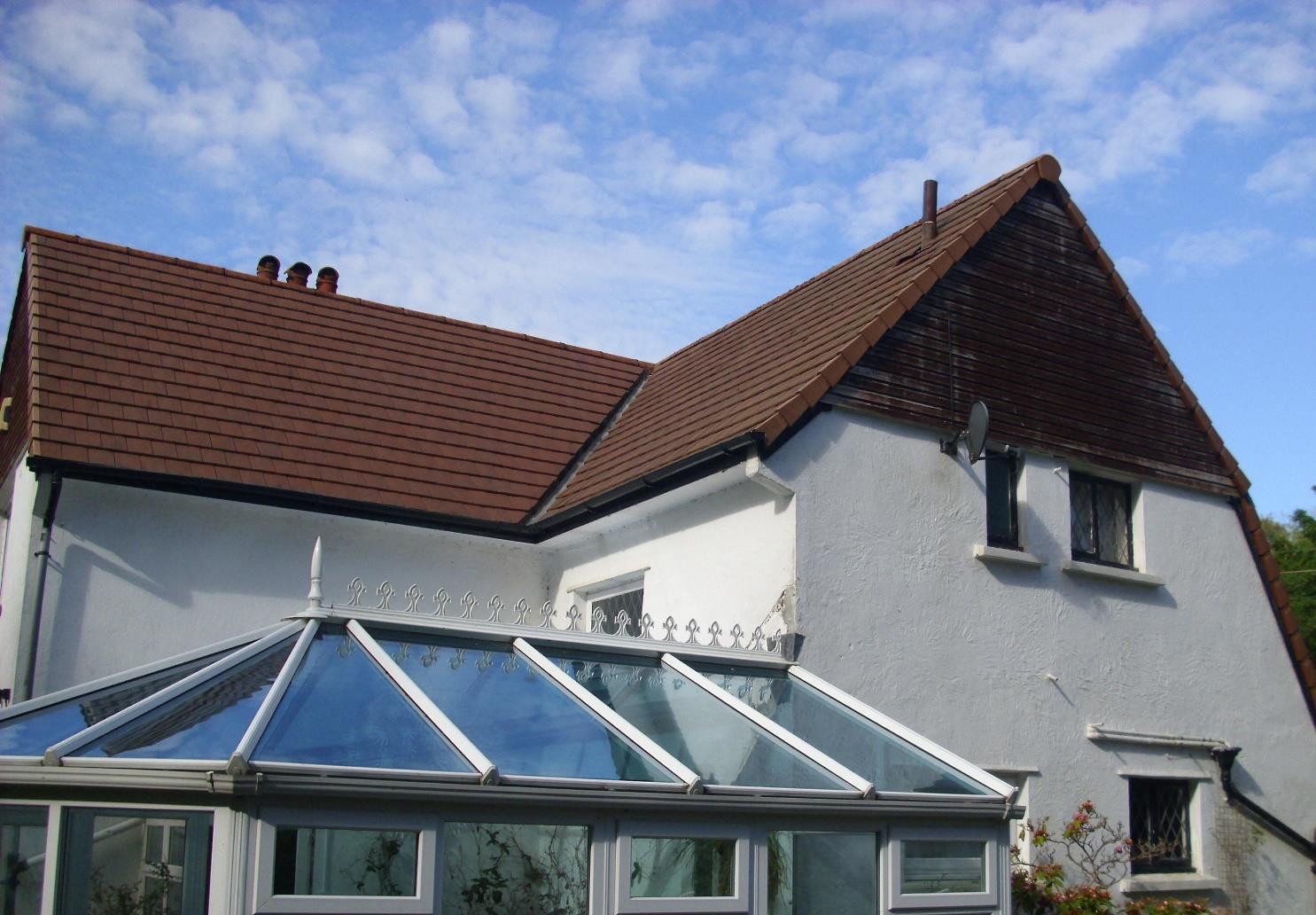
View of southern end Gable end D
View of rear of property. Gable ends A and E
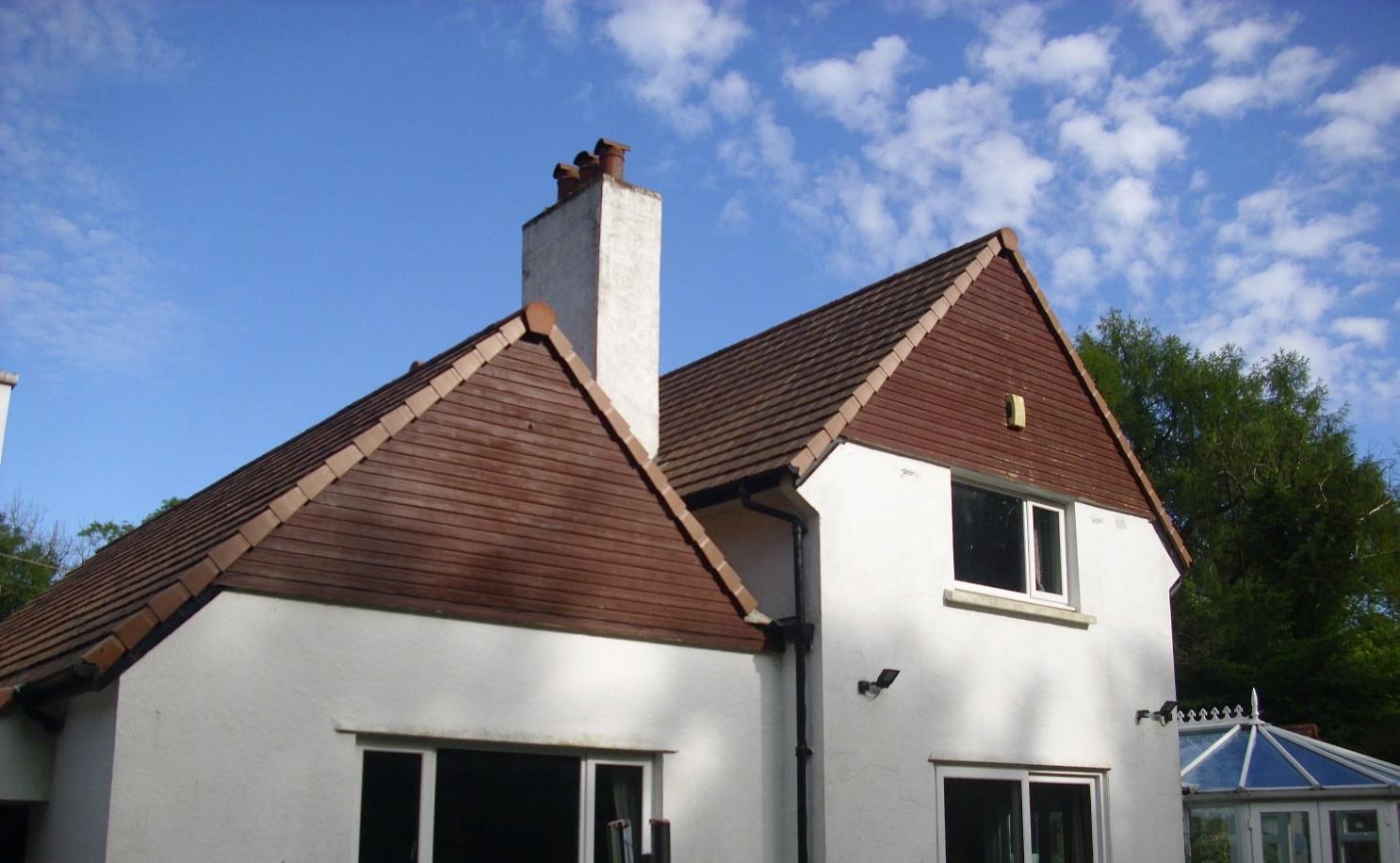
View from northern end. Note point of gable end of 2-storey roof (F) just visible above roof between chimney stacks. Gaps in dry verge clearly visible
The conservatory to the southern side is to be removed and a new 2 storey extension is to be built on (Point D). The part of the property between points A and B is to have the ceiling removed and the ground floor room to be extended into the current loft space. There will be large glass panels installed in the rear at point A. All current wooden cladding to the gable ends is being removed.
Roost Mitigation
In order to mitigate for the bats roosting in the roof, between the tiles and membrane in the southern end and between the tiles and the wooden ceiling boards in the northern end, an alternative option for roosts must be provided in the form of bat boxes, either external, internal to the walls or possibly bat bricks allowing bats access to the wall cavities, provided there is no access from the cavities back into the roof voids. These bat boxes should be of a type suitable for crevice dwellers. Some examples of suitable types boxes and bat bricks can be seen at the following web pages, but others of a similar nature are available from other sites:https://www.nhbs.com/bat-brick https://www.birdbrickhouses.co.uk/brick-nesting-boxes/bat-box/
https://www.wildcare.co.uk/bat-block.html https://www.greenwoodsecohabitats.co.uk/shop - Two or three crevice types.
Prior to purchasing any bat boxes, the type, quantity and proposed installation location must be confirmed with the DEFA Ecosystem Policy team.
It is important that these are put in place at any existing gable end between 30th of September and the 30th of April the following year. They do not all have to be installed at the same time, but the DEFA Ecosystem Policy team should be advised when any are installed so they can be checked before any changes to the current roost access is made. Once it has been confirmed that the roost mitigation is correctly installed, gaps in and around the dry verge systems on the gable ends where they are installed must be blocked to prevent bats from re-entering the roof space. This should take place between 31st of October and the 30th of the following April.
Building works
No work at roof level should take place in the period 30th of April until 30th of September. Removal of tiles and / or dry verge should be carefully done by hand, checking for bats as the work proceeds.
Removing the wooden cladding at the gable ends should be caried out by hand between 1st October and 30th of April the following year, as bats may be hibernating in any void behind the cladding. Checks should be made wherever gaps permit inspection to ensure no bats are behind any plank before it is removed.
The wooden lining in the loft space of the roof void between points A and B should be carefully removed by hand whilst checking wherever possible to ensure no bats are present. This work should only commence once DEFA ecosystem policy team has confirmed the roost mitigation is correctly in place and that any point that would allow access to that roof void (between points A and B) has been blocked. It should also only be removed between 30th of September and 30th of April the following year.
As the roof void between A and B does not connect to the other parts of the roof, work may be carried out here at a different time to the rest of the development.
Lower-level building work may take place at any time of year, but care should be taken to ensure that no scaffolding or safety netting is placed in such a way as to obstruct any of the known entrance points, or bat boxes once they are in place in the period 1st of May to 30th of September.
Lighting
Any outside lighting should be kept to a minimum, it should be down lighting, and should always be below the level of the bat boxes / bricks. When installing lighting behind the new glass windows in the upper area at point A, careful consideration should be given to light spill to the outside to ensure it does not disturb bats. Further guidance about lighting can be found in the Guidance Note – Bats and Artificial Lighting, available at https://www.theilp.org.uk/documents/guidance-note-8-bats-and-artificial-lighting.
The property is used as a summer roost location by bats in both roof areas. Both loft spaces were also very warm during the summer bat surveys. This did not appear to be due to the outside temperature at the time, but due to internal factors. This would make the spaces unsuitable for use as a winter hibernaculum roost for bats, which is why any work at the roof level should be carried out outside of the summer season of 1st May to 30th September. Any voids behind the wooden cladding on the Gable end, however, would be suitable for hibernating bats, hence the need for careful removal even during the winter season of 1st of October to 30th April.
As both bats and their roosts are protected under the Wildlife act, 1990 no work can be carried out without mitigation agreed by DEFA being in place and checked by the DEFA ecosystem policy team. Work will also not be able to take place during the summer roosting season of 1st of May until 30th of September unless agreed mitigation and exclusion had been put in place and the bats had been proved to be excluded. When working on the current roof or when removing the wooden cladding to the gable ends this work should be carried out by carefully removing tiles and boards slowly by hand taking great care to check for the presence of bats. Should any bat be found then work must stop immediately and DEFA should be consulted for advice before proceeding.
Copyright in submitted documents remains with their authors. Request removal
View as Markdown