Loading document...
From: Costain, Sophie (DEFA) Sent: 20 May 2021 16:24 To: DEFA, Planning Subject: PA 21/00482/CON - Registered Building consent for demolition elements to PA
21/00298/B Attachments: Laxey Flood Alleviation PEAR Final amended version.pdf
Good afternoon RE: PA 21/00482/CON - Registered Building consent for demolition elements to PA 21/00298/B
Please see the below response from the Ecosystem Policy Team in regards to PA 21/00298/B, which also relates to this application, and the attached PEA undertaken by the Manx Wildlife Trust which is referred to.
As our response was not considered for PA 21/00298/B, we request that the below requested conditions are implemented for this application.
Best wishes
Miss S Costain, Ecosystem Policy Officer Department of Environment, Food & Agriculture, Thie Slieau Whallian, Foxdale Road, St Johns, Isle of Man, IM4 3AS Tel +44 (0)1624 685963 Mob +44 (0)7624 431301 Fax +44 (0)1624 685851 Email [email protected] or [email protected] Website: www.gov.im/defa DEFA - working for a clean, safe, healthy, attractive and vibrant environment which will be enjoyed by present and future generations alike.
Our Island, Our Environment, Our Future. A special place for people and nature Boayl er-lheh son sleih as najoor
WARNING If you are not the intended addressee of this e-mail, you must not copy or deliver it to anyone else or use it in any unauthorised manner.
From: Costain, Sophie (DEFA) Sent: 11 May 2021 10:03 To: DEFA, Planning Subject: PA 21/00300/B – Alteration to weir & 21/00298/B – Construction of flood protection walls, Laxey
Good Afternoon
RE: PA 21/00300/B – Alteration to weir & 21/00298/B – Construction of flood protection walls, Laxey
The Ecosystem Policy Team can confirm that the Preliminary Ecological Appraisal Report Dated March 2021 undertaken by the Manx Wildlife Trust (attached) is all in order and a suitable level of assessment has been undertaken. This report covers the work to be undertaken as applied for in PA 21/00300/B & 21/00298/B and therefore this response covers both applications.
In order to ensure that the required ecological mitigation measures for fish, birds, bats, dark-bush cricket, aquatic invertebrates, bryophytes, common lizards and common frogs are fully adhered to, we request the following conditions on approval:
Prior to the commencement of works a Construction Environmental Management Plan, which details the measures to be taken to protected the watercourse, surrounding habitats and species, including the mitigation measures contained in table 5.1 of the PEA which includes Precautionary Working Method Statements, and Reasonable Avoidance Measures for fish and aquatic invertebrates, should be submitted to Planning for written approval.
Prior to the commencement of works a suitably qualified Ecological Clerk of Works must be appointed who is contracted for the duration of the works to provide ecological guidance to workers, oversee all protected species and habitat work, ensure compliance with relevant working methods statements and legislation and for the regular monitoring and inspection of works.
Best wishes
Miss S Costain, Ecosystem Policy Officer Department of Environment, Food & Agriculture, Thie Slieau Whallian, Foxdale Road, St Johns, Isle of Man, IM4 3AS Tel +44 (0)1624 685963 Mob +44 (0)7624 431301 Fax +44 (0)1624 685851 Email [email protected] or [email protected] Website: www.gov.im/defa DEFA - working for a clean, safe, healthy, attractive and vibrant environment which will be enjoyed by present and future generations alike.
Our Island, Our Environment, Our Future. A special place for people and nature Boayl er-lheh son sleih as najoor
WARNING If you are not the intended addressee of this e-mail, you must not copy or deliver it to anyone else or use it in any unauthorised manner.
+
Ecological Advice & Solutions
March 2021
 | Manx Wildlife Trust: 7-8 Market Place, Peel. Isle of Man. |
| Job number: | MWT 21_13 |
| Title: | Laxey River Flood Alleviation Works – Preliminary Ecological Appraisal Report |
| Client: | Isle of Man Government Department of Infrastructure (Dol) |
| Prepared by: | Adam Denard |
| Verified by: | Sarah Hickey |
| Date of Issue: | March 2021 |
| Version: | 1 |
| Revisions: | 1 |
| Status: | FINAL |
| This report is prepared by Manx Wildlife Trust Consultancy for the sole and exclusive use of the Department of Infrastructure and their contractors in response to their particular instructions. No liability is accepted for any costs, claims or losses arising from the use of this report or any part thereof for any purpose other than that for which it was specifically prepared or by any party other than the Department of Infrastructure. Any biological records for wildlife found in survey will eventually be submitted to Manx Biological Recording Partnership. This report does not prevent MWT pursuing its charitable objectives in relation to planning. This report has been prepared by an environmental specialist and does not purport to provide legal advice. You may wish to take separate legal advice. The information which we have prepared and provided is true and has been prepared and provided in accordance with the BS42020 2013 and Chartered Institute of Ecology and Environmental Management’s Code of Professional Conduct and guidelines for preliminary ecological appraisals (CIEEM 2017). We confirm that the opinions expressed are our true and professional bona fide opinions. | |
| Signed (Author) Electronic Signature | Signed (QA) Electronic Signature |
| Adam Denard | Sarah Hickey |
| Manx Wildlife Trust: 7-8 Market Place, Peel. Isle of Man.<br><br> | Manx Wildlife Trust: 7-8 Market Place, Peel. Isle of Man.<br><br> |
|---|---|
| Job number: | MWT 21_13 |
| Title: | Laxey River Flood Alleviation Works – Preliminary Ecological Appraisal Report |
| Client: | Isle of Man Government Department of Infrastructure (DoI) |
| Prepared by: | Adam Denard |
| Verified by: | Sarah Hickey |
| Date of Issue: | March 2021 |
| Version: | 1 |
| Revisions: | 1 |
| Status: | FINAL |
| This report is prepared by Manx Wildlife Trust Consultancy for the sole and exclusive use of the Department of Infrastructure and their contractors in response to their particular instructions. No liability is accepted for any costs, claims or losses arising from the use of this report or any part thereof for any purpose other than that for which it was specifically prepared or by any party other than the Department of Infrastructure. Any biological records for wildlife found in survey will eventually be submitted to Manx Biological Recording Partnership. This report does not prevent MWT pursuing its charitable objectives in relation to planning.<br><br>This report has been prepared by an environmental specialist and does not purport to provide legal advice. You may wish to take separate legal advice.<br><br>The information which we have prepared and provided is true and has been prepared and provided in accordance with the BS42020 2013 and Chartered Institute of Ecology and Environmental Management’s Code of Professional Conduct and guidelines for preliminary ecological appraisals (CIEEM 2017). We confirm that the opinions expressed are our true and professional bona fide opinions.<br><br>Signed (Author) Signed (QA) Electronic Signature Electronic Signature<br><br>Adam Denard Sarah Hickey |
|---|
MWT Consultancy Laxey Flood Alleviation PEAR 2
A Preliminary Ecological Appraisal Report has been produced using best industry practice to assess the potential ecological impacts from proposed flood alleviation works on a 600m stretch of river in the village of Laxey on the east coast of the Isle of Man.
Key ecological features in need of mitigation are:
Additional recommendations are provided on a precautionary approach to species of low likelihood of occurrence.
Further survey is recommended for foraging activity of bats. In accordance with Isle of Man Government strategy, recommendations for achieving ‘no net loss’ of biodiversity and potential ‘net gain’ are provided.
Sarah Hickey MRes is an ecologist with several years’ experience in baseline ecological survey and assessment and specialist protected species surveys for bats, common lizard and common frog. Sarah holds a master’s degree in Research in the Natural Environment from the University of Edinburgh and has contributed to the Independent Climate Action Report for the IOM Government (Appendix 10 (a) Peatlands).
Adam Denard BSc (Hons) has been a professional ecologist for over 10 years, with particular emphasis on recording and assessing habitats in England and the Isle of Man for their potential to support protected species. Adam regularly produces professional ecological reports within the Isle of Man planning system for ecological appraisals, mitigation plans and specialist protected species surveys. Adam holds DEFA government licences for bats, common lizard, common frog, barn owl and dark bush-cricket.
MWT Consultancy Laxey Flood Alleviation PEAR 3
ASSI Areas of Special Scientific Interest BCT Bat Conservation Trust BoCC Birds of Conservation Concern CEMP Construction Environmental Management Plan DEFA Department for Environment, Food and Agriculture DoI Department of Infrastructure LWS Local Wildlife Site MBG Manx Bat Group MBL Manx BirdLife MBRP Manx Biodiversity Recording Partnership PRA Preliminary Roost Assessment PRF Potential Roost Feature PWMS Precautionary Working Method Statement RAMs Reasonable Avoidance Measures SAC Special Area of Conservation SPA Special Protection Area
MWT Consultancy Laxey Flood Alleviation PEAR 4
Site description
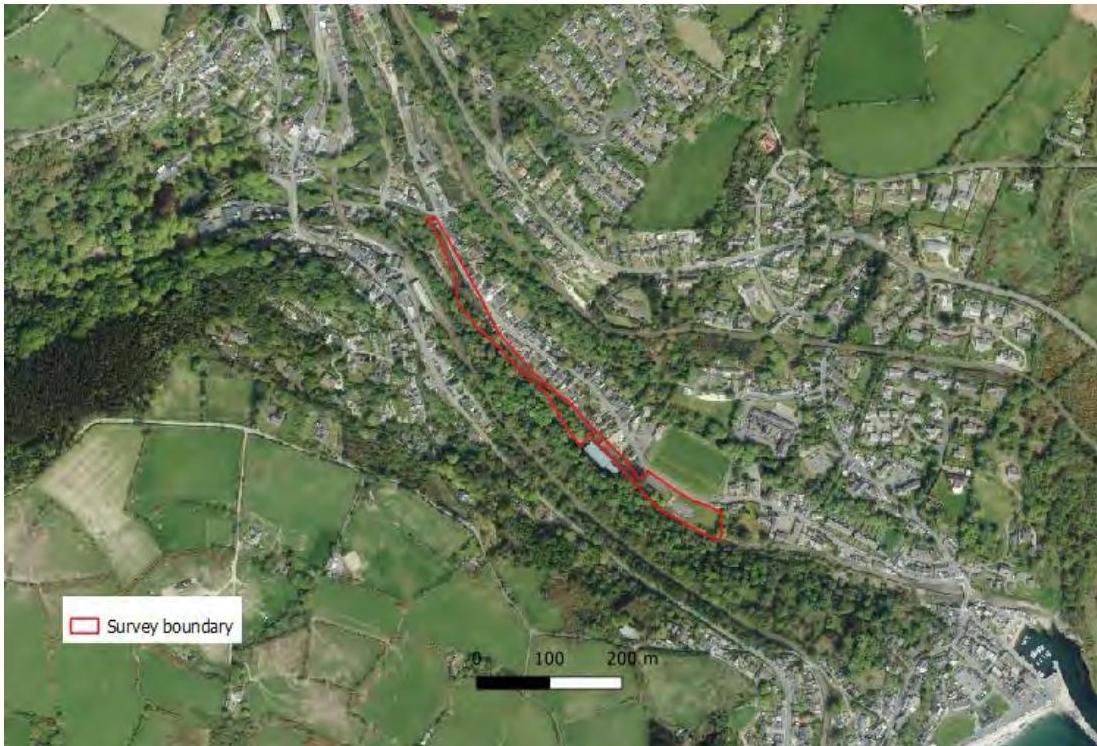
Figure 1 Location map of survey site in the context of the wider landscape
MWT Consultancy Laxey Flood Alleviation PEAR 5
Walkover survey
Survey limitations
MWT Consultancy Laxey Flood Alleviation PEAR 6
– Appendix V). Non-statutory designated sites
MWT Consultancy Laxey Flood Alleviation PEAR 7
| Table 1: Summary of MBRP records within 500m of Laxey River Flood Alleviation survey site | ||
| Taxonomic Group | Comments | Data Source |
|---|---|---|
| Higher Plants | 206 records of common and widespread species and garden escapes. Includes records of Schedule 8 Montbretia Crocosmia x crocosmiiflora and Cotoneaster hjelmqvistii | MBRP |
| Fungi | 31 records. No legally protected or Red List species | MBRP |
| Birds | No records | MBRP |
| Mammals (excluding bats) | Stoat recorded in August 2008 running across a road | MBRP |
| Invertebrates | MBRP: 128 records of insects and arachnids comprising common and widespread hoverflies, wasps (Hymenoptera), beetles (Coleoptera), Moths and Butterflies (Lepidoptera). Includes 4 records of Schedule 5 listed Dark Bush-Cricket Pholidoptera griseoaptera and the IUCN ‘Vulnerable’ Xanthandrus comtus Laxey River Aquatic Invertebrate Sample data August 2020: 187 records of common and widespread species of Mayfly Ephemeroptera, Stonefly Plecoptera, Caddisfly Trichoptera, Beetle Coleoptera, Worm Polychaete, Blackfly Simmulidae and Midges Chironimidae. 14 species identified with other records to Genus or higher taxonomic level. | MBRP DEFA EPU |
| Bats | 39 records mainly of single or low numbers (<10) dominated by Common pipistrelle Pipistrellus pipistrellus but includes evidence of roosting (115 pipistrelle bats Pipistrellus sp.) and breeding Natterer’s Myotis nattereri (adult female and baby). Also includes detector records for Leisler’s Bat (Nyctalus leislerii) and a hand-held specimen of Brown Long-eared Plecotus auritus. | MBRP and MBG |
| Common Lizard | Single record from coastal path approximately 400m SW of the survey site | MBRP |
| Common Frog | 3 records of spawn in the wider area from garden ponds | MBRP |
| Table 1: Summary of MBRP records within 500m of Laxey River Flood Alleviation survey site | Table 1: Summary of MBRP records within 500m of Laxey River Flood Alleviation survey site | Table 1: Summary of MBRP records within 500m of Laxey River Flood Alleviation survey site |
|---|---|---|
| Taxonomic Group<br><br> | Comments | Data Source |
| Higher Plants | 206 records of common and widespread species and garden escapes. Includes records of Schedule 8 Montbretia Crocosmia x crocosmiiflora and Cotoneaster hjelmqvistii | MBRP |
| Fungi | 31 records. No legally protected or Red List species | MBRP |
| Birds | No records | MBRP |
| Mammals (excluding bats) | Stoat recorded in August 2008 running across a road | MBRP |
| Invertebrates | MBRP: 128 records of insects and arachnids comprising common and widespread hoverflies, wasps (Hymenoptera), beetles (Coleoptera), Moths and Butterflies (Lepidoptera). Includes 4 records of Schedule 5 listed Dark Bush-Cricket Pholidoptera griseoaptera and the IUCN ‘Vulnerable’ Xanthandrus comtus<br><br>Laxey River Aquatic Invertebrate Sample data August 2020: 187 records of common and widespread species of Mayfly Ephemeroptera, Stonefly Plecoptera, Caddisfly Trichoptera, Beetle Coleoptera, Worm Polychaete, Blackfly Simmulidae and Midges Chironimidae. 14 species identified with other records to Genus or higher taxonomic level. | MBRP DEFA EPU |
| Bats | 39 records mainly of single or low numbers (<10) dominated by Common pipistrelle Pipistrellus pipistrellus but includes evidence of roosting (115 pipistrelle bats Pipistrellus sp.) and breeding Natterer’s Myotis nattereri (adult female and baby). Also includes detector records for Leisler’s Bat (Nyctalus leislerii) and a handheld specimen of Brown Long-eared Plecotus auritus. | MBRP and MBG |
| Common Lizard | Single record from coastal path approximately 400m SW of the survey site | MBRP |
| Common Frog | 3 records of spawn in the wider area from garden ponds | MBRP |
MWT Consultancy Laxey Flood Alleviation PEAR 8
Walkover survey – habitats Watercourses – Laxey River Corridor Channel character
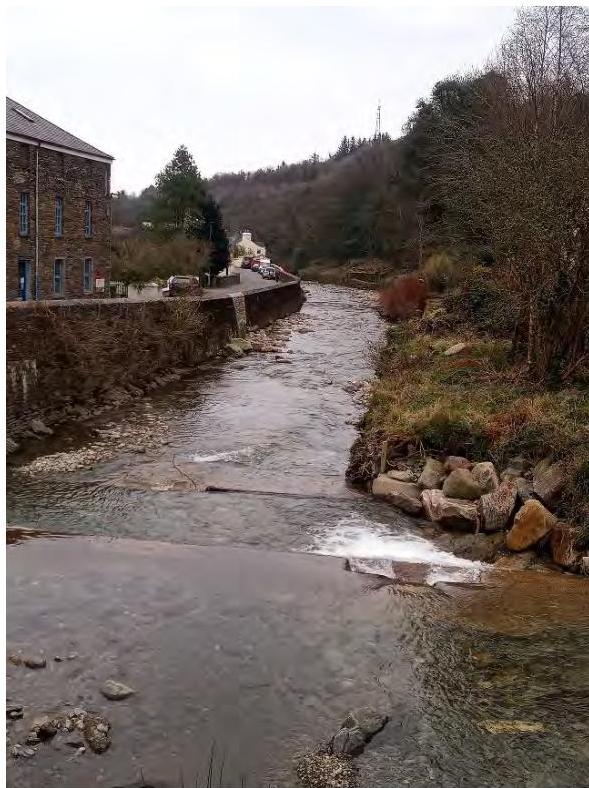
Figure 2 derelict weir and fish pass adjoining historic mill race and cobble substrate at SC435841 (looking downstream)
MWT Consultancy Laxey Flood Alleviation PEAR 9
Channel dimensions
Embankments
MWT Consultancy Laxey Flood Alleviation PEAR 10
Figure 3 Examples of retaining wall embankment (left) and vegetated cobbles (right) at upstream limit of the survey site by Laxey Woollen Mills.
Margins/berms
3.18 Of note for the planned in-channel works are the presence of two distinct berms at base of the right bank (looking downstream) at the Woollen Mills (SC434842) and immediately upstream of the Public Footpath crossing bridge at Swales’ warehouse (SC436840) (see Figures 4 below Figure 5 overleaf ).
Figure 4 low berm with extensive carpets of Wood-rush Luzula spp. and garden escape shrub Bridewort Spiraea sp. on the right bank (looking downstream) at the Woollen Mills
MWT Consultancy Laxey Flood Alleviation PEAR 11
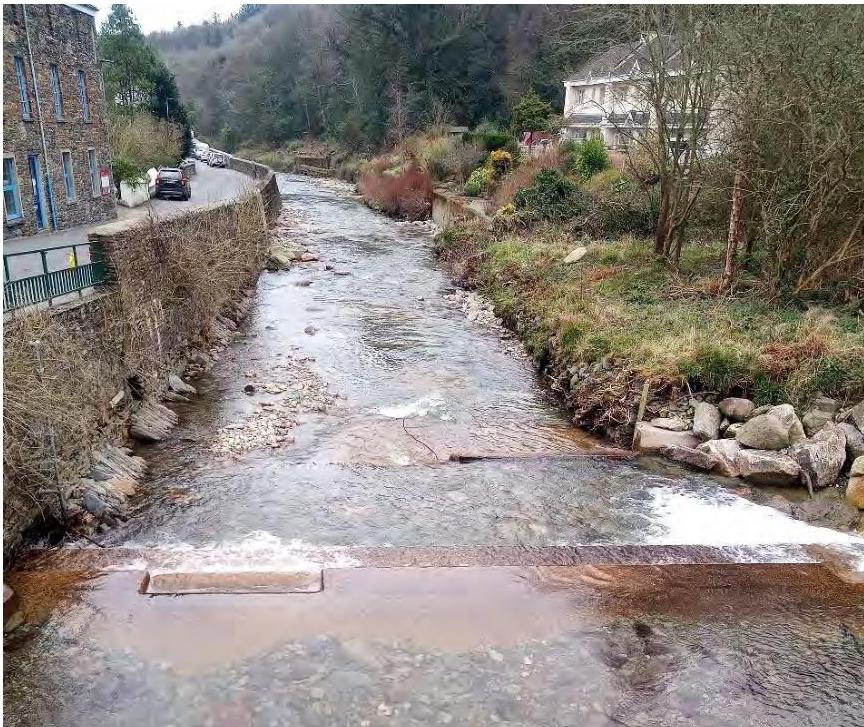
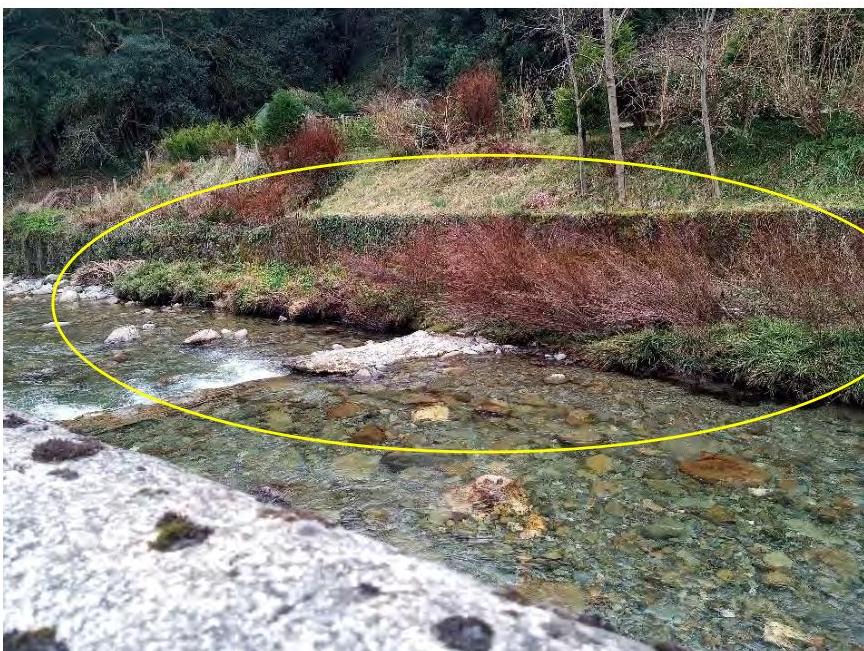
Figure 5 Wood-rush dominated berm by Swales’ warehouse bridge crossing
Figures 6 and 7 Stone archway above a sluice gate (left) and lateral structure with pillars at mill race extraction point (right)
MWT Consultancy Laxey Flood Alleviation PEAR 12
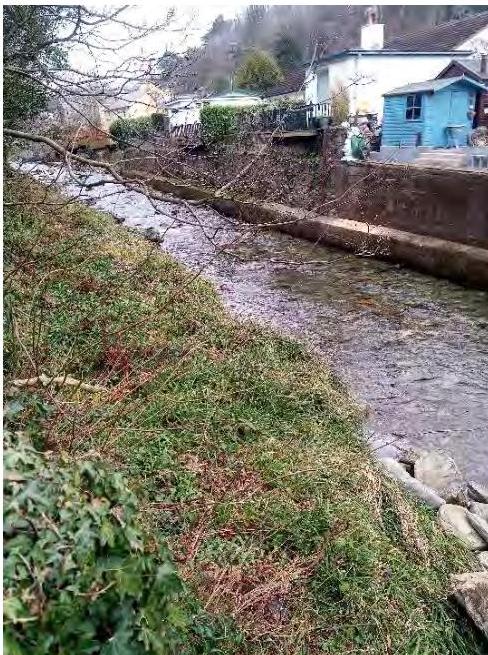
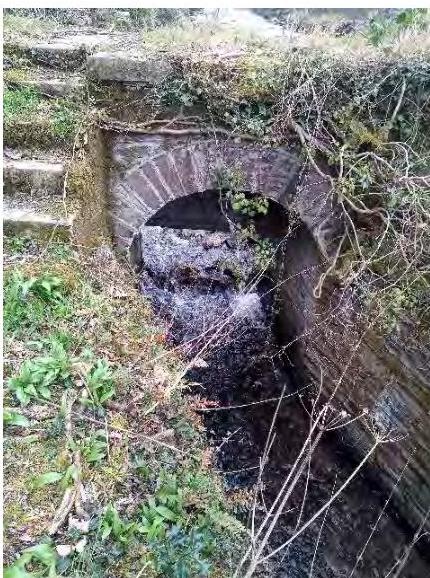
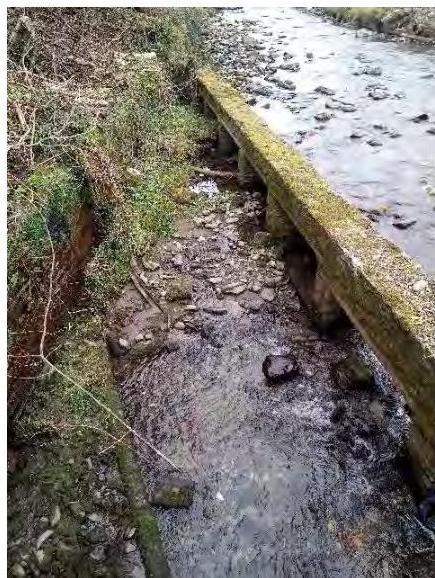
Figure 8 representative shot of mill race channel looking downstream
Bridges
Figures 9 and 10 Traditional stone road bridge by Woollen Mills (left) and footpath crossing bridge by Swales’ Warehouse (right)
MWT Consultancy Laxey Flood Alleviation PEAR 13
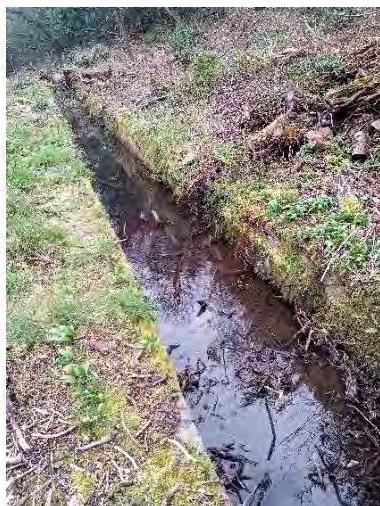
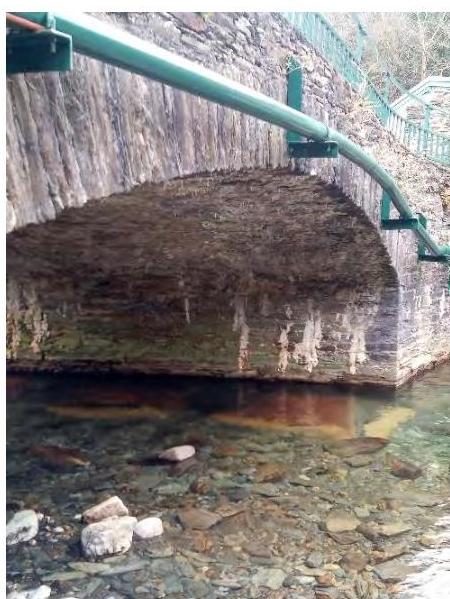
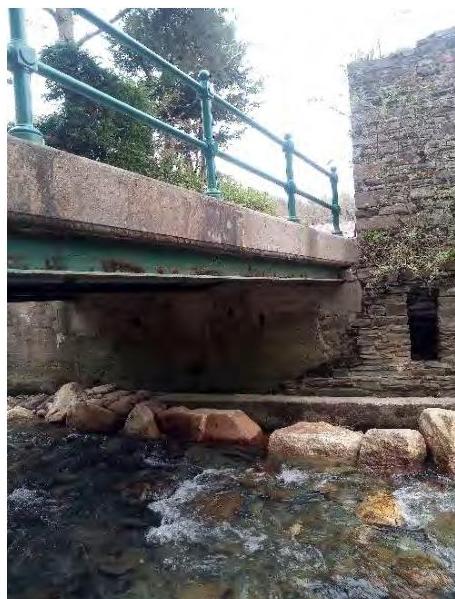
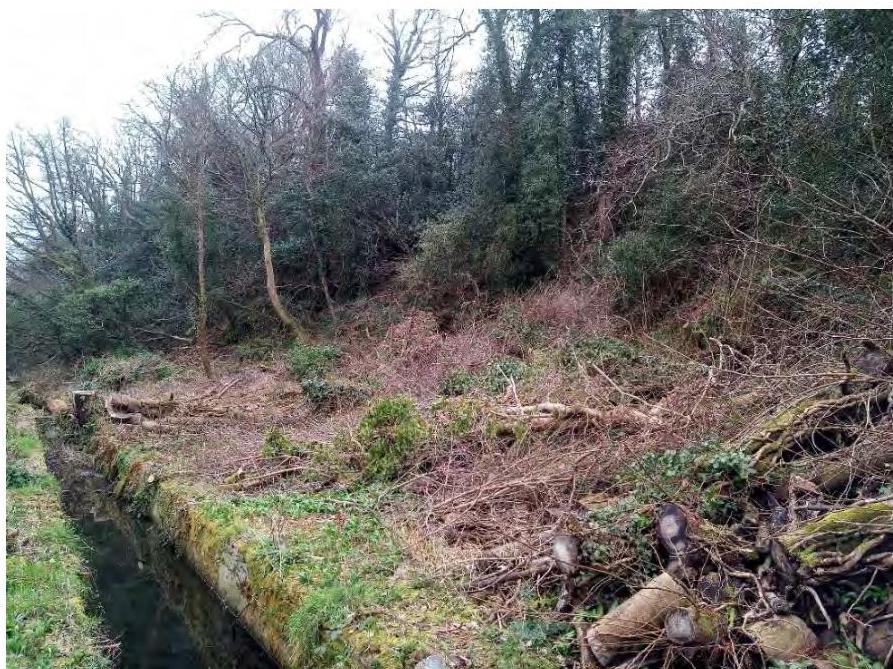
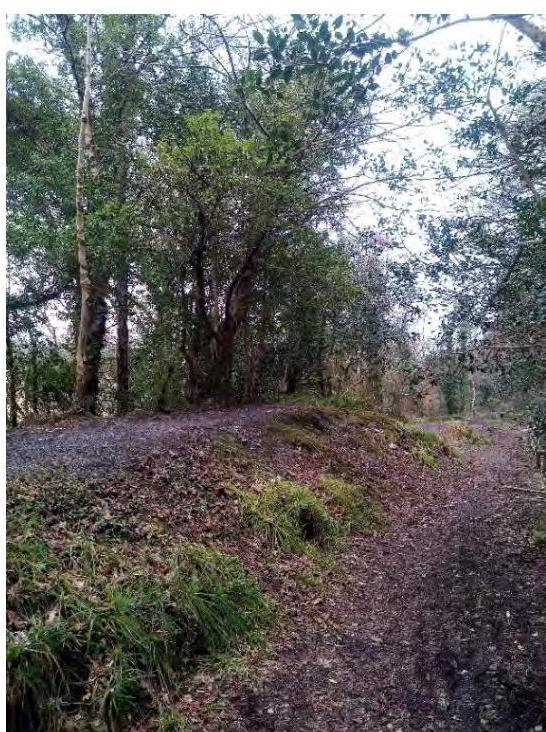
Figure 11 Clearing in wooded embankment adjacent to mill race at SC435842 showing felled stumps and brash in foreground and woodland with thick holly shrub layer in background.
MWT Consultancy Laxey Flood Alleviation PEAR 14
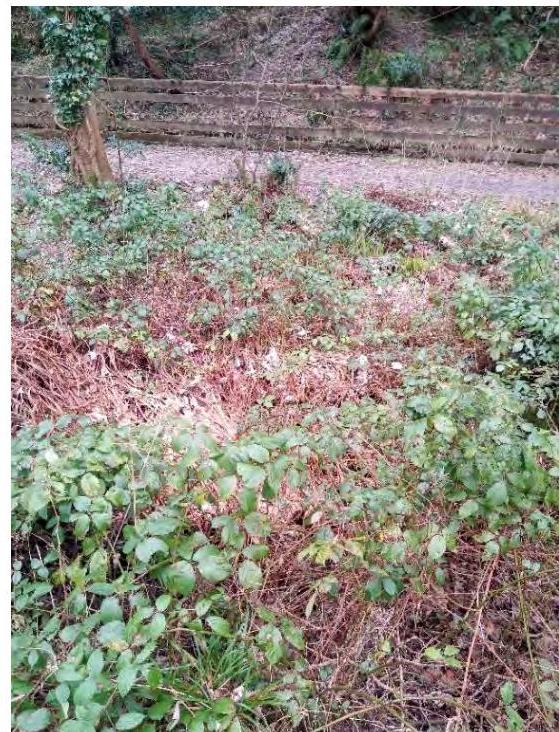
Figure 12 and 13 BMX track clearing in riverside woodland (left) and dense bramble patches in undisturbed zones (right)
Species-poor semi-improved grassland
MWT Consultancy Laxey Flood Alleviation PEAR 15
Walkover survey - species Fish
‘The stretch of river you have mentioned will currently contain various year classes of Brown Trout, Salmon, European Eel and possibly stickleback. There will probably be alevins of both Trout and Salmon still within the gravels that have yet to emerge.
A run of migratory fish (Salmon and Sea Trout) will run the river from early summer through to the end of the year when conditions allow. These fish along with the resident Brown Trout will probably spawn from October through to December.
Juvenile European Eel (glass eels) may currently be in the estuarine regions of the Laxey River waiting for their migration upstream, we believe this takes place around April. The European Eel is currently classified as a critically endangered species and remains on the IUCN Red List.’
(DEFA Inland Fisheries, pers.comm., Mar 2021)
Species listed in the response and their relevant IUCN conservation status is shown in Table 2 below.
| Table 2 Fish species known to occur in the Laxey River and their conservation status | Table 2 Fish species known to occur in the Laxey River and their conservation status |
|---|---|
| Species | IUCN Red data conservation status |
| Atlantic Salmon Salmo salar | Least Concern |
| Brown Trout Salmo trutta | Least Concern |
| European Eel Anguilla anguilla | Critically Endangered |
| Sea Trout Salmo trutta morpha trutta | Least Concern |
Invertebrates - aquatic
MWT Consultancy Laxey Flood Alleviation PEAR 16
| Table 2 Fish species known to occur in the Laxey River and their conservation status | |
| Species | IUCN Red data conservation status |
|---|---|
| Atlantic Salmon Salmo salar | Least Concern |
| Brown Trout Salmo trutta | Least Concern |
| European Eel Anguilla anguilla | Critically Endangered |
| Sea Trout Salmo trutta morpha trutta | Least Concern |
Bats
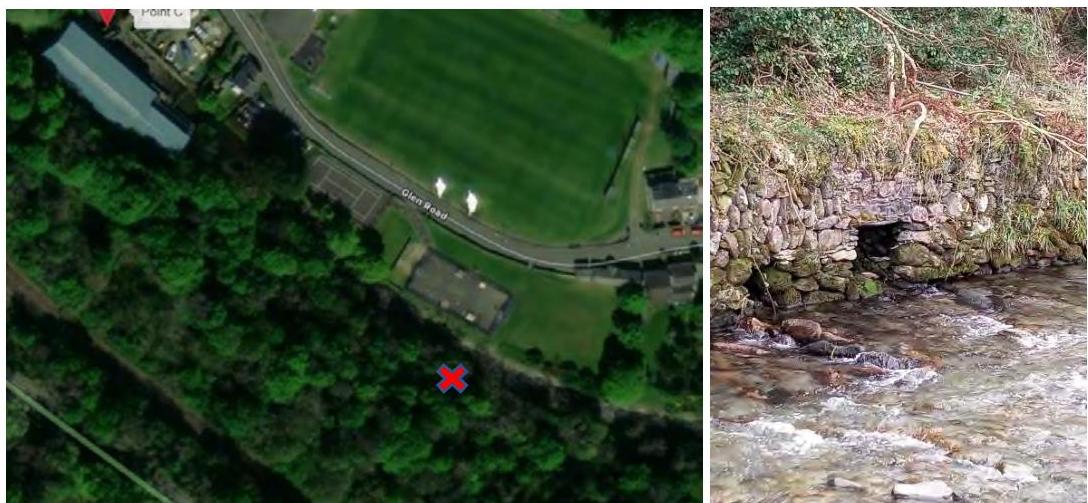
Figures 14 and 15 showing location (left) and representative photo (right) of potential roost feature for bats in west embankment.
MWT Consultancy Laxey Flood Alleviation PEAR 17
Common Lizard (Zootoca vivipara) and Common Frog Common Frog (Rana temporaria)
Schedule 7 Protected and rare and scarce plant species
Schedule 8 Plants
MWT Consultancy Laxey Flood Alleviation PEAR 18
Other mammals
MWT Consultancy Laxey Flood Alleviation PEAR 19
MWT Consultancy Laxey Flood Alleviation PEAR 20
| Table 3 Summary of ecological features and potential threats within Laxey River Flood Alleviation proposed works area | Table 3 Summary of ecological features and potential threats within Laxey River Flood Alleviation proposed works area | Table 3 Summary of ecological features and potential threats within Laxey River Flood Alleviation proposed works area | Table 3 Summary of ecological features and potential threats within Laxey River Flood Alleviation proposed works area |
|---|---|---|---|
| Ecological feature | Extent | Ecological value | Potential threats |
| WATERCOURSE: Laxey River Corridor (Channel and embankments) | 600m | • Spawning, nursery and migration route for migratory fish including Salmonids and ‘critically endangered’ European Eel.<br>• Support a range of aquatic invertebrate species associated with relatively clean and unpolluted watercourses.<br>• Foraging and commuting route for a range of bat species. Especially with proximity of extensive broadleaved woodland.<br>• Bird nesting habitat for Red List ‘high’ conservation concern Grey Wagtail.<br> | • Loss of spawning, nursery and migratory habitat and potential injury and mortality of immature stages of key fish species.<br>• Loss of riverbed aquatic invertebrate habitat and likely injury and loss of common and widespread species during any in-channel works by excavation plant.<br>• Disruption to foraging behaviour by bats and insectivorous birds.<br>• Loss of grass berm potential bird nesting and terrestrial invertebrate habitat.<br> |
| WATERCOURSE: Mill Race | 300m | • Source of invertebrate prey for foraging birds and bats<br>• Potential spawning site for Common Frog<br> | • No current tangible threat but any unplanned incursion will require reassessment of risks to ecology. |
| Broadleaved woodland | 0.25ha (within survey site) | • Bird nesting habitat for a range of common woodland species including Amber Listed ‘medium’ concern species e.g. Dunnock.<br>• Bird and bat foraging areas within the wider woodland ecological unit<br>• Range of woodland edge common invertebrates and potentially scarce species including legally protected Schedule 5 Dark Bush-Cricket.<br> | • Removal of several previously felled trees in area potentially inhabited by legally protected Dark Bush-Cricket.<br>• Loss of nesting habitat for canopy and scrub nesting birds.<br> |
| Fish | - | • Spawning, nursery and migration route for migratory fish including ‘critically endangered’ European Eel. | • Refer to Watercourse summary |
| Table 3 Summary of ecological features and potential threats within Laxey River Flood Alleviation proposed works area | |||
| Ecological feature | Extent | Ecological value | Potential threats |
| WATERCOURSE: Laxey River Corridor (Channel and embankments) | 600m | • Spawning, nursery and migration route for migratory fish including Salmonids and ‘critically endangered’ European Eel. • Support a range of aquatic invertebrate species associated with relatively clean and unpolluted watercourses. • Foraging and commuting route for a range of bat species. Especially with proximity of extensive broadleaved woodland. • Bird nesting habitat for Red List ‘high’ conservation concern Grey Wagtail. | • Loss of spawning, nursery and migratory habitat and potential injury and mortality of immature stages of key fish species. • Loss of riverbed aquatic invertebrate habitat and likely injury and loss of common and widespread species during any in-channel works by excavation plant. • Disruption to foraging behaviour by bats and insectivorous birds. • Loss of grass berm potential bird nesting and terrestrial invertebrate habitat. |
| WATERCOURSE: Mill Race | 300m | • Source of invertebrate prey for foraging birds and bats • Potential spawning site for Common Frog | • No current tangible threat but any unplanned incursion will require reassessment of risks to ecology. |
| Broadleaved woodland | 0.25ha (within survey site) | • Bird nesting habitat for a range of common woodland species including Amber Listed ‘medium’ concern species e.g. Dunnock. • Bird and bat foraging areas within the wider woodland ecological unit • Range of woodland edge common invertebrates and potentially scarce species including legally protected Schedule 5 Dark Bush-Cricket. | • Removal of several previously felled trees in area potentially inhabited by legally protected Dark Bush-Cricket. • Loss of nesting habitat for canopy and scrub nesting birds. |
| Fish | - | • Spawning, nursery and migration route for migratory fish including ‘critically endangered’ European Eel. | • Refer to Watercourse summary |
| Invertebrates | - | • Range of common and widespread aquatic invertebrates indicative of cleaner waters.<br>• Presence of legally protected Dark Bush-Cricket in riverine woodland edge.<br> | • Refer to Watercourse and Broadleaved Woodland summary |
|---|---|---|---|
| Bats | - | • Potential foraging and commuting corridor for a range of species known to occur in the wider Laxey area including Common Pipistrelle, Leisler’s Bat, Natterer’s Bat and Brown Long Eared. | • Potential degradation of riverine foraging and commuting habitat<br>• Potential loss of riverbank structural niche<br> |
| Birds | - | • Nesting and foraging niches available in riverside berms, and woodland and scrub including species of ‘high’ conservation concern Grey Wagtail. | • Potential loss of nesting and foraging habitat for riverine and woodland species, including species of conservation importance. |
| Schedule 8 Invasive non-native plant species | - | • Provision of nectar sources for common invertebrates | • Detrimental continued spread in the river channel embankments and within native woodland. |
| Bryophytes | - | • Range of common species on boulders and bedrock exposures inchannel, and on embankment cobbles and vertical walled surfaces | • Minor losses of common and widespread species |
| Proximity to Laxey Bay Marine Nature Reserve (MNR) | MNR occupies 3.97km2approximately 625m downstream to the southeast | • Rocky reef, Kelp forests, Maerl, Cetaceans and Seabird colonies (see Appendix V) | • Potential pollution sources from<br><br>machinery and concrete entering the bay ecosystem from the Laxey River |
| Invertebrates | - | • Range of common and widespread aquatic invertebrates indicative of cleaner waters. • Presence of legally protected Dark Bush-Cricket in riverine woodland edge. | • Refer to Watercourse and Broadleaved Woodland summary |
|---|---|---|---|
| Bats | - | • Potential foraging and commuting corridor for a range of species known to occur in the wider Laxey area including Common Pipistrelle, Leisler’s Bat, Natterer’s Bat and Brown Long Eared. | • Potential degradation of riverine foraging and commuting habitat • Potential loss of riverbank structural niche |
| Birds | - | • Nesting and foraging niches available in riverside berms, and woodland and scrub including species of ‘high’ conservation concern Grey Wagtail. | • Potential loss of nesting and foraging habitat for riverine and woodland species, including species of conservation importance. |
| Schedule 8 Invasive non-native plant species | - | • Provision of nectar sources for common invertebrates | • Detrimental continued spread in the river channel embankments and within native woodland. |
| Bryophytes | - | • Range of common species on boulders and bedrock exposures in-channel, and on embankment cobbles and vertical walled surfaces | • Minor losses of common and widespread species |
| Proximity to Laxey Bay Marine Nature Reserve (MNR) | MNR occupies 3.97km²approximately 625m downstream to the southeast | • Rocky reef, Kelp forests, Maerl, Cetaceans and Seabird colonies (see Appendix V) | • Potential pollution sources from machinery and concrete entering the bay ecosystem from the Laxey River |
| Table 4: Mitigation summary table for proposed Laxey River Flood Alleviation works | Table 4: Mitigation summary table for proposed Laxey River Flood Alleviation works | Table 4: Mitigation summary table for proposed Laxey River Flood Alleviation works |
|---|---|---|
| Ecological feature | Constraint | Mitigation (Avoid, Minimise, Compensate*) |
| Watercourses | Planning Environment Policy 4,5 and 7 (Appendix IX) | • The project must adhere to full compliance with DEFA Inland Fisheries requirements for mitigation of in-channel works including timing of works to avoid sensitive periods and production of and compliance with comprehensive Construction Environment Management Plan (CEMP) to include Precautionary Working Method Statements (PWMS) and Reasonable Avoidance Measures (RAMs) to the satisfaction of Inland Fisheries Department.<br>• The project must adhere to recommendations for habitats and protected species as detailed in this report.<br>• The project should appoint an Ecological Clerk of Works (ECoW) to oversee compliance with report recommendations and Isle of Man Wildlife Act 1990 (as amended).<br> |
| Fish | Planning Environment Policy 4,5 and 7 | • A PWMS must cover how operations will avoid and minimise impacts on aquatic invertebrates from harmful in-channel operations such as disturbance of gravels and silts, sedimentation events, safe use of hydrocarbon fuels and lubricant and wet concrete and cement in proximity to a watercourse.<br>• Full compliance with DEFA Inland Fisheries requirements for in-channel working.<br> |
| Birds | Part 1, IOM Wildlife Act 1990 (as amended) | • Any removal of embankment structures and/or cutting back or removal of any scrub, trees and grass berms must be done outside the bird nesting season, which can extend from 1st February to 31st August. Where this is not practically possible, a pre-clearance check by a suitably experienced Ecologist (no more than 5 days prior to removal) must be undertaken and any nests (including in the process of being built) must be safeguarded until all young are fledged and independent of the nest.<br>• If any nests are encountered during works, all work must be temporarily suspended and advice be sought from the project ecologist.<br> |
MWT Consultancy Laxey Flood Alleviation PEAR 23
| Table 4: Mitigation summary table for proposed Laxey River Flood Alleviation works | ||
| Ecological feature | Constraint | Mitigation (Avoid, Minimise, Compensate*) |
| Watercourses | Planning Environment Policy 4,5 and 7 (Appendix IX) | • The project must adhere to full compliance with DEFA Inland Fisheries requirements for mitigation of in-channel works including timing of works to avoid sensitive periods and production of and compliance with comprehensive Construction Environment Management Plan (CEMP) to include Precautionary Working Method Statements (PWMS) and Reasonable Avoidance Measures (RAMs) to the satisfaction of Inland Fisheries Department. • The project must adhere to recommendations for habitats and protected species as detailed in this report. • The project should appoint an Ecological Clerk of Works (ECoW) to oversee compliance with report recommendations and Isle of Man Wildlife Act 1990 (as amended). |
| Fish | Planning Environment Policy 4,5 and 7 | • A PWMS must cover how operations will avoid and minimise impacts on aquatic invertebrates from harmful in-channel operations such as disturbance of gravels and silts, sedimentation events, safe use of hydrocarbon fuels and lubricant and wet concrete and cement in proximity to a watercourse. • Full compliance with DEFA Inland Fisheries requirements for in-channel working. |
| Birds | Part 1, IOM Wildlife Act 1990 (as amended) | • Any removal of embankment structures and/or cutting back or removal of any scrub, trees and grass berms must be done outside the bird nesting season, which can extend from 1st February to 31st August. Where this is not practically possible, a pre-clearance check by a suitably experienced Ecologist (no more than 5 days prior to removal) must be undertaken and any nests (including in the process of being built) must be safeguarded until all young are fledged and independent of the nest. • If any nests are encountered during works, all work must be temporarily suspended and advice be sought from the project ecologist. |
| Bats | All bat species Schedule 5, IoM Wildlife Act 1990 (as amended) | • Avoid machinery and plant equipment being left in-channel after dusk and before sunset to reduce obstacles to existing foraging zones.<br>• Any unscheduled tree felling must have a pre-felling Preliminary Roost Assessment (PRA) undertaken and may require further dusk emergence and dawn re-entry surveys.<br>• Prior to any embankment wall removal works a Preliminary Roost Assessment (PRA) must be undertaken to identify any potential risk to bats and may require further dusk emergence and dawn re-entry surveys<br>• Activity surveys should be considered in order to understand baseline conditions within the river corridor ahead of future flood alleviation works down to the Laxey Harbour Mouth<br>• If any bats or anything suspected to be a bat is encountered during works, all work is to be temporarily suspended and advice sought from the project ecologist.<br> |
|---|---|---|
| Dark Bush-Cricket | Schedule 5, IoM Wildlife Act 1990 (as amended) | • Removal of felled trees from the flood alleviation clearing area must only take fully intact main trunk stems, leaving cut logs, discs and brash for deadwood habitat.<br>• Any lay-up and storage areas for heavy plant, materials and temporary infrastructure must be pre-agreed with the project ecologist to avoid sensitive areas that could be utilised by dark bush-cricket<br> |
| Aquatic Invertebrates | Planning Environment Policy 4,5 and 7 | • A PWMS must cover how operations will avoid and minimise impacts on aquatic invertebrates from harmful in-channel operations such as disturbance of gravels and silts, sedimentation events, safe use of hydrocarbon fuels and lubricant and wet concrete and cement in proximity to a watercourse.<br>• There must be full compliance with DEFA Inland Fisheries requirements for in-channel working.<br> |
| Bryophytes (Mosses and Liverworts) | N/A | • As far as is practically possible all works must avoid unnecessary removal of bryophyte cover.<br>• Any boulders with significant bryophyte cover that can be safely incorporated within channel works must be retained or (where practically possible and not causing safety issues) should be relocated to similar conditions in an unaffected area of the River.<br> |
| Common Lizard and Common Frog | Schedule 5, IOM Wildlife Act 1990 (as amended) | • If any (or anything suspected to be) Common Frogs or Common Lizards are found during works, all work must be temporarily suspended and advice be sought from the project ecologist or DEFA Ecosystem Policy Team. |
| Bats | All bat species Schedule 5, IoM Wildlife Act 1990 (as amended) | • Avoid machinery and plant equipment being left in-channel after dusk and before sunset to reduce obstacles to existing foraging zones. • Any unscheduled tree felling must have a pre-felling Preliminary Roost Assessment (PRA) undertaken and may require further dusk emergence and dawn re-entry surveys. • Prior to any embankment wall removal works a Preliminary Roost Assessment (PRA) must be undertaken to identify any potential risk to bats and may require further dusk emergence and dawn re-entry surveys • Activity surveys should be considered in order to understand baseline conditions within the river corridor ahead of future flood alleviation works down to the Laxey Harbour Mouth • If any bats or anything suspected to be a bat is encountered during works, all work is to be temporarily suspended and advice sought from the project ecologist. |
| Dark Bush-Cricket | Schedule 5, IoM Wildlife Act 1990 (as amended) | • Removal of felled trees from the flood alleviation clearing area must only take fully intact main trunk stems, leaving cut logs, discs and brash for deadwood habitat. • Any lay-up and storage areas for heavy plant, materials and temporary infrastructure must be pre-agreed with the project ecologist to avoid sensitive areas that could be utilised by dark bush-cricket |
| Aquatic Invertebrates | Planning Environment Policy 4,5 and 7 | • A PWMS must cover how operations will avoid and minimise impacts on aquatic invertebrates from harmful in-channel operations such as disturbance of gravels and silts, sedimentation events, safe use of hydrocarbon fuels and lubricant and wet concrete and cement in proximity to a watercourse. • There must be full compliance with DEFA Inland Fisheries requirements for in-channel working. |
| Bryophytes (Mosses and Liverworts) | N/A | • As far as is practically possible all works must avoid unnecessary removal of bryophyte cover. • Any boulders with significant bryophyte cover that can be safely incorporated within channel works must be retained or (where practically possible and not causing safety issues) should be relocated to similar conditions in an unaffected area of the River. |
| Common Lizard and Common Frog | Schedule 5, IOM Wildlife Act 1990 (as amended) | • If any (or anything suspected to be) Common Frogs or Common Lizards are found during works, all work must be temporarily suspended and advice be sought from the project ecologist or DEFA Ecosystem Policy Team. |
| Proximity to Laxey Bay Marine Nature Reserve (MNR) | IOM Wildlife Act 1990 (as amended) designated site | • CEMP for in-channel works to include measures to avoid and minimise adverse impacts on Laxey Bay MNR. |
|---|---|---|
| *Up front compensation for the proposed works has not been considered necessary; however if adverse impacts do occur on ecological features, compensatory measures may need to be enforced. | *Up front compensation for the proposed works has not been considered necessary; however if adverse impacts do occur on ecological features, compensatory measures may need to be enforced. | *Up front compensation for the proposed works has not been considered necessary; however if adverse impacts do occur on ecological features, compensatory measures may need to be enforced. |
| Proximity to Laxey Bay Marine Nature Reserve (MNR) | IOM Wildlife Act 1990 (as amended) designated site | • CEMP for in-channel works to include measures to avoid and minimise adverse impacts on Laxey Bay MNR. |
| *Up front compensation for the proposed works has not been considered necessary; however if adverse impacts do occur on ecological features, compensatory measures may need to be enforced. |
Figure 16 Example ecostyrocrete bat boxes from Greenwoods Ecohabitats
Woodland Enhancement
MWT Consultancy Laxey Flood Alleviation PEAR 26
Eaton, MA, Aebischer NJ, Brown AF, Hearn RD, Lock L, Musgrove AJ, Noble DG, Stroud DA and Gregory RD (2015). Birds of Conservation Concern 4: the population status of birds in the United Kingdom, Channel Islands and Isle of Man. British Birds 108, 708–746
Bat Conservation Trust (2016.) Bat Surveys for Professional Ecologists – 3rd Edition. BCT, London
DEFA (2015). Managing our natural wealth – The Isle of Man’s first Biodiversity Strategy 2015-2025 – GD 2015/0049. IoM Gov, Douglas.
Dubbeldam A (2012) Phase 2 resurvey report (unpublished). DEFA Isle of Man Government Cabinet Office (2016). The Isle of Man Strategic Plan 2016
– 2016/0060. IoM Government, Douglas. Isle of Man Strategic Plan 2016https://www.gov.im/media/1350906/the-isle-of-manstrategic-plan-2016-approved-plan-15_03_16.pdf MWT Consultancy Laxey Flood Alleviation PEAR 27
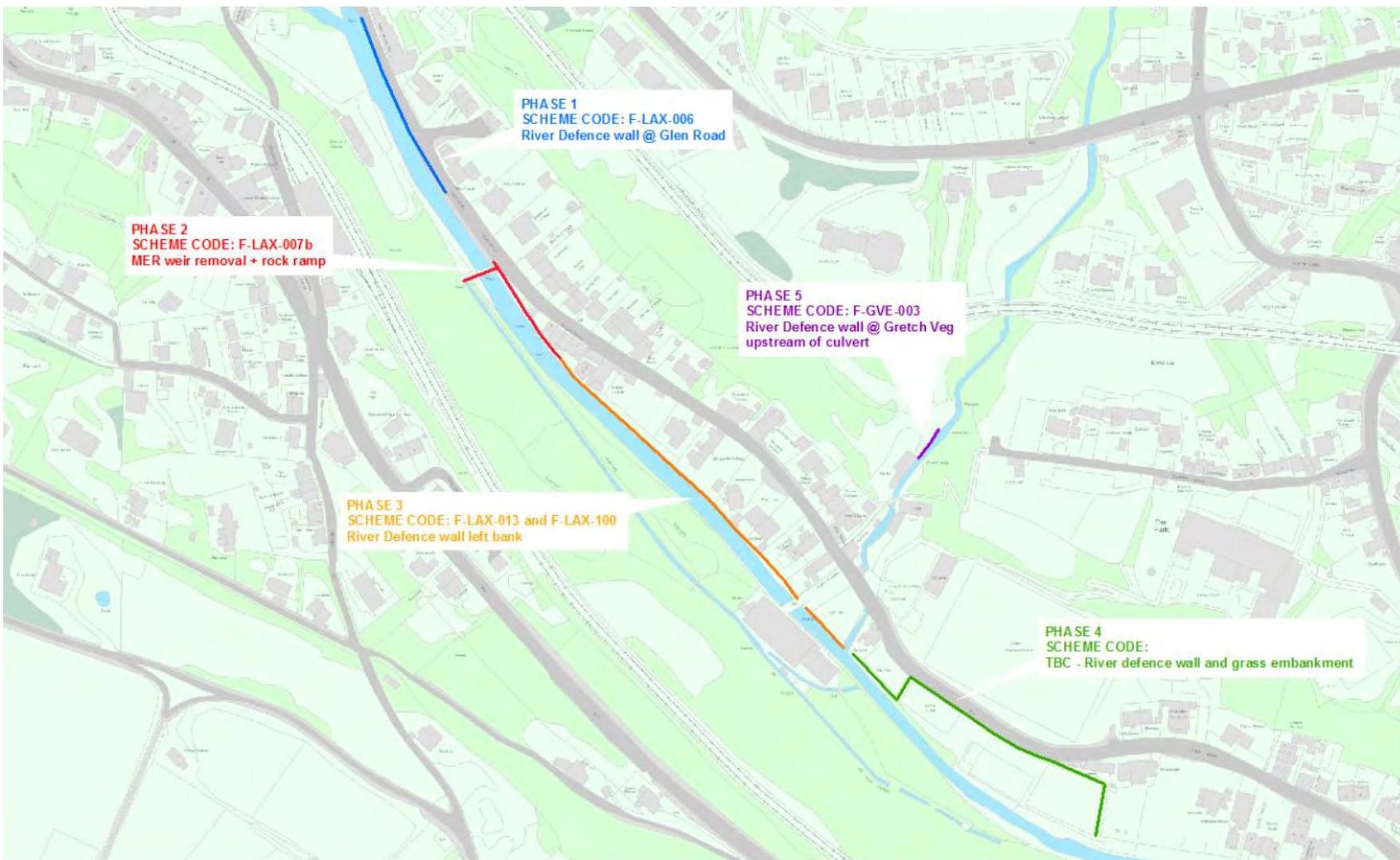
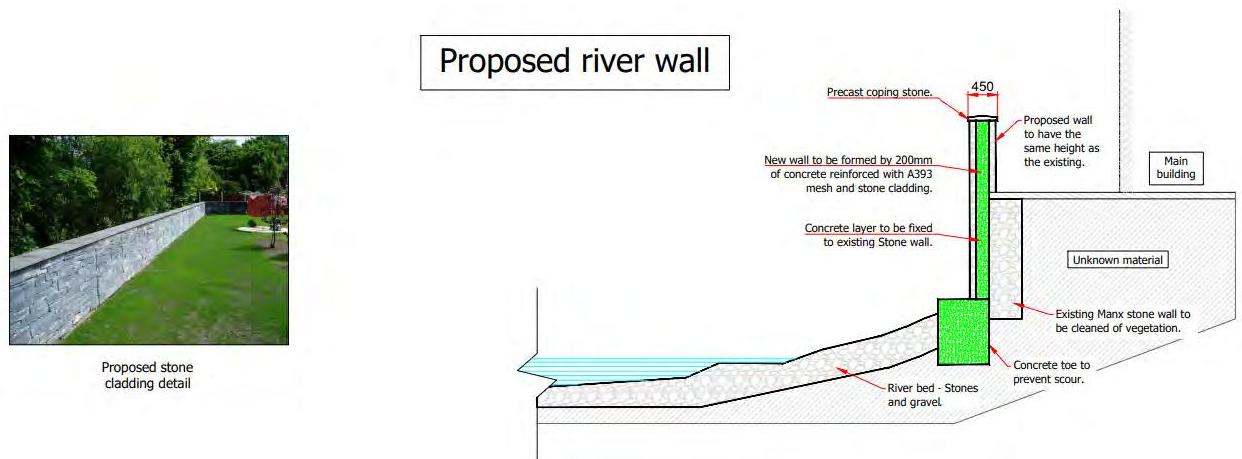
*All photos looking downstream Source: Burroughs Stewart Architects MWT Consultancy Laxey Flood Alleviation PEAR 28
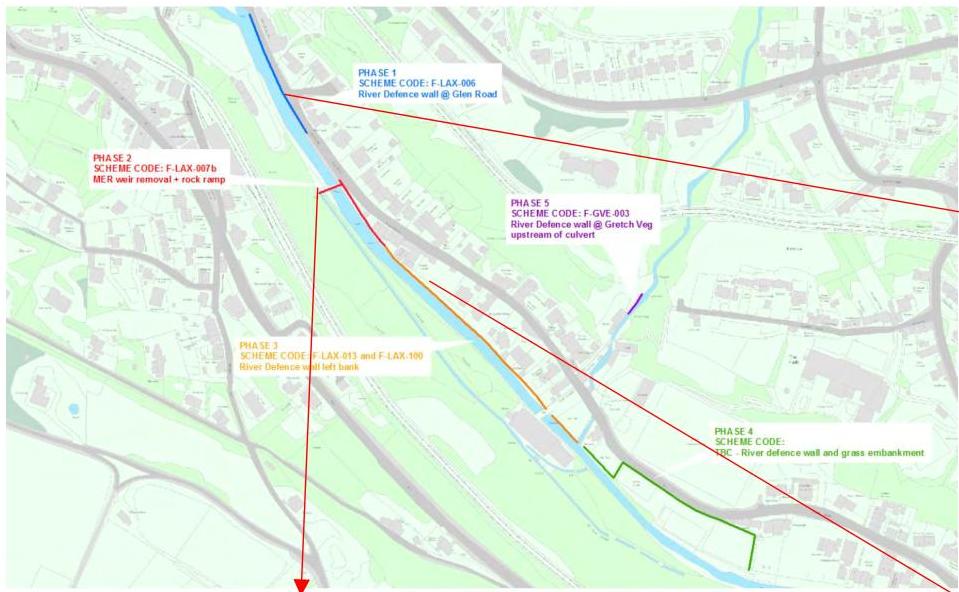
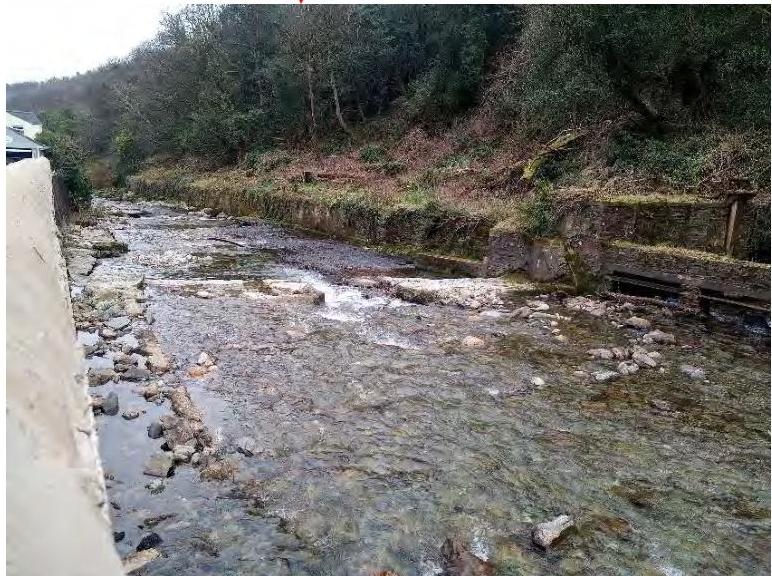
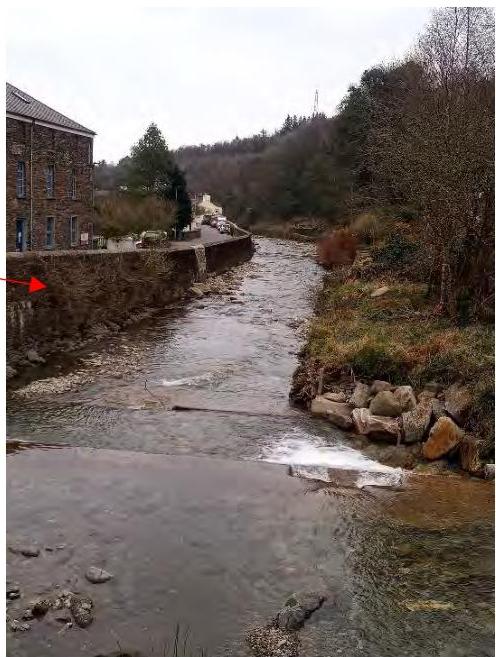
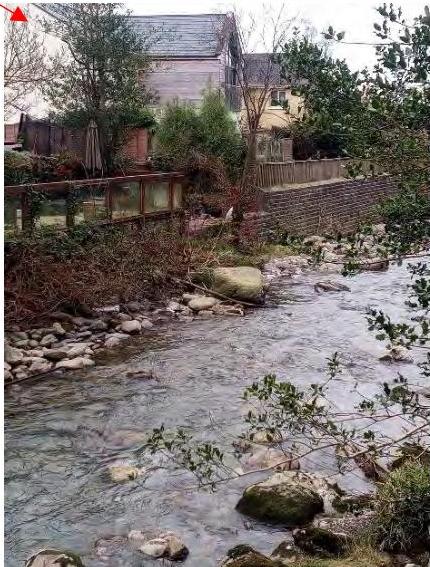
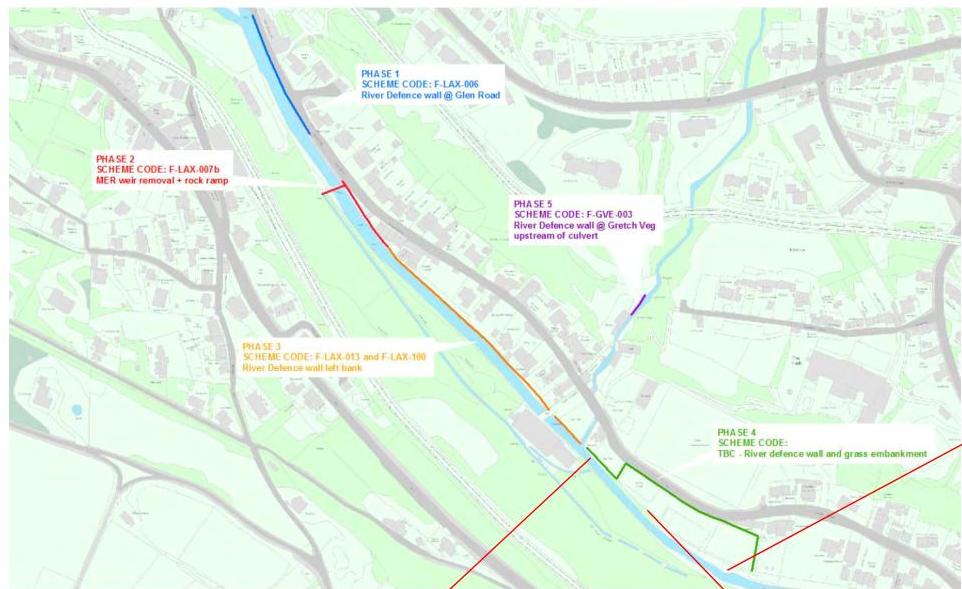
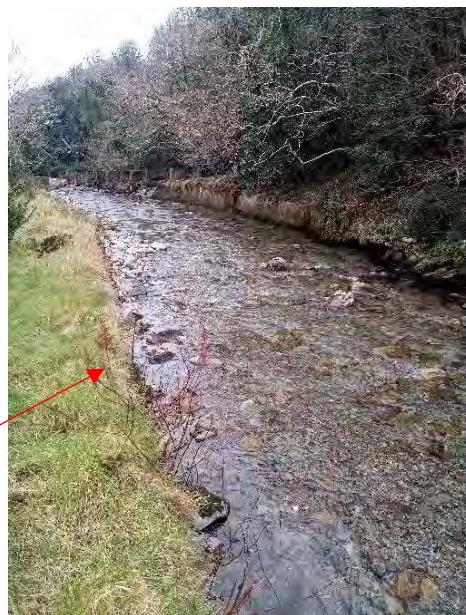
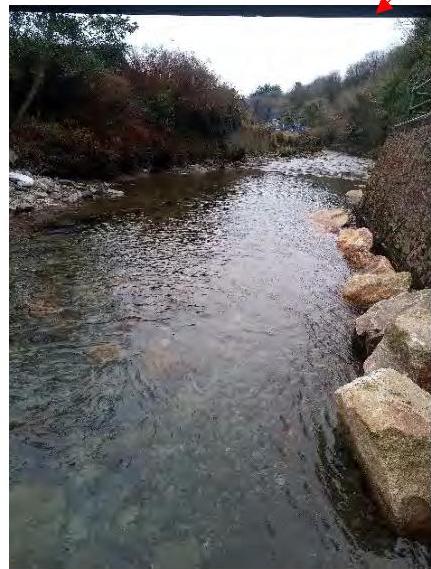
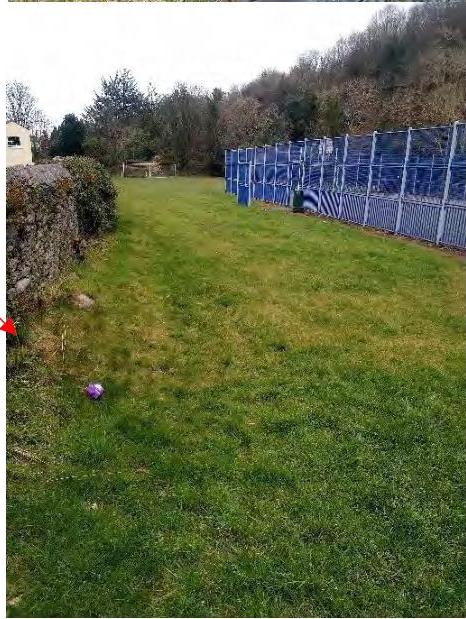
MWT Consultancy Laxey Flood Alleviation PEAR 30
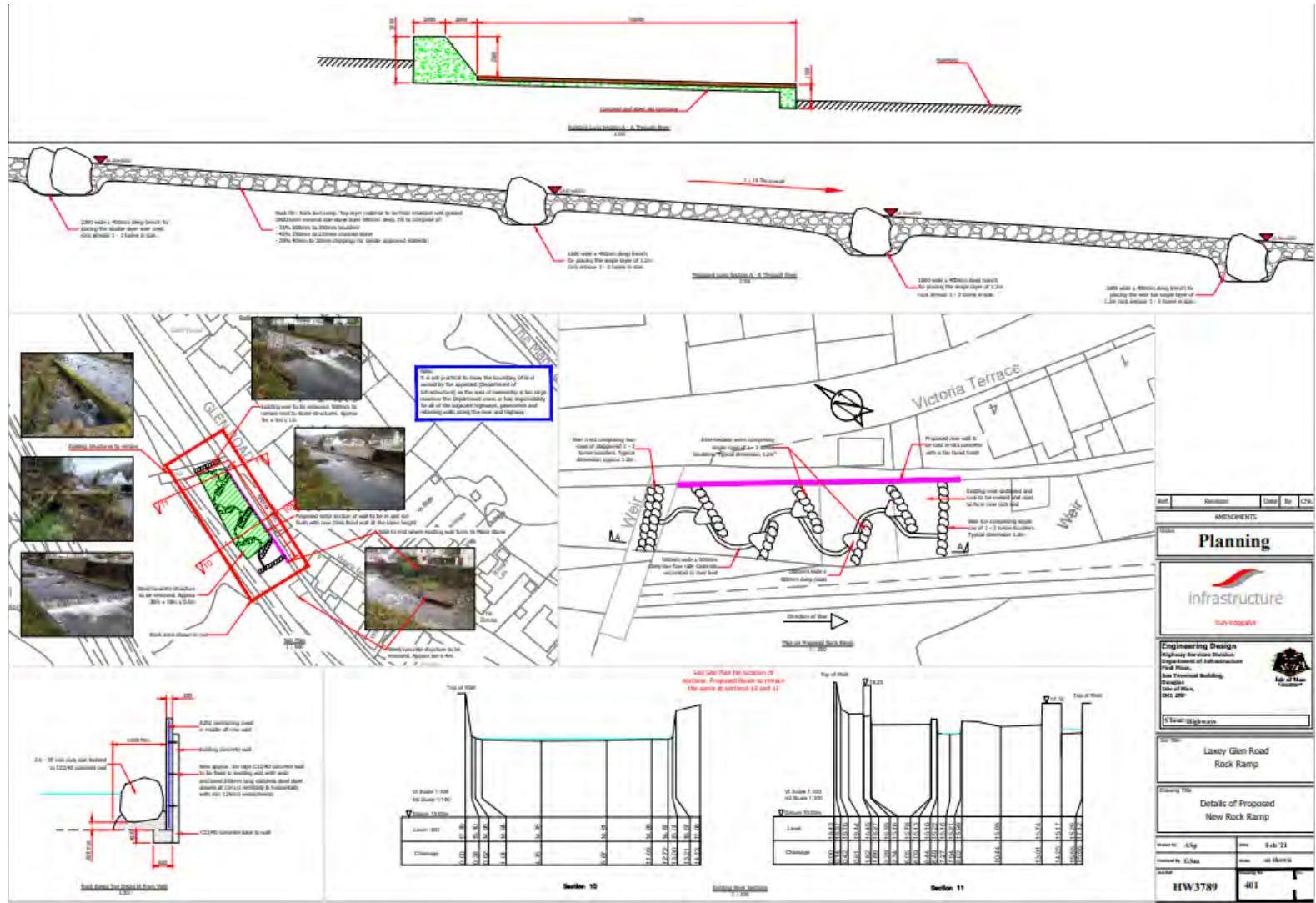
Source: Burroughs Stewart Architects
MWT Consultancy Laxey Flood Alleviation PEAR 31
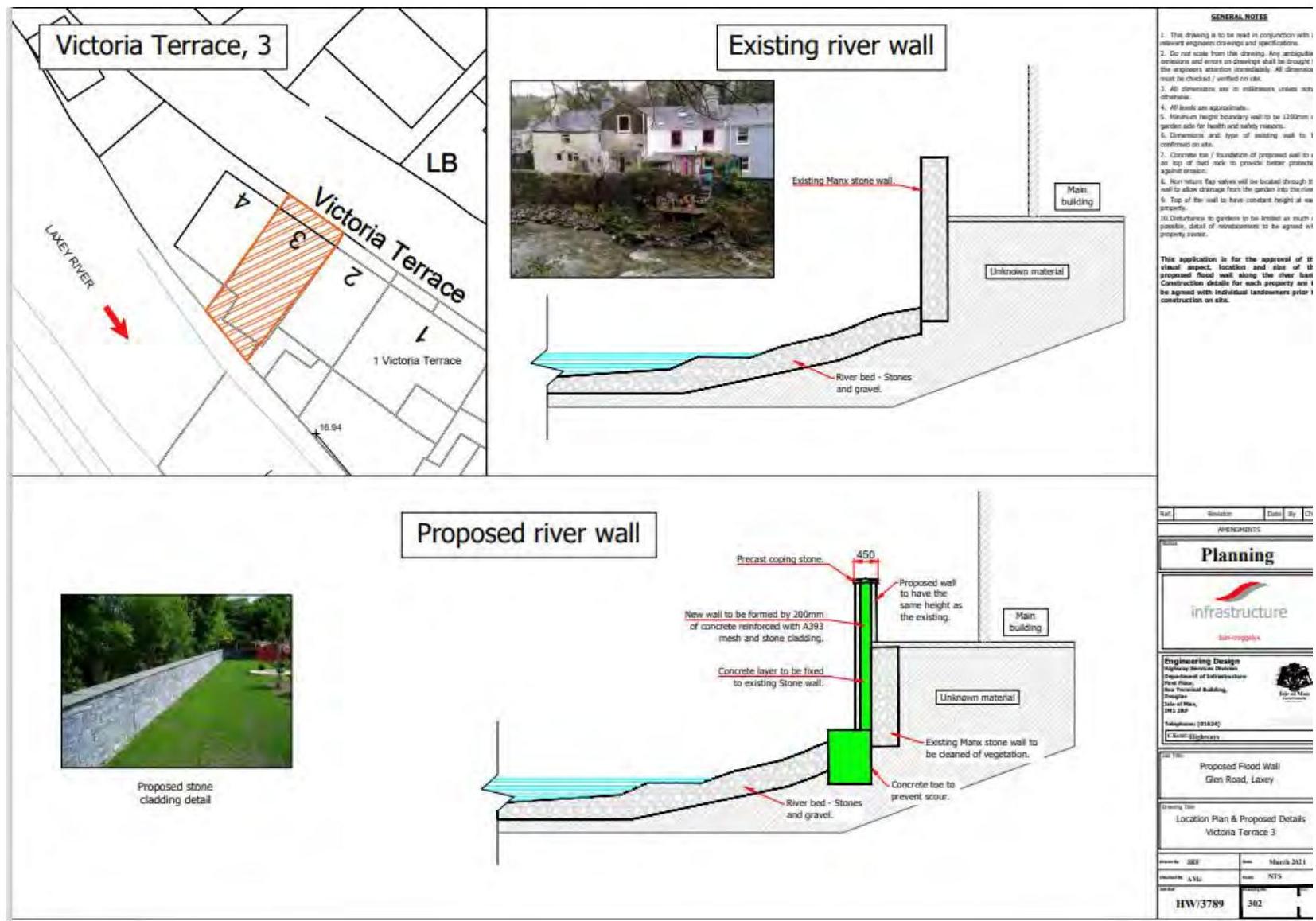
Source: Burroughs Stewart Architects
MWT Consultancy Laxey Flood Alleviation PEAR 32
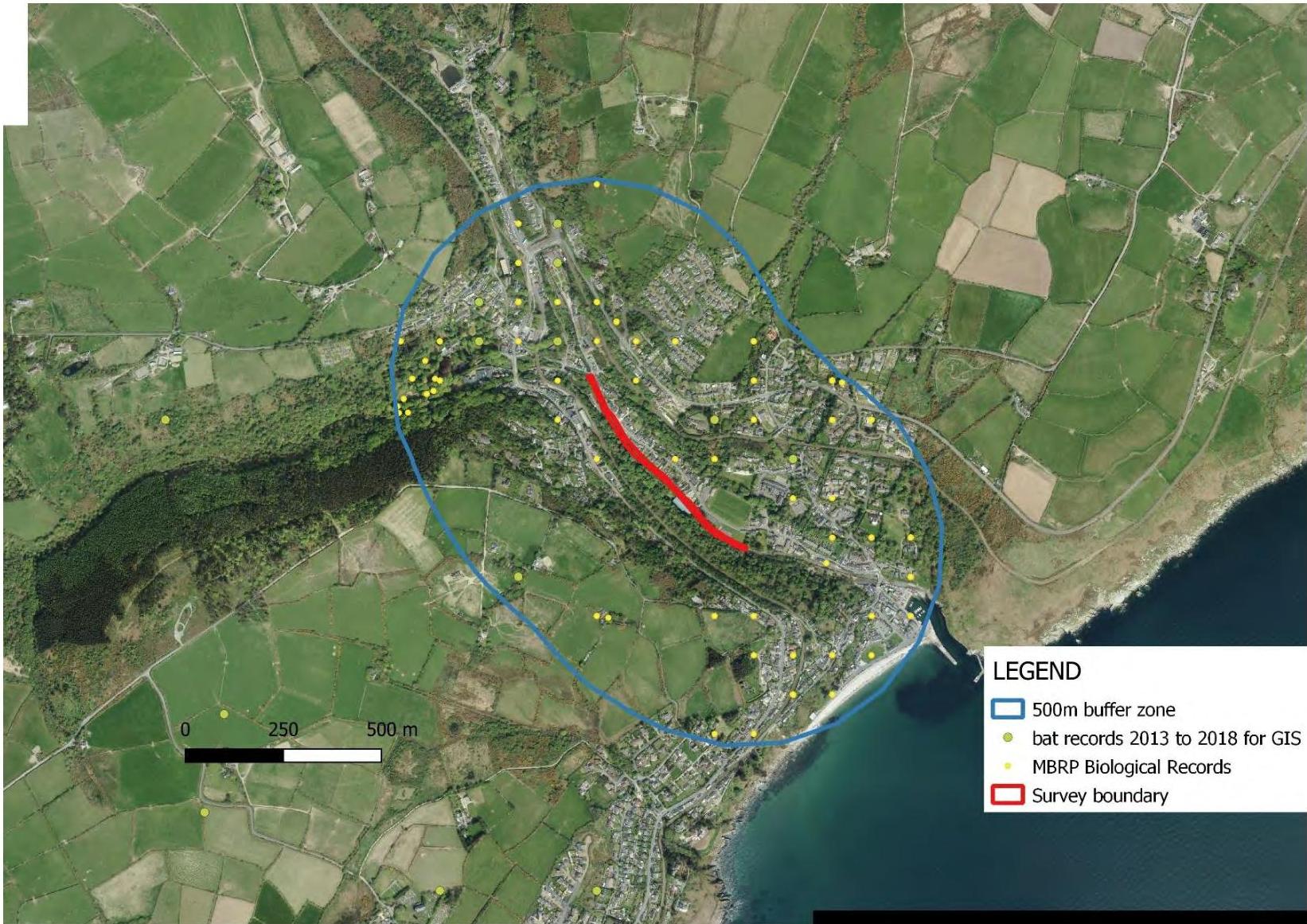
APPENDIX III – Distribution map of MBRP biological data records within 0.5km
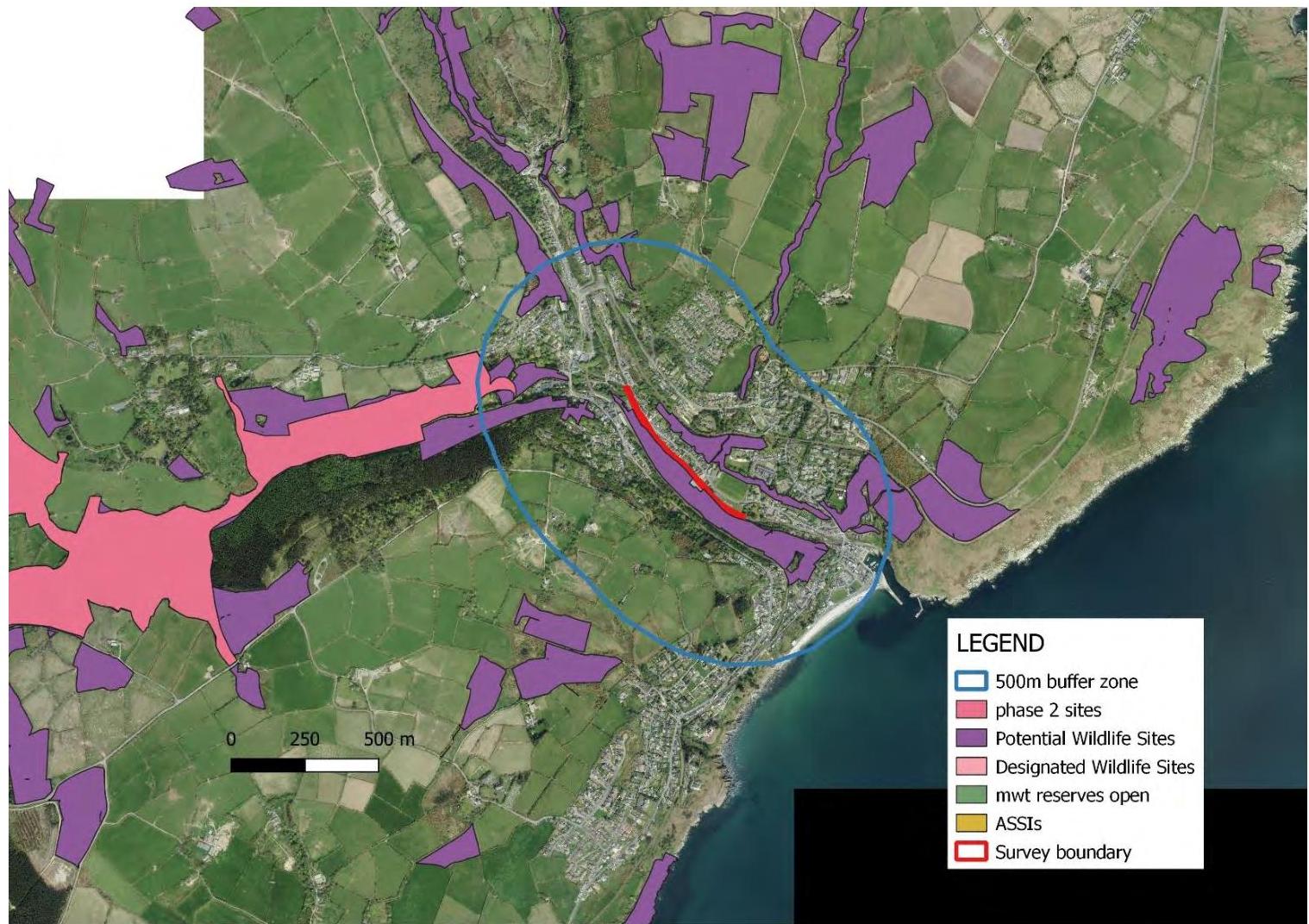
APPENDIX IV – Distribution map of designated sites within 0.5km
| Calf & Wart Bank | Baie ny Carrickey | Douglas | Langness | Laxey | Little Ness | Niarbyl | Port Erin | Ramsey | West Coast |
|---|---|---|---|---|---|---|---|---|---|
| maerl | maerl | maerl | maerl | maerl | maerl | maerl | kepl forest | maerl | maerl |
| rocky reef | rocky reef | rocky reef | rocky reef | kepl forest | horse mussel | kepl forest | rocky reef | kepl forest | horse mussel |
| kelp forest | kelp forest | kelp forest | eelgrass bed | rocky reef | Iceland clam | rocky reef | brittlestar bed | horse mussel | rocky reef |
| sea caves | eelgrass beds | European eel | horse mussel | eelgrass beds | European eel | sea caves | flame shell | rocky reef | intertidal blue mussel |
| sub-tidal sandbank | sea caves | Cumanotus beaumonti (nudibranch) | intertidal mud habitat | harbour porpoise | sea anemone | intertidal blue mussel | stalked jellyfish | brittlestar bed | European eel |
| sea anemone | European eel | Risso’s dolphin | kelp forest | bottlenose dolphin | stalked jellyfish | Iceland clam | intertidal blue mussel | common and grey seal | |
| spiny lobster | Risso’s dolphin | bottlenose dolphin | sea anemone | minke whale | Iceland clam | basking shark | Iceland clam | basking shark | |
| flame shell | harbour porpoise | cormorant, shag | Iceland clam | Iceland clam | European eel | harbour porpoise | European eel | harbour porpoise | |
| common & grey seals | bottlenose dolphin | European eel | shag, fulmar, black guillemot, lesser black-backed gull | grey seal | shag, fulmar, gannet, gulls | sea anemone | plaice (spawning/nursery) | ||
| basking shark | basking shark | common and grey seal | basking shark | plaice (spawning/nursery) | common skate | puffin, kittiwake, shag, fulmar, black guillemot, gannet, lesser black-backed gull, Manx shearwater, little tern, Arctic tern, Gavia spp. (divers) | |||
| harbour porpoise | spiny lobster | basking shark | harbour porpoise | cod (spawning/nursery) | |||||
| Risso’s dolphin | razorbill, kittiwake, fulmar, gusslemot, black guillemot, eider duck, puffin | harbour porpoise | shag, fulmar, black guillemot, lesser black-backed gull | common and grey seal | |||||
| puffin, kittiwake, fulmar, lesser black-backed gull, Manx shearwater, purple sandpiper peregrine falcon, chough | Risso’s dolphin | kittiwake, fulmar, gannet, goldeneye duck, cormorant, puffin, little tern, Arctic tern, gulls | |||||||
| fulmar, lesser black-backed gull | sand eel | sand eel | |||||||
| cod (spawning/nursery) | seabass nursery |
MWT Consultancy Laxey Flood Alleviation PEAR 35
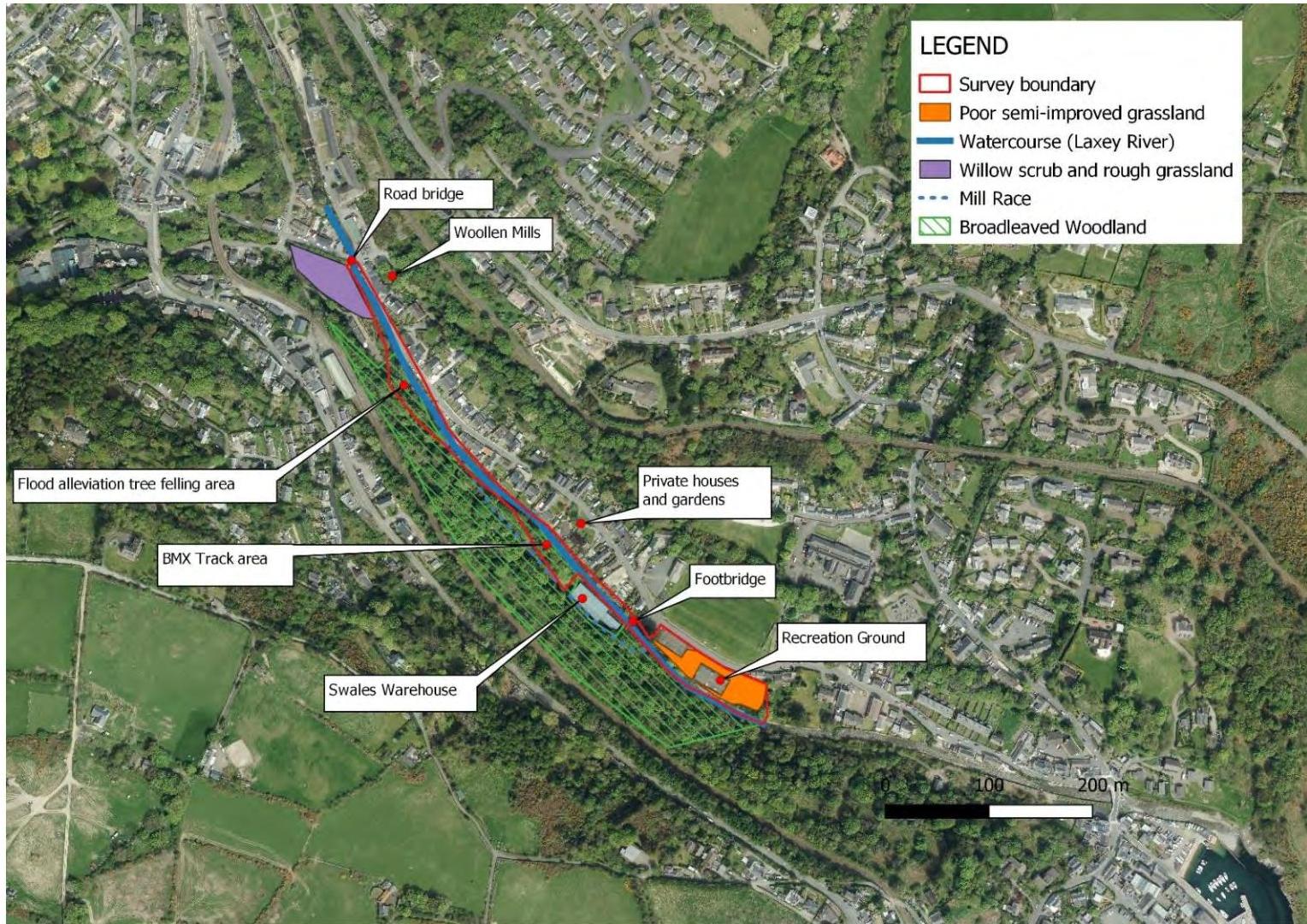
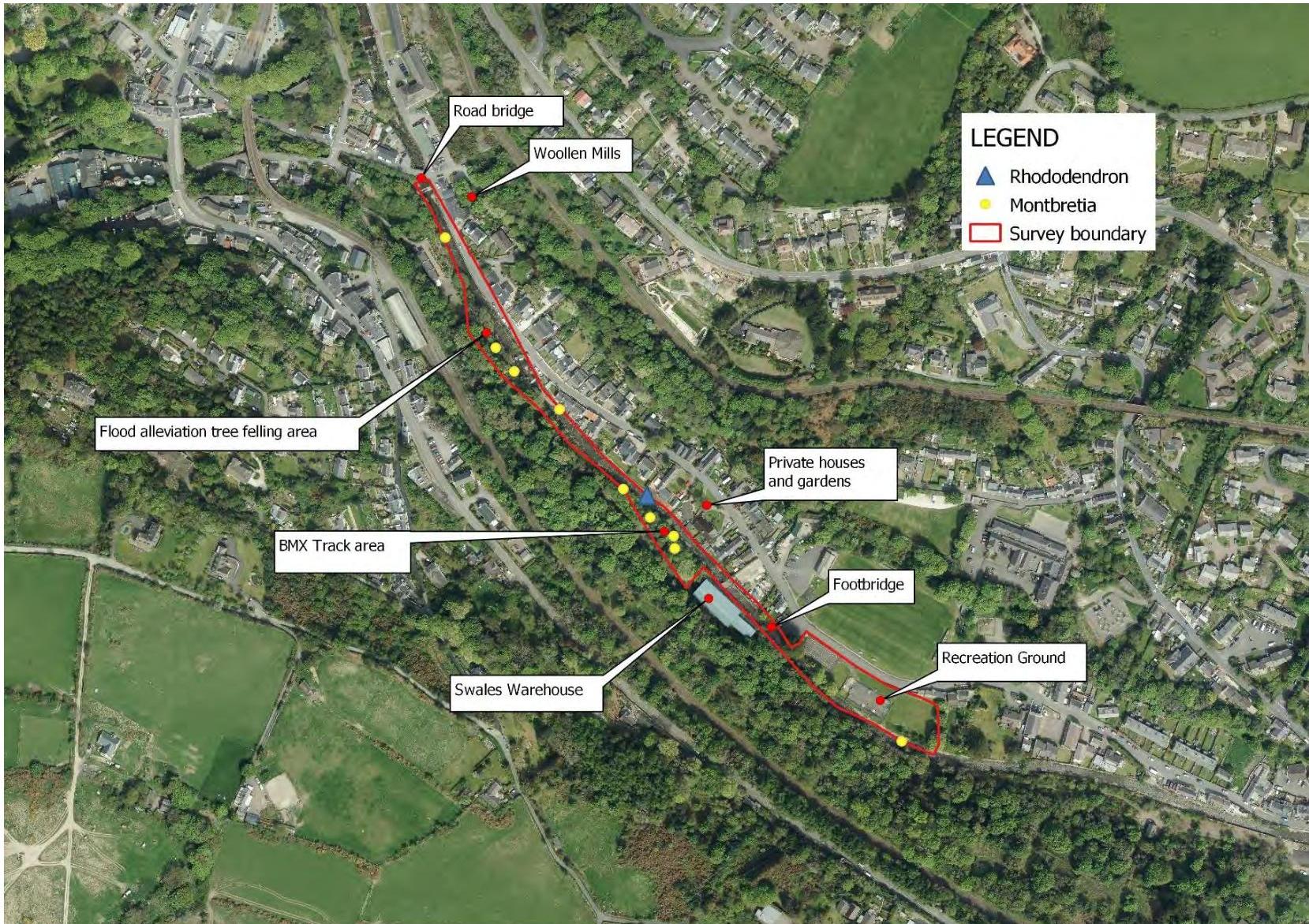
| Table 6: Walkover survey species list for Laxey River Flood Alleviation site | |
| Common name | Scientific name |
| Higher plants, mosses, ferns and trees | |
| Ash | Fraxinus excelsior |
| Bilberry | Vaccinium myrtillus |
| Bracken | Pteridium aquilinum |
| Bramble | Rubus fruticosus agg |
| Bridewort | Spiraea sp. |
| Broad Buckler Fern | Dryopteris dilatata |
| Butterfly Bush | Buddleia davidii |
| Cat's Ear | Hypochaeris radicata |
| Cock's Foot | Dactylis glomerata |
| Common Bent | Agrostis capillaris |
| Common Feather Moss | Kindbergia praelonga |
| Common Pocket Moss | Fissidens taxifolius |
| Common sorrel | Rumex acetosa |
| Creeping buttercup | Ranunculus repens |
| Crescent-cup Liverwort | Lunularia cruciata |
| Daffodil (cultivar) | Narcissus sp. |
| Dandelion | Taraxacum agg. |
| Downy birch | Betula pubescens |
| European gorse | Ulex europaeus |
| Forest Star Moss | Mnium hornum |
| Foxglove | Digitalis purpurea |
| Garden Privet | Ligustrum ovata |
| Hairy Bittercress | Cardamine hirsuta |
| Hard Fern | Blechnum spicant |
| Hawthorn | Crataegus monogyna |
| Holly | Ilex aquifolium |
| Ivy-leaved Toadflax | Cymbalaria muralis |
| Lesser Celandine | Ranunculus ficaria |
| London Pride | Saxifraga x urbicum |
| Long-beaked Water Feather Moss | Platyhypnidium riparioides |
| Maidenhair Spleenwort | Asplenium trichomanes |
| Meadow Buttercup | Ranunculus acris |
| Montbretia | Crocosmia x crocosmiiflora |
| Moss species | Hypnum spp. |
| Opposite-leaved Golden Saxifrage | Chryosplenium oppositifolium |
| Perennial Rye Grass | Lolium perenne |
| Table 6: Walkover survey species list for Laxey River Flood Alleviation site | Table 6: Walkover survey species list for Laxey River Flood Alleviation site |
|---|---|
| Common name | Scientific name |
| Higher plants, mosses, ferns and trees | Higher plants, mosses, ferns and trees |
| Ash | Fraxinus excelsior |
| Bilberry | Vaccinium myrtillus |
| Bracken | Pteridium aquilinum |
| Bramble | Rubus fruticosus agg |
| Bridewort | Spiraea sp. |
| Broad Buckler Fern | Dryopteris dilatata |
| Butterfly Bush | Buddleia davidii |
| Cat’s Ear | Hypochaeris radicata |
| Cock’s Foot | Dactylis glomerata |
| Common Bent | Agrostis capillaris |
| Common Feather Moss | Kindbergia praelonga |
| Common Pocket Moss | Fissidens taxifolius |
| Common sorrel | Rumex acetosa |
| Creeping buttercup | Ranunculus repens |
| Crescent-cup Liverwort | Lunularia cruciata |
| Daffodil (cultivar) | Narcissus sp. |
| Dandelion | Taraxacum agg. |
| Downy birch | Betula pubescens |
| European gorse | Ulex europaeus |
| Forest Star Moss | Mnium hornum |
| Foxglove | Digitalis purpurea |
| Garden Privet | Ligustrum ovata |
| Hairy Bittercress | Cardamine hirsuta |
| Hard Fern | Blechnum spicant |
| Hawthorn | Crataegus monogyna |
| Holly | Ilex aquifolium |
| Ivy-leaved Toadflax | Cymbalaria muralis |
| Lesser Celandine | Ranunculus ficaria |
| London Pride | Saxifraga x urbicum |
| Long-beaked Water Feather Moss | Platyhypnidium riparioides |
| Maidenhair Spleenwort | Asplenium trichomanes |
| Meadow Buttercup | Ranunculus acris |
| Montbretia | Crocosmia x crocosmiiflora |
| Moss species | Hypnum spp. |
| Opposite-leaved Golden Saxifrage | Chryosplenium oppositifolium |
| Perennial Rye Grass | Lolium perenne |
MWT Consultancy Laxey Flood Alleviation PEAR 38
| Pignut | Conopodium majus |
|---|---|
| Ragwort | Jacobaea vulgaris |
| Ramsons | Allium ursinum |
| Red Valerian | Centranthus ruber |
| Rhododendron | Rhododendron ponticum |
| Ribwort Plantain | Plantago lanceolata |
| Rough-stalked Feather Moss | Brachythecium rutabulum |
| Snowdrop | Galanthus spp. |
| Soft Rush | Juncus effusus |
| Spear Thistle | Cirsium vulgare |
| Sycamore | Acer pseudoplatanus |
| Tamarisk Moss | Thuidium tamariscinum |
| Western Polypody | Polypodium interjectum |
| White clover | Trifolium repens |
| Willow species | Salix sp. |
| Wood False-brome | Brachypodium sylvaticum |
| Yorkshire Fog | Holcus lanatus |
| Fauna | Fauna |
| Birds | Birds |
| Dunnock | Prunella modularis |
| Grey Wagtail | Motacilla cinerea |
| Robin | Erithacus rubecula |
| Mallard | Anas platyrhyncos |
| Chaffinch | Fringilla coelebs |
| Pignut | Conopodium majus |
| Ragwort | Jacobaea vulgaris |
| Ramsons | Allium ursinum |
| Red Valerian | Centranthus ruber |
| Rhododendron | Rhododendron ponticum |
| Ribwort Plantain | Plantago lanceolata |
| Rough-stalked Feather Moss | Brachythecium rutabulum |
| Snowdrop | Galanthus spp. |
| Soft Rush | Juncus effusus |
| Spear Thistle | Cirsium vulgare |
| Sycamore | Acer pseudoplatanus |
| Tamarisk Moss | Thuidium tamariscinum |
| Western Polypody | Polypodium interjectum |
| White clover | Trifolium repens |
| Willow species | Salix sp. |
| Wood False-brome | Brachypodium sylvaticum |
| Yorkshire Fog | Holcus lanatus |
| Fauna | |
| Birds | |
| Dunnock | Prunella modularis |
| Grey Wagtail | Motacilla cinerea |
| Robin | Erithacus rubecula |
| Mallard | Anas platyrhyncos |
| Chaffinch | Fringilla coelebs |
MWT Consultancy Laxey Flood Alleviation PEAR 40
Copyright in submitted documents remains with their authors. Request removal
View as Markdown