Loading document...
Design \& Access statement to accompany drawn information and application documentation. 17 and 19 Malew Street were purchased when the applicant was putting together the development subsequently known as Callow's Yard, they are at the extremity of the Malew Retail Street where the road joins Bank Street there is negligible retail footfall and there are residential properties both opposite and alongside the two existing shops. When these two units were bought in 2005 they were derelict.
On opening Callow's Yard in 2009 Callow's Yard Ltd opened shops in this location (newsagent/toy shop/baby shop/pound shop) but the location had poor footfall with virtually no passing trade and the businesses quickly closed as they were unsustainable.
The extant approvals allow the re-opening of the ginnell to link Malew Street via the "arena" to Arbory Street. These works have been completed and the pedestrian route is being used as a short cut between the two streets.
Despite continued efforts including rent free honeymoons it has not be possible to let the units for retail purposes. Every effort has been made to commercially attract new businesses including appointment of specialist retail consultant's form both the Island and the UK whose brief has been to review the market and attract suitable businesses to this location.
The History demonstrates that there has been no traditional retail or successful service retail activity in this location for over three decades. This part of Malew Street and Bank Street is the junction for daytime unrestricted vehicular traffic.
Since 2009 footfall in the town has dramatically declined with the recession and now has a further reduced daytime trade with the major influences since 2009 being:
1) The withdrawal from the town of nearly all of the major office employers 2) The withdrawal from the centre of the town of the doctors, the opticians and a dentist 3) The expansion of two petrol stations on the towns perimeter and being granted alcohol licences 4) The decline in tourism and spend from coaches visiting the town, and 5) The significant growth of internet trading.
Around a third of the 52 retail units in the town have been empty for several years. It is the wish of the applicant to use the two units for alternative and additional use for residential and tourist use until the local authority can devise a strategic plan to return footfall to Castletown to create a vibrant retail environment which they wholeheartedly support.
It is proposed to have provision to convert the existing retail units at 17 \& 19 Malew Street into residential units by applying for additional use as residential and tourist accommodation with amendments to the streetscape to return this part of Historic Castletown to a domestic scale.
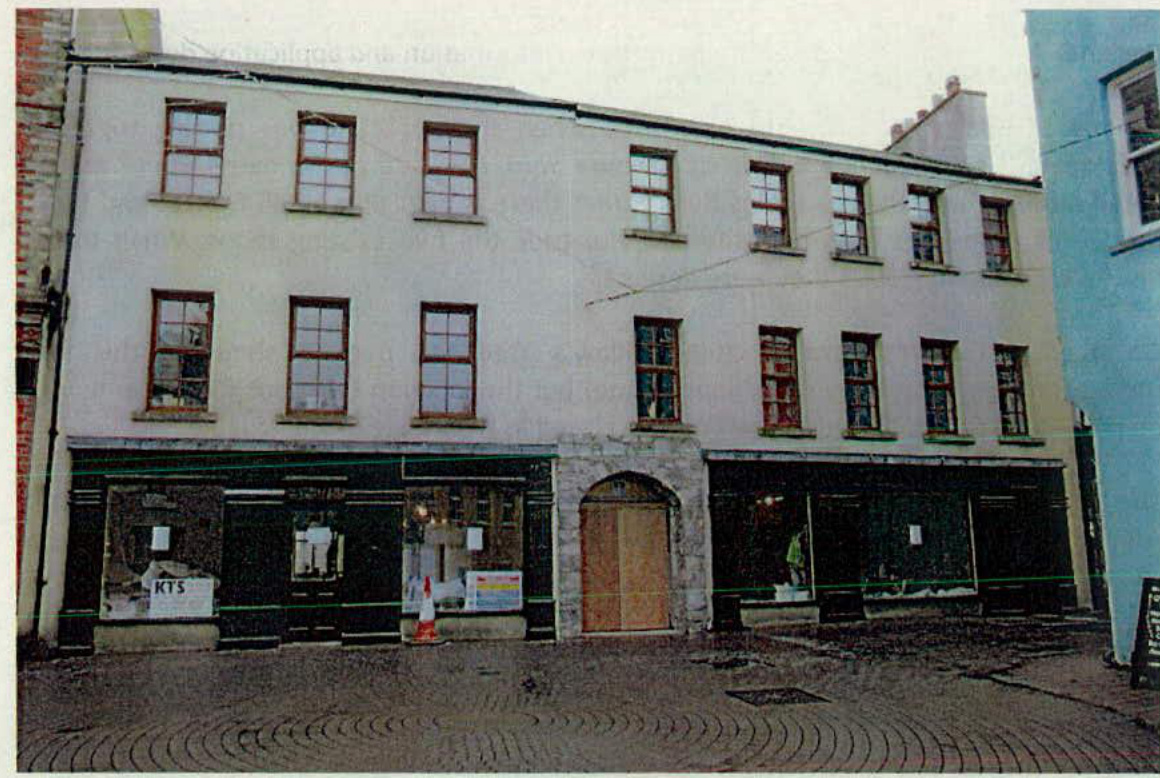
It is proposed to remove the shop fronts (see image 1) and revert the streetscape to a domestic scale. The benefit of this is:
(Image 1)
1) It restores the street to its previous historical language thus enhancing the 'group value' of the properties collectively from 17 - 27 Malew Street.
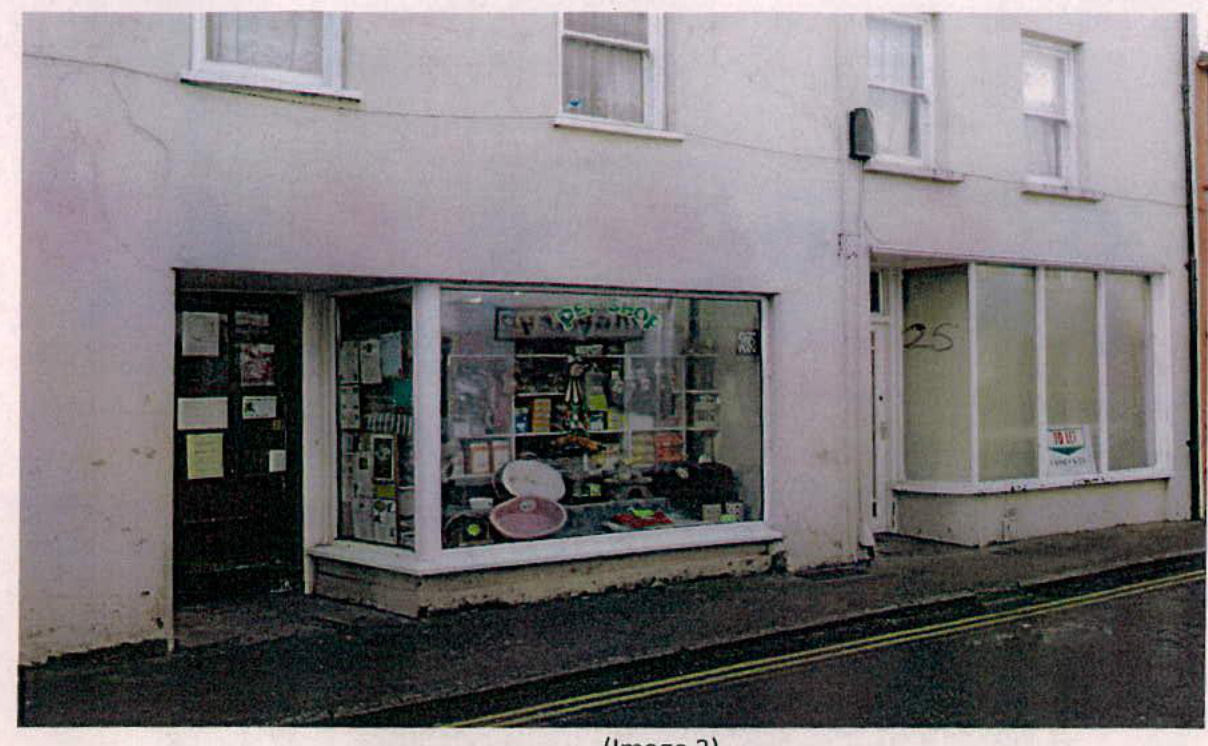
No 25 in particular (residential use at ground floor) suffers for the exact reason. PA 16/01317/B failed at the initial stage of planning (see image 2).
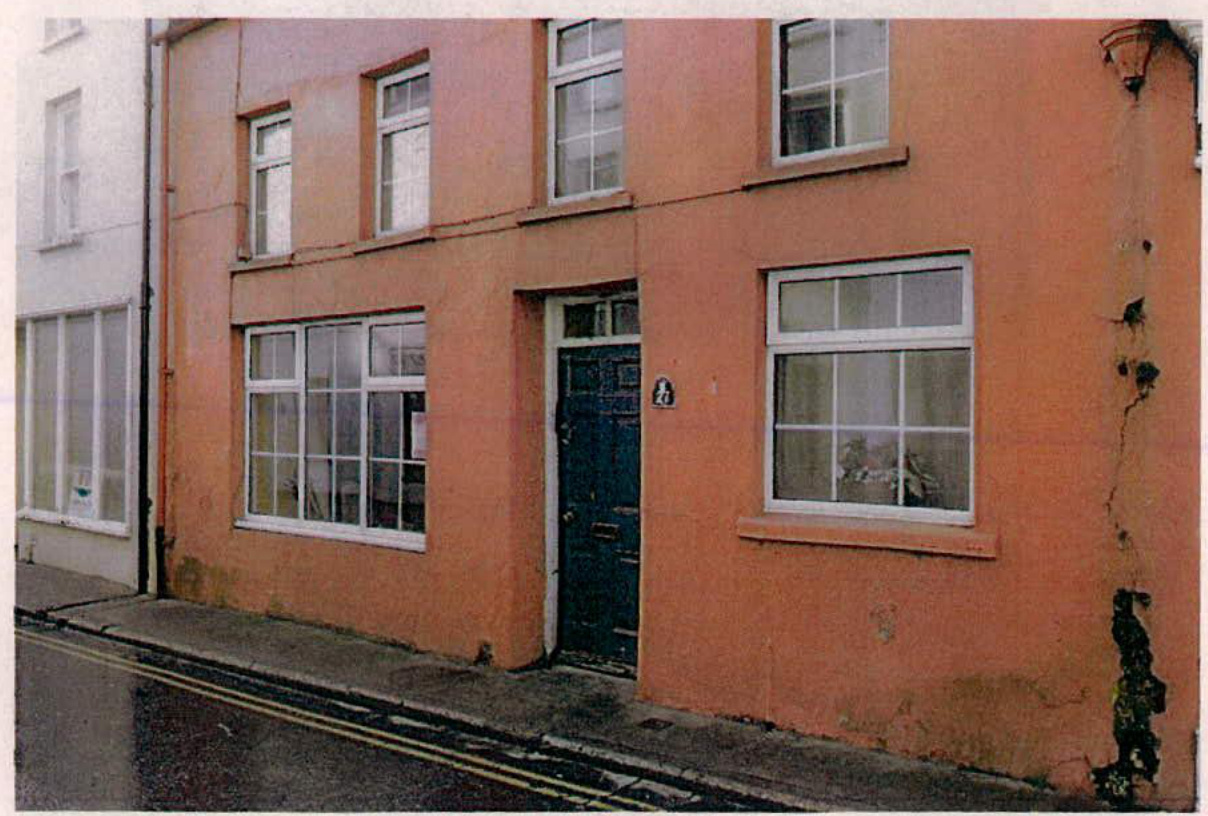
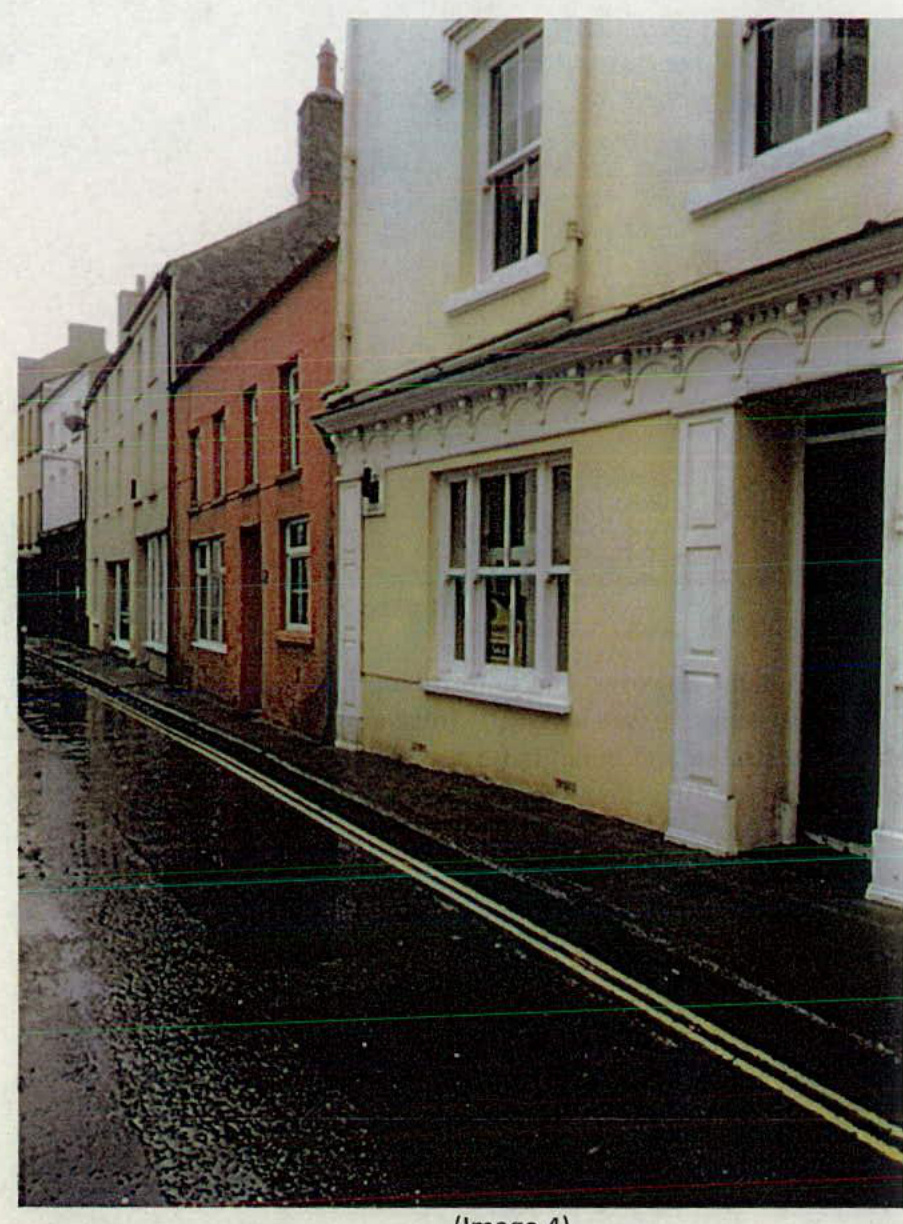
(Image 2) No 27 to a lesser extent however, the unfortunate choice of materials for the fenestration result in an awkward language (see image 3) - (residential use at ground floor) whereas No 29 is most tastefully fenestrated and benefits from a high level of maintenance (residential use at ground floor). (See image 4)
(Image 3)
(Image 4) Notwithstanding these comments, modest refurbishment could create a worthy group. 2) To provide a flexibility to enable the vacant buildings to be re-occupied.
As has been previously documented the Applicant supports the attempts to reinvigorate the retail strategies for Castletown and the application seeks the opportunity to be flexible.
The existing doors which front Malew Street/Bank Street are to be retained to emphasise the domestic scale. These are to be used as emergency alternative access to the units, they will in all likelihood remain closed at all times. 3) The windows will be the same pattern to those on the first and second floors and match the profile completely. They will also line through vertically.
The internal layout has been designed to ensure that privacy is afforded to residents in exactly the same manner as in properties adjoining, opposite and in close proximity to the application site. This includes Malew Street, Bank Street, Arbory Street and the Quay. Indeed 16 Malew Street is closer to the Town Centre. This is NOT a compromise and will create a pleasant, airy living and sleeping space with generous kitchen and bathroom areas.
All services are available and acceptance of the proposals will help maintain the vitality of the town centre (by increasing town centre residents) which in retain terms, effectively ends at No 15 Malew Street.
Previous Planning Decision ref 16/01317/B
Taking each refusal in order:
It has been well documented how the Governments retail strategy has failed with regard to attracting new businesses to Castletown and whilst anecdotally there has been new business in the centre of Castletown recently these have actually been created by allowing change of use from existing properties to facilitate the new companies coming into the Town, for example the Costa coffee outlet in the former garage used for Castletown Police cars and as long as flexibility in proposals and a positive acceptance by the planning division to encourage such a strategy the existing landlords with available space are prejudiced and their previous investment is ignored.
The applicant maintains that Community Policy 4 is complied with in that expensive retail strategy, advertising, history and commercial willingness has been shown and still
there is no activity within this part of the town. Clearly if the well documented efforts have drawn a blank there is NO REQUIREMENT FOR RETAIL PREMISES IN THE LOCATION IDENTIFIED. The applicant repeats again that if there is a meaningful, effective and productive retail strategy which is wholeheartedly bought into by the Government and Local Commissioners he wholeheartedly supports this emphasis. However, historically there has been no commitment and there has been no attraction of footfall to the centre of Castletown.
Window dressings of a domestic scale rather than those of the large blinds and extensive glazed areas can easily be incorporated and adequately address any concerns there may be regarding residents privacy. Indeed, the charm of Castletown rests with the interaction of residents with other road users and people going about their daily lives.
(i) The site lies within an area designated for mixed use. That mixed use expressly includes both retail and residential uses. (ii) There is positive support for changes between those uses (including retail and residential) - see $\S 6.6 .1$ of the Area Plan. (iii) Whilst there may be a "preference for" (\$6.6.5 Area Plan) or "presumption in favour of" (Mixed Use Proposal 1) retail on the ground floor, there is no prohibition against residential on the ground floor. Each case is to be addressed on its own merits (Mixed Use Proposal 1). (iv) Residential uses already exist on the ground floor in this (and other) mixed use areas (I assume). It is not suggested that they harm the vitality and viability of those areas. Their presence accords with policy. (v) The preference for retail on the ground floor (and it is only a preference) is in the interests of the vitality of the town centre ( $\$ 6.6 .5$ Area Plan). Those interests are not served at all by long term vacant premises.
(vi) There is no dispute in the OR that Roy has sought to market the premises and has not succeeded. There is no competing market evidence showing that occupation of the units is likely. (vii) There is no breach of Community Policy 4 since no local shop will be lost. (viii) There is no conflict with the Government's retail strategy (which is not policy in any event). It recognises that unused premises can have a harmful effect. (ix) There is no evidence at all that the change from long term empty units (which the retail strategy acknowledges can have a harmful effect) to occupied residential units will have any harmful effect on the town centre's vitality and viability. (x) Accordingly, the scheme is not in breach of mixed use proposal 1, community policy 4 or the retail strategy. (xi) The scheme complies with;
Strategic Policy 1 - an under-used building will be put to use, Strategic Policy 2 - development will be focussed within an existing town, Strategic Policy 4 - occupied residential units are bound to benefit the Conservation Area in contrast to the harm created by long term vacant retail premises,
Strategic Policy 12 - flats will be created in under-used space.
The proposals represent a valid, logical response to what is not a unique situation in other Towns on the Island. The exact efforts by the applicant to attract retail outlets is unique and every opportunity has been explored.
Vacant, redundant buildings with no probability for commercial use should be allowed to explore other uses - Residential use is accepted and in this case the applicant should be allowed.
Copyright in submitted documents remains with their authors. Request removal
View as Markdown